Category: Skin Health

Ayurvedic Treatment For Pityriasis Alba with Herbal Remedies

Abstract

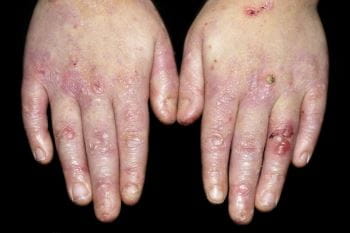
Pityriasis alba is a common, benign skin condition that primarily affects children and teenagers. It is characterized by round or oval, hypopigmented lesions with thin scales. Pityriasis alba may be a mild symptom of atopic dermatitis, and most patients have a history of atopy. The lesions may be slightly erythematous at first, then turn hypopigmented with time. Those with darker skin types tend to notice them more, and they are most frequently found on the face, arms, and upper trunk. The lesions become more noticeable in the sun. In this article, we discuss pityriasis alba in detail.

Pityriasis Alba

Introduction

Pityriasis alba is a common, benign skin condition that primarily affects young people. Its name describes how it looks: alba denotes its pale hue (hypopigmentation), and pityriasis alludes to its thin scales. Pityriasis alba may be a mild symptom of atopic dermatitis, and most patients have a history of atopy. It is typified by round or oval, poorly defined macules and patches (or thin plaques), frequently with minor scaling, and occasionally with mild pruritus. The lesions may be slightly erythematous at first, then they gradually turn hypopigmented. They are more prominent in those with darker skin types and are more frequently found on the face, arms, and upper trunk, particularly the cheeks. The lesions become more noticeable in the sun. Parents and patients frequently worry about how the lesions will look cosmetically. The spontaneous resolution of Pityriasis alba results in a gradual restoration of normal skin pigmentation.

Causes

Pityriasis alba’s precise cause is unknown. Nonetheless, it’s frequently thought of as a mild variant of atopic dermatitis, which is a sort of eczema. An hyperactive immune system that reacts angrily to stimuli may be the cause of eczema. The protective function of the skin is diminished in eczema sufferers. Normally, the immune system exclusively targets the proteins of dangerous entities like bacteria and viruses, ignoring benign proteins. But if you have eczema, your immune system can not always know the difference and end up attacking your body’s good chemicals. It aggravates the irritation. It is comparable to an allergic reaction. Pityriasis alba and eczema typically go away by early adulthood.

Symptoms

Pityriasis alba causes areas of light pink or red skin that are shaped like circles, ovals, or other irregular shapes. Usually, the areas are dry and scaly. They could show up on the

  • Face, the most frequent location
  • Upper arms, back, neck, and chest

After a few weeks, light-coloured patches may replace the pale pink or red blotches. These lesions usually disappear within a few months, although sometimes they might linger for years. They are particularly noticeable in the summer when the surrounding skin tans. This explains why the pityriasis patches don’t tan. If you wear sunscreen in the summer, the patches might be less noticeable. Darker skin tones also make the light regions more noticeable.

Diagnosis

Pityriasis alba is often diagnosed by a clinical exam. However, it can be mistaken for a number of other conditions that result in hypopigmentation. Investigations may involve the following to rule these out

  • Wood lamp examination
  • Scrapings for mycology
  • Skin biopsy

Management

Without treatment, pityriasis alba frequently improves, but it could take some time. Normal skin pigmentation may not return for several months or even years. But the majority of people’s skin heals in a year or less.
To alleviate the symptoms, people can do the following

  • Try using moisturizing agents.
  • Consult a physician about the use of topical medications: Nonsteroidal creams such as crisaborole (Eucrisa), tacrolimus (Protopic), and pimecrolimus (Elidel) may lessen itching related to pityriasis alba
  • Try topical steroids with low potency.

Ayurvedic View

In Ayurveda, Pityriasis alba is correlated with Mandala kustha. It is one type of kustha. Skin conditions of various kinds are referred to as kustha. There are three doshas involved in this, and each is treated in accordance with its symptoms. Kapha dosha vitiation is a factor in mandala kusth.

Mandala Kushta

श्वेतं रक्तं स्थिरं स्त्यानं स्निगधंमुत्स्नंमण्डलं |
कृच्छ्रमन्योन्यसंसक्तं कुष्ठ्म मंडलमुच्यते || (च चि ७/१६ )

Acharya Charak describes Mandala kustha (Pityriasis alba) as the production of round, circular patches that are white, red, extensive, stable, unctuous, and linked with each other. It is not very treatable.

Causes Of Mandala Kustha

  • Unctuous and dense materials.
  • Repress your instincts.
  • Take incompatible foods and beverages on a regular basis.
  • Exposed to extreme heat following a heavy meal.
  • Exertion.
  • Exposed to physical activity.
  • Use cold water immediately following an extended period of sun exposure.
  • Fear.
  • Eat when experiencing dyspepsia.
  • Utilize goods that are not recommended during panchakarma therapy.
  • Get regular daytime sleep.
  • Overindulgence in fish, curd, salty, and sour foods.
  • Having sex whilst suffering from dyspepsia.

Lakshanas/ Symptoms

  • Redness
  • Scaling
  • Itching
  • Fever
  • Sore throat
  • Headache, and scaled patch.

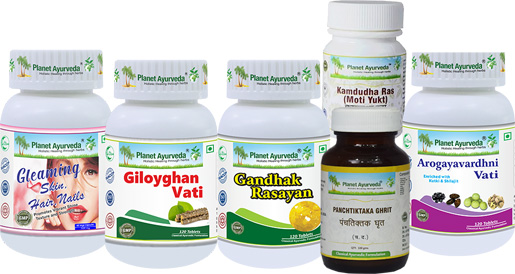
Herbal Remedies For Pityriasis Alba By Planet Ayurveda

The special herbal formulations from Planet Ayurveda can help you ease the symptoms of sarcopenia and cure it miraculously by balancing the vata dosha and promoting mamsa vridhi. Planet Ayurveda uses four herbal formulations—vikramprash, shatavari ghrita, weight gain pills, and Ashwagandha capsules—to treat sarcopenia. These formulas are all made under the appropriate guidance of M.D. Ayurvedic professionals. Formulations are entirely natural, devoid of artificial ingredients such as gums, starches, resins, fibers, etc. or preservatives.

Product List

  1. Gandhak Rasayan
  2. Vidangarisht
  3. Gleaming Skin, Hair, Nails Formula

 Pityriasis Alba

Product Description

1. Gandhak Rasayan

With the use of shuddha gandhak (purified sulfur), Planet Ayurveda created Gandhak rasayan, a single herbal tablet. For skin conditions, it is advantageous. It reduces redness and itching. It soothes the three doshas, pitta, kapha, and vata. Furthermore, it purifies the blood, which helps with skin condition rehabilitation. It fights several kinds of allergies. It regulates the immune system and possesses antimicrobial properties. Urinary tract infections, blood problems, and skin diseases can all benefit substantially from it. Aging symptoms are slowed by it. There is a reduction in macules.

Dosage : Take two tablets twice daily with plain water after a meal.

2. Vidangarisht

With the aid of Vaividang (Embelia ribes), Holarrhena antidysenterica (Kutaj), Lodhra (Symplocos racemosa), and a few more components, Planet Ayurveda created Vidangarisht, a multi-herbal concoction. Vidangarishta is vital for treating many infections and skin ailments. This polyherbal mixture’s high antioxidant content effectively eliminates harmful free radicals from the body, and its antipruritic qualities lessen itching caused by allergic conditions including sunburn, eczema, psoriasis, scabies, patchy skin, etc.

Dosage : Take two teaspoons twice daily after a meal with plain water.

3. Gleaming Skin, Hair, Nails Formula

Planet Ayurveda created the multi herbal capsule known as Gleaming Skin, Hair, and Nails Formula by combining Manjistha (Rubia cordifolia), Fumaria officinalis (Pitpapda), Sariva (Hemidesmus indicus), and Aloe barbadensis (Ghritkumari). That appeases Pitta and Kapha. It helps treat recurrent skin disorders such as pigmentation irregularities and leucoderma. It improves complexion and functions as a detoxifier, hematopoietic system booster, and blood cleaner. In addition to improving the skin’s sheen and brightness, it helps to clear up acne and discolouration. It also possesses restorative, antioxidant, anti-inflammatory, and rejuvenating qualities.

Dosage : Take one capsule twice daily after a meal with plain water.

Contact Planet Ayurveda Support Team to provide you the costing/ordering and delivery information at – costing.planetayurveda@gmail.com or Call at 0172-521-4040 (India), +91-172-521-4040 (Outside India) or Whatsapp at (+91) 842-749-4030.

Conclusion

Commonly affecting children and adolescents, pityriasis alba is a benign skin disorder with characteristic round or oval hypopigmented lesions covered in thin scales. When the pinkness or redness has receded, pityriasis alba, a mild dermatitis or eczema, typically affects circular or oval forms and leaves behind pale (hypopigmented) patterns. It is not communicable and does not appear to have an infectious cause. Mandala kustha (Pityriasis alba), according to about the story of Acharya Charak, is the formation of circular, rounded patches that are white, red, extensive, stable, unctuous, and linked with one another. We covered pityriasis alba in this post, along with herbal treatments for the condition.

Plantar Warts Causes, Symptoms, and Ayurvedic Treatment

Abstract

The feet are the ones which take us to many places and feet health is the one which is mostly ignored by a human being. That’s the most wrong thing to do, our feet demand equal care as our face and we reject this fact from time to time. Due to our ignorance, our feet develop conditions like Plantar warts, various fungal infections, and bacterial growths. But all can be avoided by just taking care of your precious feet. In this article we will discuss one condition which is affecting the feet of many humans and is quite irritating. This is known as Plantar warts. The plantar warts are mostly due to HPV infection that is human papillomavirus but its other causes are also stated in the following article. So, let’s get to know more and more about Plantar warts.

Plantar Warts

Introduction

Plantar warts are a type of skin infection which is present on the sole of the feet. It can be single sided or can be present on both of the feet. The term “plantar” refers to the sole of the foot. These are small and rough overgrowths which are present on the sole of the foot or feet. They are mostly present in the areas which tend to bear most of the pressure. The pressure causes inward growth of the wart which is below a hard and thick layer of skin which thus results in various symptoms present in this condition. This thick layer of skin is called a callus. Plantar warts are mostly caused by human papillomavirus which enters inside through tiny breaks or cuts on the bottom of the feet. Most of the plantar warts are not serious and go away themselves especially in the children below the age of 12. Mostly self care works in this condition really well. In Ayurveda Plantar warts are correlated with Kadar.

Causes of Plantar warts

As we have discussed above, they are due to the HPV infection or human papillomavirus infection. Human papillomavirus is the name of a very common group of viruses. These viruses cause problems in most people or some types are potent to cause genital warts or even cancer.

Symptoms and Signs of Plantar Warts

The Sign and Symptoms of Plantar Warts may vary from person to person but following are one of the most important

  1. A small but fleshy slight rough and grainy growths or lesions are observed on the sole of the foot. The most major sites are the base of toes and heels of one or both feet
  2. Hard or thickened skin which is called as callus is observed
  3. Black pinpoints are also seen which are called Wart seeds. These are clotted blood vessels
  4. A lesion which interfere the normal ridges/ lines in the skin of foot (both sides)
  5. Pain and tenderness can be present while walking as well

In Ayurveda it has been explained that pain in case of Plantar warts is of pricking nature and can have secretions as well.

Diagnosis of Plantar Warts

The diagnosis of Plantar Warts can be done through following methods

Physical Examination involves the examination of lesions and tearing them with scalpel. Also check for the signs of dark or pinpoint dots (Tiny clotted blood vessels).
Sometimes the small section of lesion is removed and is sent for biopsy.

Treatment for Plantar Warts

The Plantar warts are harmless mostly and also go away without treatment but in case if it persists and starts spreading the medical attention is needed. For such warts strong peeling medicine like salicylic acid, freezing medicine like the one used in cryotherapy are preferred.

In some cases electrodesiccation is also preferred which is a minor surgical procedure.

Ayurvedic Aspect of Plantar Warts

Plantar Warts, as mentioned before, are called or understood as kadar in Ayurveda. Kadar is one of the kshudra rogas which are mentioned in Ayurveda and kshudra rogas simply means small or minor or negligible. Roga means disease. Various Aacharyas have mentioned kshudra rogas and they are 44 in number according to Acharya Sushruta. On the other hand, Acharya Vagbhatta has mentioned 36 kshudra rogas.

The Kadar is being mentioned by both of them and is defined as painful swelling at the sole of the foot.

In addition, if understood according to Acharya Sushruta deeply then he is mentioned in Nidana Sthana chapter 13 Shlok 29-30.

Reference Sushruta samhita Nidana Sthana 13/29-30

The above shloka explains that injury due to small stones, thorns  etc can result in vitiation of meda along with rakta dosha. This results in hard nails like swelling in the middle of the sole of the foot.

This Nail like swelling is a bit raised from the flat surface of the skin and is a bit oval in shape.

Aforementioned in symptoms the kadar results in pain and a granthi (type of hard swelling) which may ooze some discharge. That’s how Plantar warts are being explained in Ayurveda. But it doesn’t end here. Acharyas have also mentioned treatment of Kadar or Plantar warts in Ayurveda.

Treatment of KADAR/ Plantar Warts in Ayurveda

Reference Sushruta samhita Chikitsa sthana 20/33

Explaining treatment of Kadar in his samhita, Acharya Sushruta has explained that its best to do chedan karma in case of kadar. Chedan karma is called excision in modern language. After Chedan the Cautri is done with Vata Nasak oil.

But initially the situation can be managed with Ayurveda and siddha medication without requirement of any minor or major surgical procedure. Plantar warts are well managed with herbs which are responsible for cleansing the circulatory system like manjistha and neem. Along with that, gandhak or purified sulphur also has good results in kadar. A popular herb from siddha medication system called as Thuja occidentalis also gives good impact in this condition.

Herbal Remedies For Plantar Warts by Planet Ayurveda

Planet Ayurveda, A herbal supplements  manufacturing company which has been in the market for more than two decades. The Planet Ayurveda manufactures both patent and classical products. All of the products are GMP certified and do not have anything which is against the ethics. The company has its resellers around the world and in many parts of India as well. The products are registered with the FDA as well. The manufacturing of products is strictly done under the MD Ayurveda experts so as to maintain the unique quality of them. Ayurveda has solutions to many problems, problems especially like plantar warts. Planet Ayurveda has following products to manage Plantar Warts

Produts List

  1. Gandhak Rasayan
  2. Mahamanjisthaghan Vati
  3. Neem Capsules
  4. Kustha Rakshas Tel + Thuja Occidentalis Mother Tincture

Product Description

1. Gandhak Rasayan

Gandhak rasayan is a Ayurveda classical formulation which has only purified sulphur (Shuddha Gandhak) as its ingredient. Sulphur is an element which is known for its various properties in Ayurveda and also an ingredient in many formulations. Gandhak has the power to rejuvenate and hence help in removing the warts. As the warts are benign growths, they are easily managed with gandhak rasayan. Gandhak rasayan has the tendency to move into microchannels after ingestion and remove impurities etc from them. It’s a great preparation and can be given in both genders and at any age.

Dosage: Two tablets twice a day after meals with lukewarm water

2. Mahamanjisthaghan Vati

Mahamanjisthaghan vati is an impressive formulation which has only one ingredient and that is manjistha (Rubia cordifolia). The role of this formulation is in blood purification and it also acts as a brilliant immunomodulator. The formulation works on the plantar warts or warts which are there anywhere in the body. Due to its immunomodulatory effect it has its impact on the body’s metabolism and also results in pacification of doshas. The herb is very well known for its blood purification effect and has its positive impact on the entire body. The tablets are having impressive results in this condition and prepared under the strict guidance of MD Ayurveda Experts

Dosage: Two tablets twice a day after meals with lukewarm water

3. Neem Capsules

Neem Capsules are the patent product of Planet Ayurveda and have neem (Azadirachta indica) extract. The extract which is used for the manufacturing of these capsules is totally herbal and is very potent for the elimination of Plantar Warts. In addition, these capsules are prepared under the strict guidance of MD Ayurveda experts and have an impressive effect in easing the rough surface of warts. The warts are often due to fungal infections or bacterial infections but potent extract of neem helps in making the things better in such cases. The reason is it has antifungal and antibacterial effects as well.

Dosage: One capsule twice a day after meals with lukewarm water

Kustha Rakshas Tel + Thuja Occidentalis Mother Tincture

4. Kustha Rakshas Tel

Kustha rakshas tel is a classical preparation manufactured by Planet Ayurveda. It is prepared in the same way which is mentioned in the classics and gives good results in Plantar warts or any type of warts. The oil is having ingredients like Bakuchi (Psoralea corylifolia), Kushta (Saussurea lappa), Chitraka (Plumbago zeylanica), Aragwadha (Cassia fistula), Saptaparna (Alstonia scholaris), Rasona (Allium sativum) and many others. These all ingredients have an impressive effect in decreasing the plantar warts and also have anti fungal and anti bacterial effects. The oil also has purified mercury and purified sulphur which are also having a good impact in many conditions related to skin due to their rasayanic effects.

5. Thuja Occidentalis Mother Tincture

The Mother tinctures of herbs originated in homoeopathic sciences. Mother tinctures are the liquid preparation resulting from the extraction of a suitable herb or animal substance and then mixed with alcohol and water. These are mixed in a particular ratio to make mother tincture. In the same way thuja occidentalis mother tincture is prepared. Thuja is known for its great effects in warts and thus helps in elimination of the same.

How to Use Kustha Rakshas Tel + Thuja Occidentalis Mother Tincture

Take the amount of kushta rakshas tel to be used. Now add 3-4 drops of thuja occidentalis mother tincture. Mix well and apply over wart/warts.

Contact Planet Ayurveda Support Team to provide you the costing/ordering and delivery information at – costing.planetayurveda@gmail.com or Call at 0172-521-4040 (India), +91-172-521-4040 (Outside India) or Whatsapp at (+91) 842-749-4030

Conclusion

The plantar warts are difficult to treat and if ignored for a long time it can give you troubles in walking and running too. The warts are small, rough growths on the feet and they usually show up on the balls or heels of the feet. Modern treatment of plantar warts generally involves freezing medicine called cryotherapy. In Ayurveda, the same is done with the help of herbal and mineral medication. Ayurveda also explains agni karma for warts, which is a cauterization technique. In modern times the treatment involves surgery as well but it will not give much impressive results. In case of any query kindly visit www.planetayurveda.com