Category: Liver Cirrhosis

Herbal Remedies for Liver Hemangioma Treatment

Abstract

Liver is the heaviest internal organ of the body and is present in vertebrates only. It weighs around 1.2 to 1.5 kg and is located in the right upper quadrant of the abdomen. It also helps in detoxification and in various metabolic activities. It is a roughly triangular structure that consists of two lobes. One is the right lobe and another is the left lobe. Right lobe is slightly larger than the left lobe and is separated by falciform ligament. Liver is also connected to two large blood vessels, which are hepatic artery and portal vein. The hepatic artery carries blood from aorta to liver whereas portal vein carries blood containing digested nutrients. When due to these blood vessels a non- cancerous lump is made then this lump is called liver hemangioma. Some hemangioma occurs externally on skin and some occur internally like liver hemangioma. In this article we will be discussing liver hemangioma and also about the ayurvedic herbs that help in managing this condition.

Introduction

Liver hemangioma can be understood as the tangled network of blood vessels in or on the surface of liver. The tumor thus formed is benign (non cancerous) and usually do not cause any symptoms. The tumor is small and generally measures less than 4 cm in diameter. In rare cases it can grow larger and hence apply pressure on the surrounding structure. If it grows larger it can cause pain on the liver site and also can cause symptoms like nausea associated with vomiting. Many people have only one hemangioma but in some cases people can have multiple hemangiomas on their liver at once.  In adults it usually does not cause any complications but can be dangerous if develops in infants.  In infants it commonly develops in first 6 months of life. Further let us discuss the causes, symptoms, diagnosis and management of this condition.

Liver Hemangioma

Causes

It is believed that this condition runs in families and is having its roots stuck to genes.  Even in some cases this condition can also be understood as birth defects. It is most common in pregnant females due to hormonal changes and also in menopausal females on estrogen therapies. In ayurveda, liver is called as yakrit and liver hemangioma is understood as yakrit asrigdar. Yakrit helps in agni chaya upchaya that is maintaining the digestive metabolism. This condition arises due to imbalance in agni or digestive fire. This imbalance results in the accumulation of toxins and hence gives rise to yakrit asrigdar.

Symptoms and signs or clinical features

In common, there is absence of symptoms. But if the size of tumor increases then following symptoms can be observed

  • Pain in the right upper quadrant of the abdomen.
  • Feeling full after having small amount of meals
  • Nausea may or may not be associated with vomiting
  • Lack of appetite
  • Indigestion

In ayurveda acharya charaka mentioned asrigdara as rakta- pradoshja vikara and also as a complication of pittavrita apana vayu. Yakrit is called moola (root) of rakta vaha strotasa (channels of circulation). The strotasa carries dhatu (tissue elements and their constituents) that undergo transformation to their destination. This indicates that when the integrity of strotas is impaired both sthanagata and marga gata dhatu are involved and the vitiation spreads from one dhatu to another. This causes diseases of one particular strotas. Yakrit asrigdhara or liver hemangioma is believed to be vikara of rakta vaha strotasa.

Risk factors

  • The people lying in between the age group of 30 to 50 years.
  • Pregnant females
  • Females on estrogen therapies as high levels of estrogen tend to increase the risk of liver hemangioma.
  •  Infants before the age of 6 months
  • The people with family history of liver hemangioma.

Diagnosis

  • Ultrasound and Computerized Tomography scan can be used as the confirmation test. The imaging tests will show a small sized, nodular appearance of hemangioma mentioning its measurements and liver condition.
  • Magnetic resonance imaging can also be used if the sizeof hemangioma is large and there is probability of some other associated condition.

Treatment of Liver Hemangioma in Ayurveda

If the condition does not depict any symptom, then, no treatment is generally required. But in case of symptoms there are chances that hemangioma is increasing and will cause problems in future. So for this in modern science either use of corticosteroids is prescribed or surgery is to be performed. If the conservative treatment fails only then the surgical option is to be considered. In surgical procedure hepatic artery ligation is done after the removal of hemangioma so as to cut off the blood supply to hemangioma.

Herbal Remedies for Liver hemangioma by Planet Ayurveda

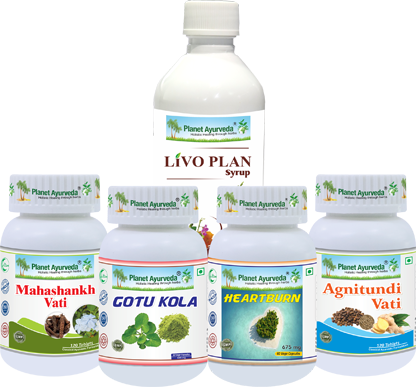
Planet ayurveda is the leading herbal manufacturing unit that deals with production of best herbal products. These products are 100% pure and are totally vegetarian. The manufacturing is internationally certified and is done using standardized extracts of potential herbs. The products offered by planet ayurveda for liver hemangioma are:

  1. Mahashankh Vati
  2. Agnitundi Vati
  3. Livo Plan Syrup
  4. Heartburn Capsules
  5. Gotu Kola Capsules


Liver-hemangioma

Treatment of Liver Hemangioma

1. Mahashankh Vati

This tablet is having amazing results in conditions like indigestion, acidity, pain in abdomen, nausea and vomiting. It also behaves as a deepana formulation, which increases your appetite. The formulation contains herbs like Pippali (Piper longum), Chitraka (Plumbago zeylanica), Danti (Baliospermum montanum) and some more.  These all herbs together help in pacifying the vitiated dhatus.

Dosage: 2 tablets twice a day after meals with Lukewarm water.

2. Agnitundi Vati

Agnitundi vati also behaves as a deepana formulation and also helps in relieving abdominal pain. It enhances the digestive fire by reducing gastric secretions. It is also very useful in bloating and flatulence. Agnitundi vati contains herbs like Ajmoda (Apium graveolens), Amalaki (Emblica officinalis), Haritaki (Terminalia chebula), Bibhitaki (Terminalia bellerica), Sajjikshara (natural sodium carbonate) and many more. These all herbs play a very important role in subsiding the hemangioma by stabilizing the digestive fire.

Dosage: 2 tablets twice a day after meals with Lukewarm water.

3. Livo Plan Syrup

The livoplan syrup enhances the liver metabolism and also eliminates the toxins that cause harm to the liver. It helps in regeneration of liver cells.the decoction is made using potential herbs like Kalmegh (Andrographis paniculata), Bhumi amla (Phyllanthus niruri), Ghrit kumari (Aloe barbadensis), Kasni (Cichorium intybus) etc. These all herbs work potentially and protect the liver and its normal functioning.

Dosage: 2 spoons twice a day after meals with Lukewarm water.

4. Heartburn Capsules

These capsules work wonderfully on stubborn acidity. They work by neutralizing the excessive acid in the stomach and thus balance the digestive fire.  These capsules contains Praval pishti (Coral compound), Akik pishti (Agate compound), Jawar mohra pishti, Kamdudha ras, Mukta pishti (Pearl compound) and Giloy satva (Tinospora cordifolia).

Dosage: 1 capsule twice a day after meals with Lukewarm water.

5. Gotu Kola Capsules

The gota kola capsules are the patent product of Planet Ayurveda and have great impact in conditions like liver hemangioma. The capsules contain standardised extract of Gotu kola (Centella asiatica) and do not have any side effects. These capsules are free from chemicals, fillers, adulterants, flavouring agents and any type of additives. Gotu kola is a very good herb which is having its impact on the entire body, most of the vital organs like liver, kidney and heart. These capsules can be given to children as well as adults and in both of the genders as well. The product is totally vegan and is also helpful in boosting brain power.

Dosage: 1 capsule twice a day after meals with Lukewarm water.

Contact Planet Ayurveda to provide you the costing / ordering and delivery information at – costing.planetayurveda@gmail.com or call at +91-172-5214040 Or Check Website – www.PlanetAyurveda.com

Conclusion

The liver hemangioma is a rare disorder and is non cancerous. Although it can be troublesome when ignored for long or grows really fast. Such conditions are easily manageable if given attention on time. The medications offered by planet Ayurveda are best for the management of this condition as they cause no side effects and are easy to consume. Herbal medications have very good results in such conditions. In case of any query visit www.PlanetAyurveda.com

Yakrit Plihantak Churna Regulates TNF-Alpha & IL1-beta and Reduces Hepatic Inflammation

Overview

As the Ayurveda system of medicines is the oldest and natural medicinal system, a large number of chronic diseases can be treated with Ayurvedic medicines. Ayurvedic medicines are made up of natural herbs only which treat the root cause of the disease in a natural way without showing any side effects. From one of the dreadful disorders, hepatic inflammation is one and affecting a large portion of the population. But to treat this, Yakrit Plihantak churna is used and very positive results of this herbal remedy are observed. In this article, we will study about the disorder hepatic inflammation and how Yakrit Plihantak churna provides relief from this condition.

What Is Hepatic Inflammation?

Hepatic or Liver inflammation can be defined as the reaction occurring after attack by a disease-causing substance or microbes on liver cells. It affects the various digestive functions along with some other activities occurring in the liver and makes the patient uncomfortable due to inflammation. Major functions performed by the liver includes production of bile for converting food into energy, production of hormones, regulating fat storage, cholesterol generation, purifying the blood and excreting toxins from the body including alcohol and drugs. But due to hepatic inflammation, all these activities got disturbed.

The term “Hepatitis” is considered for inflammation of the liver. Most types of hepatitis occur from viral infection and sometimes by auto-immune disorders hat affect the body’s immune system which further begins to attack liver cells and cause inflammation in the liver.

hepatic inflammation

Signs and symptoms observed in the patient of Hepatic inflammation include

  1. Yellowness of the eyes and skin
  2. Intermittent vomiting
  3. Nausea
  4. Pale stool color
  5. Dark urine color
  6. Itchy skin
  7. Swelling in the ankles and legs
  8. Pain and swelling in the abdominal area

What Is Tnf-Alpha?

TNF-alpha stands for Tumor necrosis factor-alpha. It is a cytokine or we can describe it as a small protein brought in use by the body’s immune system for passing signals through the cells. When an infection is detected by the macrophages (certain white blood cells), secretion of TNF is done to alert various other cells of the immune system and various tissues from being infected. This mechanism results in inflammation in the whole body.

When an infection or disease starts to develop in the liver cells, inflammation in the liver is done by TNF-alpha. This inflammation makes the patient troublesome in doing daily routine activities. TNF-alpha is a necessary body compound which protects the other body organs by alerting them but its way of working is found to be annoying to the body. Meanwhile, we can say that inflammation is considered as the good sign of the health of the immune system and shows that the body’s immune system is working wisely.

What Is Il 1-Beta?

IL 1-beta implies Interleukin 1-beta, also recognized as lymphocyte activating factor, mononuclear cell factor, leukocyte endogenous mediator or leukocytic pyrogen. Basically it is a cytokine protein which is encoded by IL1B gene in the human body. IL 1-beta is a part of the interleukin 1 family of cytokines. This cytokine is secreted by stimulated macrophages as a proprotein which further gets converted into an active state by caspase 1 (CASP1/ICE). This cytokine is considered as an essential mediator of the inflammatory response and plays an important role in multiple cellular functions such as cell proliferation, apoptosis and differentiation. This cytokine does the enhancement of COX-2 (cyclooxygenase-2) enzyme in the CNS (central nervous system) which contributes to inflammatory pain. When the infection begins to rise inside the liver cells, the IL 1-beta begins to protect cells and results in inflammation.

Yakrit Plihantak Churna By Planet Ayurveda

Yakrit Plihantak churna prepared by Planet Ayurveda is a well known herbal formulation for its positive impact on the liver and enhance its health. This churna reduces hepatic inflammation as well as treats a variety of diseases associated with the liver. Yakrit Plihantak churna detoxifies the liver and restores its health. Along with that, hepatic inflammation is managed and reduced by this churna which provides the relief to the patient.

This churna is processed with eight herbs obtained from the nature of God. Thus, we can say that one churna consists of the potency of eight herbs. All these herbs are used by extracting them through a standard procedure and only high quality extracts are used in preparing this churna under the guidance of expert Ayurvedic doctors who ensure this churna is 100 percent natural. No preservative, chemical, color, additive, binder, starch or any chemical material is utilized in this churna. Thus, no side-effect will be given to the patient who is consuming Yakrit Plihantak churna, whether he is a child, an adult or an elder. This churna is totally safe for consumption by any age grouped person.

Yakrit Plihantak Churna

hepatic inflammation

Herbs present in Yakrit Plihantak churna work in a synergistic manner to reduce inflammation in the liver.

These Herbs are

  1. Bhumi Amla (Phyllanthus niruri)
  2. Katuki (Picrorhiza kurroa)
  3. Makoy (Solanum indicum)
  4. Punarnava (Boerhavia diffusa)
  5. Kalmegh (Andrographis paniculata)
  6. Kaasni (Cichorium intybus)
  7. Sharpunkha (Tephrosia purpurea)
  8. Bhringraj (Eclipta alba)

How Yakrit Plihantak Churna Reduces Hepatic Inflammation?

Yakrit plihantak churna is very beneficial in reducing hepatic inflammation due its properties possessed by various herbs present inside the churna. All these herbs are rich sources of various health beneficial properties that provide nourishment to the liver and treat the multiple diseases of the liver. The role of herbs in maintaining the health and reducing hepatic inflammation is as follows:

1. Bhumi Amla (Phyllanthus niruri)

Multiple medicinal properties are present in Bhumi Amla herb which makes it capable of managing various health issues. Hepatoprotective properties, antioxidant properties, antiviral properties, etc are present in this herb. It regulates the functioning of Tnf-alpha and IF-1 beta. Hence reduce the hepatic inflammation.

2. Katuki (Picrorhiza kurroa)

Active constituents present in the roots of Katuki are picrorrhizin (a bitter ingredient) 15 %, cathartic acid 9%, glucose and wax in small quantities. These chemical constituents improve the bilous flow and prevent the deposition of fat and bile inside the liver cells. It reduces the risk of liver disease and maintains its normal functioning.

3. Makoy (Solanum indicum)

Makoy herb used in the Yakrit Plihantak churna consists of diosgenin, epicatechin, solasonine, alpha, glycosides, rutin, naringenin, gallic acid, sapogenin, etc. These chemical constituents provide the property of antidiabetic, antibiotic, antiseptic, anti-inflammatory, diaphoretic, etc. Hepatic inflammation is reduced to a great extent by this herb.

4. Punarnava (Boerhavia diffusa)

Punarnava is a rich source of nutrients and bioactive substances which are beneficial for the overall health. Sodium, calcium, vitamin c, iron, oleanolic acid, hypoxanthine, boeravinone A to F, serratagenic acid, etc are found in this herb. Punarnava improves the body metabolism and improves the functioning of the liver.

5. Kalmegh (Andrographis paniculata)

The whole part of the Kalmegh herb contains chlorophyll and kalameghin in large quantities which is used to treat diseases developed through imbalance in Pitta and Kapha dosha. This herb is used as liver stimulant, digestion enhancer and in prevention of liver and spleen enlargement. Beyond this, Kalmegh improves blood metabolism, treats jaundice, constipation, diarrhea and enhances liver health. TNF alpha and IL 1-beta are successfully managed by this herb and hepatic inflammation is prevented.

6. Kaasni (Cichorium intybus)

Being a cholagogue, appetizer, and liver stimulant, Kaasni treats the health issues generated by impaired agni, liver dysfunctions, and jaundice. This herb is also used in general debility, pitta induced disorders, burning sensation and fever.

7. Sharpunkha (Tephrosia purpurea)

Sharpunkha herb’s nature is to optimise the secretion of bile and prevents the accumulation of fat as well as bile inside the liver cells which is the major cause of liver disease. The healthy condition of the liver is maintained by this herb due to its anti-toxic, diuretic and antipyretic properties.

8. Bhringraj (Eclipta alba)

Large quantities of resins and ecliptin are present in this herb. That is why it is processed in the Yakrit Plihantak churna. It is a strong liver stimulant, and shows its main action on the liver and the spleen. It provides protection to the liver and stimulates lipotropic activity which increases the cutdown of the fat and prevents its deposition in the liver. Thus, decrease the hepatic inflammation.

Conclusion

After reading and understanding this article, we can say that Yakrit Plihantak churna is an effective herbal remedy to overcome the disorders of liver and improve the life-span of the liver. This churna is totally natural and doesn’t possess any side-effects of the patient’s body.