Category: Heart Health

Natural Cure For Arrhythmogenic Right Ventricular Cardiomyopathy (ARVC)

Abstract

Pain, itching, discolouration, and fatigue, all are calls for help from our bodies. Our bodies let us know that we have a threat inside by exhibiting symptoms. Imagine if the body skips this. What will happen? We will never know the disease progressing into a fatal stage, especially when a disease is slow progressing.  The body adapts or compensates for the loss of function till it is unable to manage the loss anymore. And the heart is an organ we cannot afford to be in the dark about its state, but we are going to tell you about one such disease which can cost a person’s life even before they know they have a disease inside them!

arrhythmogenic right ventricular cardiomyopathy

An introduction to Arrhythmogenic right ventricular cardiomyopathy (ARVC)

A condition that damages the cardiac muscles (Myocardium). The myocardium gradually deteriorates over time, resulting in an irregular heartbeat (Arrhythmia). Due to its slow progressing nature, even when the damage is fatal, symptoms may not be exhibited and the risk is that the person will die suddenly with no warning signals.

Symptoms

ARVC is asymptomatic in the early stages which put the person at risk of sudden death, especially during strenuous exercises. If symptoms are shown, they mostly are palpitation, light-headedness and fatigue.

ARVC can cause shortness of breath and abnormal swelling in the legs or abdomen in the long term. Strenuous exercise puts pressure on the fragile bond between heat muscles and the breakdown process is accelerated. If the myocardium becomes severely damaged, it can lead to heart failure.

Cause

Error in genes that instruct the formation of desmosomes (a factor that binds the myocardium) cause the links between muscle fibres to be fragile leading to their detachment from each other and cell death.

Diagnosis

  • Medical history
  • physical exam
  • Tests like echocardiogram, electrophysiologic testing, Holter monitor, cardiac MRI, and/or cardiac CT scan

Abnormal function of the right ventricle, Fatty or fibrous-fatty infiltration of the right ventricle myocardium, Abnormal ECG, Arrhythmias especially with exercise, Family history of ARVC are some of the sure signs of this diagnosis.

Treatment

The treatment options are symptomatic and supportive as a definite cure is not yet found. Antiarrhythmic drug therapy is widely used, if this option fails, then the patient is treated with radiofrequency ablation. The risk of sudden death is prevented by an implanted defibrillator (ICD). Patients are advised about managing strenuous activities like sports and exercise.

ARVC and Ayurveda

Hridroga is a major chapter in classics. The heart is told as one of the Trimarmas. In the case of an ARVC, the myocardium is affected which is considered to be derived from mamsa dhatu (muscle tissue) and can be treated in terms of dhatu kshaya (depletion of tissues), mamsa dhatu dhusti (vitiated muscle tissues) and hridroga (heart disease).
A hereditary condition cannot be totally cured but through Ayurveda, you can effectively manage it. The treatment focuses not only on improving the person’s lifespan but also on providing the best possible quality of life. And for this, you should be in the best hands!

Planet Ayurveda is a world-renowned Ayurvedic pharmaceutical company with a storehouse of elixirs from both Ayurveda classics and our creation. Planet Ayurveda has a team of great doctors that can help you choose the most suitable medicines for your conditions and needs. Every medicine we provide to our customers is carefully made with handpicked raw materials. All the medicines we manufacture are 100% vegetarian and chemical-free.

Here are some of our medicines that will benefit your heart!

  1. ARJUNA CAPSULES
  2. ARJUN TEA
  3. TOTAL HEART SUPPORT
  4. BRAHMI VATI
  5. HRIDAYARNAVA RASA

Product’s Description

1. ARJUNA CAPSULES

Arjuna capsules contain standardised Arjuna extract (Terminalia arjuna). The pure and herbal extract of arjuna, which contains polyphenols, alkaloids, glycosides, and other phytonutrients, has been shown to have an antioxidant impact and aid in the relief of inflammation and other pathologies. It serves as a replenishing agent for your heart and aids in its rehabilitation.

Dosage: Consume 2 capsules twice daily with plain water after meal.

2. ARJUN TEA

It is a natural and herbal alternative to regular tea. Arjun tea is made with arjuna (Terminalia arjuna), punarnava (Boerhavia diffusa), two species of elaichi, and other herbs. Including this unique tea, which is rich in antioxidants, in your daily routine will help you recover faster. This is a simple addition to your diet that is quite beneficial for your recuperation.

Dosage: Consume 1 cups, twice daily after meal.

3. TOTAL HEART SUPPORT

These are polyherbal capsules containing Arjuna (Terminalia Arjuna), Brahmi (Bacopa monnieri), Shankhapushpi (Convolvulus pluricaulis), and Ashwagandha (Withania somniferum). This mixture of extracted pure medicinal herbs imbued with steroids, withanolides, alkaloids, and other compounds can aid in your recovery by strengthening cardiac muscles and facilitating healthy blood flow into your heart.

Dosage: Consume two capsules twice a day with plain water after meal.

4. BRAHMI VATI

This tablet is a fusion of herbal and mineral drugs consisting of Brahmi (Bacopa Monnieri), Shankhapushpi (Convolvulus pluricaulis), Vacha (Acorus calamus), Maricha (Black Pepper-Piper nigrum), Gojihva (Onosma bracteatum), Swarna Makshika Bhasma, and Ras Sindoor (Purified Mercury and Sulphur). A perfect blend to reinstall normal heart function and slow down the breakdown process.

Dosage: 1 tablet twice daily for best results after meal.

5. HRIDAYARNAVA RASA

A poly-mineral capsule containing Shuddha Parad (purified mercury), Shuddha Gandhak (purified sulphur), Tamra Bhasma (purified copper dust).  A rasaushadhi that is capable of creating miraculous recovery in a short period of time. This medicine is undoubtedly an elixir for any conditions that affect the heart.

Dosage: 1 tablet chewed twice daily after meal.

Contact my assistant to provide you the costing / ordering and delivery information at – costing.planetayurveda@gmail.com or call at +91-172-5214040 Or Check Website – www.PlanetAyurveda.com

Conclusion

Now let’s fight back against what is attempting to defeat us! It is not our fault that we have a genetic disorder. It happened on its own, and we are still experiencing the consequences. It does not, however, have to make your life a living hell. Our forefathers compiled all of their pure wisdom into a great science, and as long as we have the power of that knowledge, we can effectively fight any disease, labelled or not. We hope to assist you in your recovery as soon as possible. If you want more help, please contact Planet Ayurveda at herbalremedies123@yahoo.com or visit our Mohali clinic. For more details of our products check out our website www.planetayurveda.com
How to Balance Pitta Dosha with Ayurveda

ABSTRACT

Doshas are the humor and elements of the body which are responsible for a person’s physiological, mental and emotional health. Each one of these doshas have their own respective functions in our body. These doshas are Vata, Pitta and Kapha. Where vata represents the movement and nervous system, pitta represents digestive elements or juices and kapha ensures the lubrication of joints. The imbalance in any of these elements will deteriorate one’s health and give rise to various health conditions. In this article we will discuss the pitta dosha and how it can be managed using various ayurvedic herbs.

INTRODUCTION

Pitta dosha is generally said to be associated with the digestion and metabolism where pitta works by its properties of ushna(hot) and tikshna by initiating enzyme secretion. It has other properties according to the properties of their subtypes like ranjaka (coloring), bhrajaka, sadhaka, pachaka and alochaka pitta. Where pachaka pitta refers to digestion and this form of pitta exists primarily in the stomach and the intestine. Each one of them possesses different properties. Ayurvedic medicine is based on the idea that the world is made up of five elements- akash (space), vayu (air), agni (Fire), jala (water) and prithvi (earth).

A combination of each element results in three humors or doshas vata, pitta and kapha which are responsible for a person’s physiological, mental and emotional health. Each and every person has a unique ratio of each dosha if a person is having pitta dosha in predominance while others may be mostly of vata and kapha dosha. Balance of all three doshas is adequate to maintain a healthy mind and body balance. As per the quotation samdoshas samagnisch sama dhatu mala kriya prasantamindriya mana swasth ityabhidhiyata. If our body is in proper balance with the proportion of doshas, agni and dhatu then the patient is said to be in a state of physical, social and mental well being.

pitta dosha

Place of pitta dosha

The important site and location of the pitta dosha is as follows-

  • Sweda- rasa dhatu end product of food digestion
  • Lasika- lymph
  • Rudhira- blood
  • Amashaya- small intestines are sites of pitta.

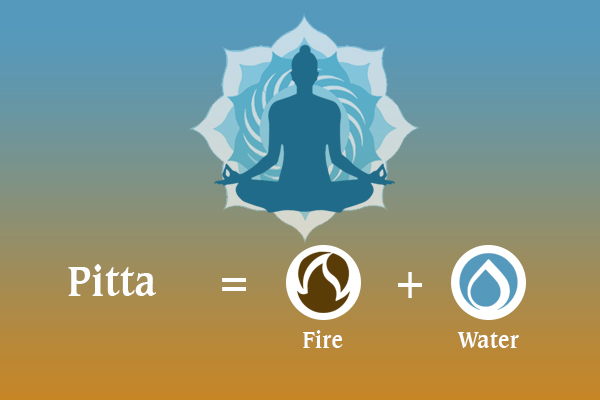
Pitta dosha is based on fire and water. It is commonly described as ushna(hot), laghu(light), tikshan(sharp) and sara(mobile). Grisham ritu or summer season is known as the pitta season. People with pitta dosha have intelligence, self master skills, good metabolism and healthy skin and hair. All metabolic activities, appetite, hunger, color, complexion and body’s circulation are dependent on pitta dosha. When pitta is out of balance then the body may lead to many diseases like inflammation, acne and acidity.

SUB-TYPES OF PITTA DOSHA

TYPE OF PITTA DOSHA LOCATION AND   FUNCTION
Ranjaka Located in the liver and spleen, it is responsible for converting rasa dhatu into rakta dhatu
Pachaka Located in the stomach and intestine, it controls the digestive system
Sadhaka Located in the head and heart. It attends mental functions such as knowledge and intelligence
Bhrajaka Located in the skin, it gives color and complexion to the skin
Alochaka Located in the eyes and helps in vision

Food to eat in pita

Pitta is said to be aggravated by the diet rich in rasa like amla (sour), lavan (salty) and katu (pungent) and is mitigated by madhura (sweet), tikta (bitter) and kashay (astringent) rasa. So, people having a pitta body type should refrain from having a diet rich in rasa amla (sour), lavan (salty) and katu (pungent) like grapes, papaya, onions, eggplant, almonds and various other things.

FOOD TO CONSUME IN PITTA BODY TYPE FOOD NOT TO CONSUME IN PITTA BODY TYPE
Sweet and bitter vegetables like celery, carrots, cucumber and cabbage. Spicy hot food, soy sauce, urad dal and things having salty and sour content.
Fruits like sweet ripe oranges, pear, bananas, melons and mangoes. Cashew, sesame seeds, peanuts, egg yolk and thyme.
Herbs and spices like black pepper, cumin, cilantro and turmeric. Honey, jaggery and white sugar. Spices like garlic, cloves, mustard seeds and hing.

Summer is said to be the season of pitta which is a combination of fire and water elements, pitta has the characteristics of being hot. When there is excess pitta in the body you may experience the following:-

  1. Feeling of heat generation in the body.
  2. Acid reflux
  3. Nausea
  4. Diarrhea
  5. Anger and hot flashes
  6. Excessive sweating
  7. Foul body odor
  8. Irritability
  9. Insomnia
  10. 10.Inflammation of the joints

According to ayurveda due to the inconsistency of them chronic diseases occur. There are 40 types of diseases caused by pitta dosha.

Among the forty nanatmaja vyadhi of pitta dosha some of the diseases are given below:

  1. Daha (burning)
  2. Amlaka
  3. Antar daaha (burning sensation inside the body)
  4. Ati sveda (excessive sweating)
  5. Ushmaadhikya (excessive temperature)
  6. Kaamla (jaundice)
  7. Jivadana (hemorrhage)
  8. Tamah pravesha (fainting)

Symptoms of Pitta Imbalance

  1. Daha- burning sensation
  2. Ushna – heat
  3. Sweda- perspiration
  4. Kandu- itching
  5. Kotha- putrefaction
  6. Srava- discharge
  7. Raaga – redness

General Treatment for pitta diseases

  1. Pita is treated with herbs having Madhura, tikta and kashaya rasa.
  2. Herbs having cool potency
  3. Virechana- purgation
  4. Parisheka- effusion
  5. Abhyanga- massage with herbs having pitta-pacifying qualities.

Importance of virechana in pitta imbalance

Purgation or virechana is the treatment for curing the pattika disease after administration virechana eliminates vitiated pitta from its root from the level of intestines. It also alleviates the entire vitiated pitta from other parts of the body.

AYURVEDIC TREATMENT

In ayurveda shamana is done by using madhura(sweet), tikta(bitter) and kashaya(astringent) rasa. The goal of treatment is to cleanse the body of undigested food. These cleansing mechanisms are described among panchkarma to maintain balance in the body.

Panchkarma includes five types of shodhana karmas.

1. VAMAN

  • Vaman is done to detoxify vitiated kapha dosha.

2. Virechana

  • Virechana is done to detoxify vitiated pitta dosha.

3. Basti

  • Basti is done to detoxify vitiated vata dosha.

4. Nasya

  • Nasya or nasal administration of medicated oil and herbs are used for relieving doshas from the head.

5.Raktamokshana

  • Raktamokshana is done to expel out vitiated rakta dosha.

FORMULATIONS TO BALANCE VITIATED PITTA DOSHA.

  1. Shadanga Paniya
  2. Ushirasava
  3. Praval Panchamrit ras
  4. Amalaki Rasayan
  5. Kamdudha ras

ASANAS TO MAINTAIN HEALTHY PITTA BALANCE

  1. Dhanurasana
  2. Bhujangasana
  3. Ardha matsyendrasana
  4. Setu bandhasana
  5. Ushtrasana

Some effective herbs by planet ayurveda to balance pitta dosha

1. Pitta Balance

This herbal formulation is made up of rasaushadhi like jahar mohra pishti, kaharava pishti, akik pishti, mukta pishti and giloy satva(Tinospora cordifolia) herb. Akik pishti and mukta pishti are helpful in balancing excess acid in the stomach and provides immediate relief from acidity and heartburn but also improves digestion and reduces constipation.

Dosage– 1 to 2 capsules twice daily with water after a meal.

2. Panchatikta kwath

This formulation is made of guduchi(Tinospora cordifolia), nimba(Azadirachta indica), patola(Cucumis acutangulus), kantakari(Solanum virginianum) and parpata(Fumaria indica) etc. which is useful in reducing inflammation and fever like conditions.

Dosage– 2 tsp before food with equal amount of water

3. Shankh bhasma

It is made of the conch or sea shell for managing conditions like acid reflux, also called GERD. Sankha bhasma has a kshar (alkaline) property which helps in neutralizing the excess acid production. It works by its sheeta (cold) property. It is useful in controlling acidity, abdominal pain and ibs like condition.

Dosage– 125-250 mg twice a day

4. Praval panchamrit ras

This herbal formulation is in the form of tablet or powder formed by Mukta bhasma, shankh bhasma, shukti bhasma, praval bhasma and the latex of arka. It has a calming effect on curing bloating, anorexia, ascites, indigestion and gastritis like conditions and is helpful in balancing vata and kapha dosha

Dosage-2 tablets  twice daily with honey, ghee and milk after a meal.

CONCLUSION

Pitta dosha is one of the three doshas of our body which has its own natural properties and functioning in the body. When these doshas get out of balance they cause different health conditions which are aggravated by the consumption of rasa opposite to that of their nature. Pitta dosha is similarly maintained by giving up on certain items leading to its aggravation like amla(sour), lavan(salt) and katu(pungent) rasa and also by shodhana(detoxification) and shamna(pacification).