Category: Heart Health

Ayurvedic Treatment of Myxomatous Mitral valve

Myxomatous Mitral valve

Abstract

Our heart has four chambers. Two upper chambers are called the right and left atrium while the lower two chambers are called the right and left ventricles. These four chambers work together to allow the proper functioning of the heart. Any deformity in any of these four chambers because of any reason can cause serious complications. One such complication/disorder is the Myxomatous Mitral valve. It can also be pronounced as Barlow syndrome, Billowing mitral valve syndrome, Click-murmur syndrome, Floppy valve syndrome, and mitral prolapse. In this article, we will discuss all possible causes of Myxomatous Mitral valve and its ayurvedic treatment.
Myxomatous Mitral valve

Introduction

The atrium and ventricle on the right are separated by the tricuspid valve and on the left by the mitral valve (bicuspid valve). Myxomatous Mitral valve is a heart valve disorder (mitral valve disorder) that can be due to prolapse and improper closure of valve flaps. The valves open to let blood flow from the upper chambers to the lower ventricles. In between heart contractions the valves open through flaps (leaflets) that allow passage of blood through them and no blood can pass to ventricles from these flaps are closed. If leakage of blood is present, it may indicate Myxomatous Mitral valve disorder. It may cause a backward flow of blood to the atrium during contractions. Surgery may be recommended if treatment is not done at the proper time and conditions worsen to severe regurgitation.

Ayurvedic Aspect

The heart is called ‘Hridya’ and its disorders are called “Hridya Rogas” in Ayurveda. Valves disorders can be described and correlated with ‘Kabhatika Hridyaroga”. Rakta (Blood) and Kapha come together to arise Hridya. The main function of Hridya is to circulate Rakt (Blood) throughout the body. Heart contractions are influenced by Vata dosha and any disturbance in dosha balance along with dhatus (ras, rakt, mams, medah) dearth may lead to malfunctioning of the heart (valves). Continuous imbalance can further cause more damage to heart walls, valves, and arteries. Timely balancing of tridoshas and requirement of dhatus is fulfilled. For that purpose, Ayurveda recommends healthy diet plans, lifestyle modifications, along with herbal medications.

Causes

Due to a problem in the working of mitral valve flaps Myxomatous Mitral valve disorder occurs. The problem with the flap’s normal working can be due to various reasons

  • Prolapsed of valves
  • Overstretching of flaps
  • Heavy working men
  • Age of 50 years or more
  • Inherited

Associated with some autoimmune diseases

  • Muscular dystrophy
  • Grave’s disease (thyroid disorder)
  • Scoliosis

Symptoms

Myxomatous Mitral valve symptoms can vary according to the degree of valve prolapse in every person

  • Arrhythmia (irregular heartbeats)
  • Breathlessness
  • Dizziness
  • Difficulty in breathing during heavy work
  • Weakness/fatigue

Diagnosis

Tests are done to confirm the diagnosis

  • X-ray – chest
  • Echocardiogram
  • Electrocardiogram (ECG)
  • Exercise tests/ stress tests
  • Cardiac catheterization

Complications

Untreated heart valve disease can cause

  • Stroke
  • Heart failure
  • Mitral valve regurgitation
  • Blood clots
  • Cardiac arrest

Treatment

Most people with Myxomatous Mitral valve do not require any treatment because of their asymptomatic condition. But unidentified cases along with untreated cases may result in prolonged complications. Basic treatment methods for Myxomatous Mitral valve are

Medications

  • Beta-blockers
  • Antibiotics
  • Anticoagulants (blood thinners)
  • Antiarrhythmics (for heart rhythm)

In severe cases

  • Surgery – It may require the replacement or repair of heart valves.
  • Open heart surgery
  • Minimal invasive surgery

Herbal Remedies for Myxomatous Mitral Valve by Planet Ayurveda

Planet Ayurveda is a leading manufacturing company of various herbal medications with the best overall result for many years. This company is internationally certified and people worldwide are using these medicines. Their products are 100% vegetarian and are made from various potential medicinal plants. They strictly follow government guidelines for making their products the best. Planet Ayurveda provides a Heart Care Pack to treat the Myxomatous Mitral valve. It is the best treatment option with no side effects. Here are the further details about the working and efficacy of the product

Heart Care Pack

Ingredients list

  1. Arjuna Capsules
  2. Arjun Tea
  3. Total Heart Support
  4. Gotu Kola Capsules

Herbal Remedies for Myxomatous Mitral valve
Buy Now- Heart care pack

Ingredients description

1. Arjuna Capsule

These classical capsules are prepared from standard extracts of the herb Arjuna (Terminalia arjuna). Arjuna is a drug of choice for heart diseases. It maintains healthy blood cells and their proper circulation in heart vessels. Arjuna capsules manufactured by planet Ayurveda are purely made from extracts of Arjuna. Arjuna balances tridoshas and also maintains accurate levels of cholesterol in the body. It also strengthens heart muscles and enhances blood-pumping activity.

Dosage – Have 1 capsule twice daily with water.

2. Arjun Tea

This herbal tea contains herbal powder of the marvelous herb Arjuna along with Punarnava (Boerhavia diffusa), Pipal Tvak (Ficus religiosa), Elaichi (Elettaria cardamomum), and Dalchini (Cinnamomum zaylanicum). This tea is rich in antioxidants are improves metabolism. It provides nutrition to the heart in a very natural way. Regular consumption of tea maintains heart health and protects it from any adverse effects. It supports healthy heart vessels and maintains accurate blood flow through them. It tones up the heart’s arterial system. There are no added chemicals, preservatives, or caffeine in the tea. It is a pure herbal tea and excellent for heart patients.

Dosage – Drink 1 cup of this tea daily.

3. Total Heart Support

These polyherbal capsules contain standard extracts of the following four herbs – Arjuna (Terminalia arjuna), Brahmi (Bacopa monnieri), Shankhpushpi (Convolvulus pluricaulis), and Ashwagandha (Withania somnifera). All these four ingredients have various benefits. Together use of these herbs in these capsules enhances their working actions and boosts immunity. They together work on the heart, brain, and overall on all important organs of the body and enhance physical and mental performance. They reduce stress, anxiety, high blood pressure, high cholesterol, etc. Also helps to prevent various heart problems such as angina and heart attack.

Dosage – Have 2 capsules twice daily.

4. Gotu Kola Capsules

These capsules are prepared from the herb Mandookparni (Centella asiatica) also called gotu kola. These capsules are pure and free from chemicals. It has main actions on the brain as well as the heart. Proper blood flow is maintained by these capsules. It stabilizes plaques in the blood and thus reduces the chances of blood clots and associated heart or brain problems.

Dosage – Have 1 capsule two times with water every day.

Conclusion

Eating a healthy diet, proper exercise/yoga, and following dincharya (Proper daily routine) helps you to remain healthy and prevent heart problems according to our Vedas. Still, any heart condition if recorded may be healed with ayurvedic drugs and therapies. Untreated Hridyarogas (Heart/valve diseases) for a long period can lead to shosham and vaikalyam (blockage or failure) of Heart valves. For proper and safe recovery from such heart problems visit us at www.planetayurveda.com.

SIGNIFICANCE OF HS-CRP TEST. HOW CAN AYURVEDA HELP?

ABSTRACT

Despite prevalence of traditional Cardiovascular risk factors, affordable therapies, substantial differences in cultures, ethnicities, habits, the heart diseases remain the major cause of death in developing and developed countries. Research conducted for “high-sensitivity C-reactive protein” describes differences in cardiovascular mortality in combination with epidemiology, prevalence, race, gender, and ethnicity. In this article we will put light on Introduction of hs-CRP test, Procedure of hs-CRP test, Indications of hs-CRP test, When hs-CRP test is required?, Ayurveda and hs-CRP, Herbal remedies for hs-CRP and Heart disease at Planet Ayurveda and Conclusion.

HS-CRP and Heart Disease

INTRODUCTION OF HS-CRP TEST

HS-CRP appears to be one of the best ways to identify people at risk of Cardiovascular Diseases, independent of their epidemiology, prevalence, race, gender, and ethnicity. Studies have shown that a single elevated hs-CRP level may predict a Myocardial Infarction, Stroke, Peripheral Vascular Disease, and sudden cardiac death. Coronary artery disease is a leading cause of global death and disability and hs-CRP is considered a valuable predictor of CHD. C – reactive protein is made by the liver and is involved in the activation of complement, enhancement of phagocytosis, and detoxification of substances released from damaged tissue that circulates in the blood, and its level increases when there is inflammation in the body and is known as an “acute phase reactant”. The increase of LDL in the body causes a coating in arterial walls and also damages them which causes inflammation and the body tries to heal by sending a response team of proteins of which CRP is a component. A simple blood test can detect CRP levels in your body.

A HS-CRP is more sensitive than a standard CRP test and can detect smaller increases of CRP in the body and can be used in combination with other tests such as lipid panel or other cardiac markers to provide added information about the risk of cardiovascular disease.

This Test is an Immunoturbidimetric Assay with Two Ranges

  • Serum – 0.25-20 mg/L
  • Whole blood – 0.50-20 mg/L

The Test Duration takes about 3 minutes for serum and 4 minutes for Whole Blood

Here are What the Result means

  • hs-CRP < 1.0mg/L – low risk of CVD,
  • hs-CRP = 1.0mg/L – moderate risk of CVD
  • hs-CRP > 1.0mg/L – high risk of CVD.

THE PROCEDURE OF THE HS-CRP TEST

HS-CRP test is Performed at a Healthcare Facility and the Following Steps are Faaollowed

  • At first, the vein will be located in the patient’s arm and blood will be drawn by a healthcare professional.
  • An alcohol wipe will be used to clean the site of drawing blood.
  • Tourniquet will be placed on the upper arm making the vein more visible and easily accessible.
  • Blood will be drawn by the syringe after being placed in a vein and the blood sample tube will be connected to the needle and the sample will be collected.
  • Tourniquet and needle will be removed and a cotton swab will be applied to stop any further blood loss.
  • The results of this test will be available after a few days of sample collection.

CRP levels can vary and therefore it is necessary to check CRP twice (two weeks apart) to confirm the risk.

INDICATIONS OF THE HS-CRP TEST

HS-CRP test can be advised to

  • Bacterial or viral infections
  • In diagnosis of chronic inflammatory diseases
  • Irritable Bowel Syndrome
  • Heart disease risks
  • Second heart attack risks

Generally, experts recommend that this test should be used if the patient is at risk of developing heart disease in the coming 10 years.

WHEN HS-CRP TEST IS REQUIRED?

Individuals with very high CRP often have symptoms of acute infection and require hs-CRP test.  These include

  • High fever
  • Rapid heart rate
  • Uncontrollable sweating chills or shaking
  • Difficulty in breathing
  • Rash or hives
  • Parched lips, mouth, and skin
  • Dizziness or lightheadedness
  • Severe headache, body pain, stiffness, or soreness
  • Loss of consciousness

Some people with high CRP may have few or no symptoms, especially in the early stage of heart disease.

There are certain other conditions under which the interpretation of levels of CRP can become difficult. These include

  • Smoking
  • Sedentary life
  • Minor injuries or infections can conceal IBD or Diabetes.
  • Chronic Diseases
  • Oestrogen supplements
  • Taking Statins
  • Pregnancy

AYURVEDA AND HS-CRP

HS-CRP is a test advised in modern medicine whereas in Ayurveda diagnosis of heart disease can be made by trividha pariksha which includes darshan (inspection) which includes observing the patient, sparsh (palpitation) and prashna (history taking).

Dyslipidemia, inflammation, and immunity play important roles in CVD. Arogyavardhini Vati and Arjuna Powder have been used to treat heart diseases for ages.

A study was made at CGHS Ayurvedic Hospital, New Delhi in which Arjuna Powder (5g, BD) was prescribed for 3 weeks and then Arogyavardhini vati (500mg, BD) for 4 weeks and fall in CRP levels along with total cholesterol, LDL, TGL, and blood glucose were noted.

HERBAL REMEDIES FOR HS-CRP AND HEART DISEASE AT PLANET AYURVEDA

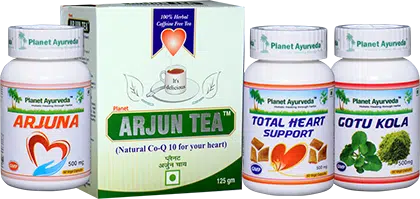
Planet Ayurveda has been providing 100% pure and chemical free and prepared following strict Ayurvedic principles from the last 20 years. All the medicines are GMP certified and are made from the best quality of herbs with ancient time tested formulas and enriched with wisdom from ages. Heart care pack with the best quality herbs prepared by experts at Planet Ayurveda is available to treat heart ailments and reduce hs-CRP levels. It is 100% pure and chemical-free and prepared following strict Ayurvedic principles. It includes:

Products List

  1. Arjuna Capsules
  2. Arjun Tea
  3. Total Heart Support
  4. Gotu Kola Capsules
    Herbal Remedies For HS-CRP TestHerbal Remedies For HS-CRP Test

Products Description

1. Arjuna Capsules

Arjuna Capsules prepared from Terminalia arjuna belong to the Combretaceae family and its bark and decoction are used in cases of Hypertension, Dyslipidemia, Angina pain, and Congestive Heart failure. The bark is having Astringent, expectorant, demulcent, styptic, cardiotonic, and antidysenteric properties and is used to cure Anaemia, ulcers, fractures, cardiomyopathies, diabetes, and Leucorrhea.

Dose – 1 capsule twice daily with plain water, after meals.

2. Arjun Tea

Arjun Tea Contains Terminalia arjuna, Boerhavia diffusa classified as “Rasayana” that helps in relaxing the muscles of the heart and Cinnamomum zeylancia acts as an anti-inflammatory, antimicrobial, anticancer, antimutagenic, anti-tyrosinase, and anti-diabetic.

Dose: – 1 cup daily.

3. Total heart Support

This herbal medicine is a combination of Terminalia arjuna as a major component of total heart support Withania Somnifera or Ashwagandha also known as “Indian winter cherry” or “Indian Ginseng” and Bacopa monnieri. It reduces Cortisol levels in the body and thereby lowering the risk of heart diseases.

Dose – 2 Capsules twice daily with plain water, after meals.

4. Gotu Kola Capsules

This is a capsules preparation which includes Gotukola (Centella asiatica or Mandukaparni) as its main ingredient.  This herb is of the Parsley family. It decreases swelling and BP.

Dose – 1 Capsule twice daily with plain water, after meals.

Contact Planet Ayurveda Support Team to provide you the costing / ordering and delivery information at – costing.planetayurveda@gmail.com or Call at 0172-521-4030 (India), +91-172-521-4030 (Outside India) or Whatsapp at (+91) 9915-593-604.

CONCLUSION

Doctors use the hs-CRP test to diagnose the risk of cardiovascular disease. The treatment for elevated CRP will be dependent on the cause. Adequate follow-up duration is required to rule out risk cut-off values for CVD in the Indian population. Following a healthy lifestyle and taking proper treatment can reduce the risk of developing cardiac diseases.

In case of any query related to your doubts, you can always connect with our experts at Planet Ayurveda.