Herbal Remedies of Excess Estrogen from the Female Body – Causes, Symptoms, Diagnosis & Treatment
Abstract
Female hormones play an important role in reproductive health, menstrual function, bone health, metabolism, mood and overall physiological balance. Estrogen is one of the principal female sex hormones and is essential for normal functioning of several organs and tissues. Problems arise when estrogen levels become disproportionately high in relation to other hormones or when estrogen exposure remains elevated for a prolonged period. High estrogen levels can occur because of increased estrogen production, altered hormone metabolism, obesity, certain ovarian conditions, reduced clearance through the liver, or exposure to external sources of estrogen. Symptoms can include heavy or irregular menstrual bleeding, breast tenderness, bloating, mood changes and other hormonal disturbances. Rather than attempting to completely eliminate estrogen, the appropriate objective is to restore hormonal balance and address the underlying cause. In this article, we shall discuss estrogen, factors associated with excessive estrogen exposure, its evaluation and management in the contemporary medicinal system, and the Ayurvedic approach to maintaining hormonal balance when estrogen is elevated.
Introduction
Estrogen is a group of hormones that includes estradiol, estrone and estriol. Estradiol is the predominant and most biologically active estrogen during the reproductive years. The ovaries are the principal source of estrogen before menopause, while adipose tissue becomes an increasingly important source after menopause. Estrogen supports the development and functioning of the female reproductive system. It contributes to follicular development, ovulation, endometrial growth, breast development, bone maintenance and several metabolic processes. The body continuously produces, transforms and eliminates estrogen. The liver plays an important role in metabolizing estrogen, while the digestive system participates in its elimination through bile and stool. Estrogen metabolism is therefore influenced by liver function, body composition, intestinal processes and hormonal activity. The phrase “excess estrogen” does not describe one single medical condition. Estrogen levels naturally fluctuate according to age, menstrual-cycle phase, pregnancy, menopause and hormonal medications. Consequently, treatment should be directed toward the underlying cause rather than simply attempting to reduce estrogen as much as possible.
What Causes Excess Estrogen in Women?
Several factors can contribute to increased estrogen exposure or an imbalance between estrogen and other reproductive hormones.
- Increased Estrogen Production : Certain ovarian conditions can increase estrogen production. Some estrogen-producing ovarian tumors are rare but important causes of unusually high estrogen levels.
- Obesity and Increased Aromatase Activity : Adipose tissue contains aromatase, an enzyme involved in converting certain androgens into estrogens. Increased adipose tissue can therefore contribute to greater estrogen production, particularly after menopause.
- Polycystic Ovary Syndrome : Polycystic ovary syndrome (PCOS) is associated with ovulatory dysfunction and hormonal imbalance. Irregular or absent ovulation can result in prolonged exposure of the endometrium to estrogen without the regular progesterone influence that follows ovulation.
- Exogenous Estrogen : Estrogen-containing contraceptives and hormone replacement therapy can increase estrogen exposure. The amount and type of hormone exposure differ considerably between preparations, so treatment decisions should be individualized.
- Reduced Hormone Clearance : The liver metabolizes estrogen into compounds that can subsequently be eliminated from the body. Conditions affecting hepatic function can influence normal hormone metabolism and clearance.
- Perimenopause : Hormonal fluctuations during perimenopause can produce significant variations in estrogen and progesterone. Symptoms do not necessarily indicate persistently high estrogen because hormonal levels can rise and fall considerably during this period.
Signs and Symptoms Associated with Estrogen Imbalance
The symptoms associated with estrogen excess or estrogen-progesterone imbalance are not specific to one condition. Common complaints can include:
- Heavy or prolonged menstrual bleeding
- Irregular menstrual cycles
- Breast tenderness or fullness
- Premenstrual symptoms
- Bloating and fluid retention
- Mood changes
- Headaches
- Changes in libido
- Difficulty maintaining a healthy body weight
- Menstrual abnormalities associated with anovulation
Persistent abnormal uterine bleeding deserves medical evaluation, particularly after menopause or when bleeding is unusually heavy or prolonged. Long-standing unopposed estrogen exposure is associated with endometrial hyperplasia and an increased risk of endometrial cancer.
How Is Excess Estrogen Evaluated?
A diagnosis should not be made solely on the basis of symptoms. Estrogen levels vary naturally throughout the menstrual cycle, so laboratory results need to be interpreted according to age, menstrual status, symptoms and the timing of testing. Medical evaluation can include:
- Detailed menstrual and reproductive history
- Medication and contraceptive review
- Physical examination
- Estradiol and other hormone testing when indicated
- Thyroid and metabolic evaluation when clinically appropriate
- Pregnancy testing in reproductive-age women when relevant
- Pelvic ultrasound for abnormal uterine bleeding or suspected ovarian pathology
- Endometrial evaluation when indicated by age, bleeding pattern or risk factors
The underlying cause determines the appropriate treatment. There is no universal requirement to “detox” or eliminate estrogen from the body.
Contemporary Management of Excess Estrogen
Management focuses on correcting the cause and reducing prolonged excessive estrogen exposure rather than eliminating estrogen completely.
- Healthy Body Weight : Maintaining a healthy body weight is important because adipose tissue participates in estrogen production. Weight management through balanced nutrition and regular physical activity can therefore contribute to healthier hormonal metabolism.
- Regular Physical Activity : Exercise improves metabolic health, supports healthy body composition and can assist with weight management. A combination of aerobic activity and resistance training provides a practical approach for most women.
- Dietary Pattern : A balanced diet containing vegetables, fruits, whole grains, legumes, adequate protein and appropriate dietary fiber supports metabolic and digestive health. Fiber also contributes to normal bowel function and fecal elimination of metabolized hormones.
- Limit Excessive Alcohol Consumption : Alcohol can affect hepatic metabolism and overall metabolic health. Limiting alcohol intake is therefore beneficial for women concerned about hormonal and liver health.
- Review Hormonal Medicines : Women taking oral contraceptives, hormone replacement therapy or other estrogen-containing medicines should discuss their symptoms and concerns with their healthcare professional. Hormonal medicines should not be stopped independently.
- Treat the Underlying Disorder : PCOS, thyroid disorders, ovarian disorders, obesity, abnormal uterine bleeding and other contributing conditions require condition-specific management.
Ayurvedic View of High Estrogen
Ayurveda does not describe “high estrogen” as an isolated laboratory diagnosis because modern reproductive hormones are not categorized in exactly the same manner as Ayurvedic concepts. An Ayurvedic interpretation focuses on the functional disturbance underlying menstrual and reproductive abnormalities. A suitable pathophysiological is Pitta aggravation with disturbance of Artavavaha Srotas (female reproductive channels). Pitta governs transformation, metabolism and physiological heat. Rakta (blood tissue) and Artava (menstrual and reproductive functions) have a close functional relationship in Ayurveda. Excessive Pitta can contribute to increased heat, inflammatory tendencies and disturbances in menstrual patterns. When Artavavaha Srotas become affected, abnormal menstrual flow, irregular cycles and other reproductive symptoms can develop. From this perspective, management focuses on Pitta-shamana (Pitta pacification), preservation of healthy Agni (digestive and metabolic function), proper elimination of metabolic waste and maintenance of reproductive health. Ayurvedic management should therefore be individualized according to Prakriti (individual constitution), Vikriti (current imbalance), Agni, bowel function, menstrual pattern and associated symptoms. The Ayurvedic approach emphasizes correction of the underlying functional imbalance instead of attempting to suppress one hormone directly. Pitta-pacifying dietary principles can be incorporated when Pitta aggravation is evident. Fresh vegetables, seasonal fruits, adequate hydration and moderate use of spices are generally preferable to excessive intake of very spicy, oily and highly processed foods. Regular meals, adequate sleep, physical activity and proper bowel habits also form an important part of maintaining metabolic balance. Ayurvedic herbs are selected according to the individual’s presentation. Herbs traditionally associated with liver function, digestion, menstrual regulation and female reproductive health can be incorporated when appropriate. The purpose is not to “block estrogen” but to support the physiological systems involved in hormonal balance.
Herbal Remedies for High Estrogen by Planet Ayurveda
Planet Ayurveda is an Ayurvedic wellness organization focused on making herbal healthcare accessible worldwide. Its formulations combine Ayurvedic principles with carefully selected herbal ingredients and standardized preparations. The range includes formulations directed toward digestive, hepatic, metabolic and female reproductive wellness. For women concerned about estrogen imbalance, Planet Ayurveda is pleased to present formulations that focus on areas closely connected with hormonal physiology, including liver health, digestion and female reproductive function.
Product list
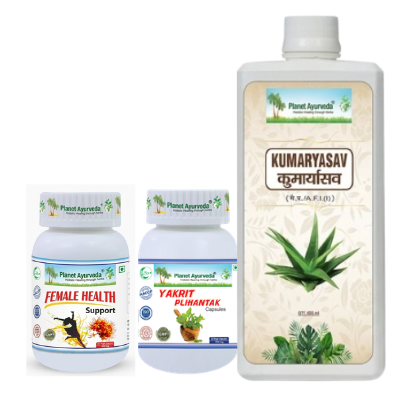
- Yakrit Plihantak Churna
- Female Health Support Capsules
- Kumaryasav
Herbal Remedies of Excess Estrogen from the Female Body

Product description
1. Yakrit Plihantak Churna
Planet Ayurveda’s Yakrit Plihantak Churna is a polyherbal Ayurvedic formulation for Yakrit (liver) and Pliha (spleen) health. The liver is an important organ in hormone metabolism, making healthy hepatic function relevant when discussing estrogen metabolism. The formulation contains Bhumi Amla (Phyllanthus niruri), Kalmegh (Andrographis paniculata), Bhringraj (Eclipta alba), Sharpunkha (Tephrosia purpurea), Kaasni (Cichorium intybus), Katuki (Picrorhiza kurroa), Makoy (Solanum indicum) and Punarnava (Boerhaavia diffusa). Bhumi Amla (Phyllanthus niruri) is known for its Pitta-pacifying and digestive properties. Its phytochemical profile includes lignans, tannins, flavonoids and other bioactive constituents that contribute to its antioxidant and hepatobiliary properties. Kalmegh (Andrographis paniculata) contains diterpene lactones, particularly andrographolide. The herb has antioxidant, inflammatory and hepatic effects. Bhringraj (Eclipta alba) contains wedelolactone and demethylwedelolactone along with other phytoconstituents. Bhringraj maintains normal functioning of Yakrit (liver). Sharpunkha (Tephrosia purpurea) contains flavonoids and other phenolic constituents. It is particularly helpful in Pliha (spleen) and hepatic functions. Kaasni (Cichorium intybus) contains phenolic compounds, inulin and sesquiterpene lactones. Its digestive, hepatobiliary and metabolic enhancing activities help in maintaining the healthy functioning of the liver. Katuki (Picrorhiza kurroa) contains iridoid glycosides, particularly picroside I and picroside II. The herb is known for its pitta pacifying properties. Punarnava (Boerhaavia diffusa) contains alkaloids, flavonoids and rotenoids, including punarnavine. It is recognized for its Shothahara (anti-inflammatory/anti-edema) and metabolic properties. The formulation therefore emphasizes healthy liver function, digestion and metabolism and normalises estrogen levels indirectly.
Dosage: 1/2 to 1 teaspoonful twice daily with plain water.
2. Female Health Support Capsules
Planet Ayurveda’s Female Health Support Capsules are formulated specifically around female reproductive wellness. The formulation contains Ashoka (Saraca indica) bark, Lodhra (Symplocos racemosa) bark and Shatavari (Asparagus racemosus) root. Ashoka (Saraca indica) contains flavonoids, tannins and other phytoconstituents and is an important Ayurvedic herb for female reproductive health and menstrual regulation. Lodhra (Symplocos racemosa) contains alkaloids, flavonoids and tannins helpful in conditions involving abnormal menstrual patterns and excessive menstrual flow. Shatavari (Asparagus racemosus) contains steroidal saponins known as shatavarins. It is classified as a Rasayana (rejuvenative) herb and is particularly associated with female reproductive and hormonal health. The combination addresses female reproductive wellness from an Ayurvedic perspective. It is especially relevant when menstrual irregularity, painful menstruation or heavy menstrual flow accompanies a broader hormonal imbalance. Its purpose is to maintain the healthy female reproductive function that gets imbalanced with high estrogen.
Dosage: 1–2 capsules twice daily with plain water after meals.
3. Kumaryasav
Kumaryasav is a classical Ayurvedic fermented formulation containing Gwar Patha (Aloe barbadensis) as its principal ingredient along with a broad combination of herbs that are helpful in digestive, hepatic, and reproductive health. Gwar Patha (Aloe barbadensis) contains polysaccharides, anthraquinone-related compounds and other phytochemicals. Aloe has digestive and metabolic functions. The formulation also contains herbs such as Shunthi (Zingiber officinale), Pippali (Piper longum), Kali Maricha (Piper nigrum), Dalchini (Cinnamomum verum), Laung (Syzygium aromaticum), Kutki (Picrorhiza kurroa), Mulethi (Glycyrrhiza glabra), Punarnava (Boerhaavia diffusa), Haritaki (Terminalia chebula), Bahera (Terminalia bellirica), Amla (Phyllanthus emblica), Lodhra (Symplocos racemosa) and several other ingredients. The combination is designed around digestion, metabolism and female reproductive wellness. From an Ayurvedic perspective, healthy Agni (digestive and metabolic function) is important for maintaining proper tissue nourishment and physiological balance. Kumaryasav therefore fits into a broader Ayurvedic approach in which digestive, hepatic and reproductive health are considered interconnected and manages normal levels of estrogen.
Dosage: 15–25 mL once or twice daily after food, or as directed by an Ayurvedic physician.
Conclusion
Estrogen is essential for female reproductive and systemic health, so the goal should never be to eliminate it completely. Problems arise when estrogen production, metabolism or exposure becomes disproportionate to the body’s requirements or when estrogen remains unopposed for prolonged periods. Contemporary management focuses on identifying the underlying cause, improving metabolic health, addressing obesity or PCOS when present, reviewing hormonal medicines and investigating abnormal menstrual bleeding appropriately. Ayurveda approaches the issue through functional balance, with Pitta aggravation and disturbance of Artavavaha Srotas (female reproductive channels) providing one useful framework for understanding certain menstrual and reproductive presentations. Management emphasizes Pitta balance, healthy Agni, appropriate elimination and maintenance of reproductive health. Planet Ayurveda formulations can be incorporated into an individualized Ayurvedic wellness approach focused on liver, metabolic, digestive and female reproductive health. These formulations should be viewed as part of a comprehensive regimen rather than as direct estrogen-blocking medicines.