Category: Irritable Bowel Syndrome

Raktapittakulkuthar Ras – Ayurvedic Remedy for Bleeding Disorders
bleeding disorders

ABSTRACT

Processed spicy-salty foods, pollution-induced heat, winter dryness, chronic stress, and vitamin K-deficient diets fuel the surge in Raktapitta cases nowadays, triggering sudden, profuse bleeding from body openings such as the nose (epistaxis), mouth (hematemesis), urine (hematuria), and rectum without any injury. People consume too many pungent, sour, and hot items, push their bodies with overwork and heat exposure, and endure constant emotional pressure, all of which stir up Pitta dosha fiercely. This aggravated Pitta then poisons the Rakta dhatu (blood tissue) right at its source in the spleen and liver (Pliha-Yakrit), sparking a rapid, burning hemorrhage that ancient sages labeled a Mahagada—a major killer. Ayurveda offers many medications along with lifestyle modifications for these disorders. Raktpittakulkuthar ras is one of the best Ayurvedic herbomineral formulations for bleeding disorders. Let’s know about this formulation in detail.
bleeding disorders

INTRODUCTION

Raktapittakulkuthar Ras stands as a potent herbo-mineral formulation renowned for halting Raktapitta bleeding and its complications like epistaxis along with hemorrhagic crises. The name “Kulkuthar” (root-destroyer) reflects its fierce assault on Pitta-Rakta roots, combining the ingredients in Vasa (Adhatoda vasica), triturated for profound Pitta pacification and Rakta stabilization. Moreover, there are two phrases given in the text for this formulation which signifies its importance in Raktapitta (bleeding disorders).

रक्तपित्तकुलकण्डनाभिधो जायते रसवरोअस्त्रपित्तिनाम् ।
(योगरत्नाकरः/ रक्तपित्तरोगाधिकारः/ १०/१२२)

This preparation is known as Rakatpittakulkandan ras, which is the supreme medicine for rakatpitta

नास्त्यनेन सममत्र भूतले भेषजं किंमपि रक्तपित्तनाम्।।१२३।।
(योगरत्नाकरः/ रक्तपित्तरोगाधिकारः/ १०/ १२३ )

This shloka glorifies Raktapittakulkuthar Ras as earth’s unparalleled supreme remedy for conquering Raktapitta.

CLASSICAL INDICATION

Rakatpitta (bleeding disorders)

INGREDIENTS

शुद्धपारदबलिप्रवालकं हेममाक्षिकभुजङ्गरङ्गकम्।
मारितं सकलमेतदुत्तमम् भावयेदथ पृथक्पृथक्द्रवैस्त्रिशः ।।१२०।।
चन्दनस्य कमलस्य मालतीकोरकस्य वृषपल्लवस्य च।
धान्यवारणकणाशतावरीशाल्मलीवटजटामृतस्य च।।१२१।।
  1. Purified Mercury (Shuddha Parad)
  2. Purified Sulphur (Shuddha Gandhak)
  3. Coral Calx (Praval Bhasma)
  4. Chalcopyrite calx (Swarna Makshik Bhasma)
  5. Naga Bhasma (Lead Calx)
  6. Vanga Bhasma (Tin Calx)

Bhavna (levigating medium)- These ingredients are triturated (Bhavana) with the juices or decoctions of

  1. Sandalwood (Chandana)
  2. Lotus (Kamala)
  3. Flower buds of Malati (Jasmine)
  4. Tender leaves of Vrisha (Adhatoda vasica)
  5. Dhanyaka (Coriander)
  6. Varana (Crataeva nurvala)
  7. Kusha Grass (Desmostachya bipinnata)
  8. Shatavari (Asparagus racemosus)
  9. Shalmali (Silk cotton tree)
  10. Vata Jata (aerial roots of Banyan tree)
  11. Guduchi (Tinospora cordifolia).

INGREDIENT DESCRIPTION

  1. Purified Mercury (Shuddha Parad) – Mercury, after proper purification, helps control excessive bleeding and has a deep tissue penetration effect, supporting hemostasis in mucosal and internal bleeding. Its special effect helps stabilize vascular integrity.
  2. Purified Sulphur (Shuddha Gandhak) possesses Shodhana (detoxifying) and Raktashodhaka (blood purifying) properties. Sulphur’s mild astringent and antimicrobial actions help control bleeding and prevent infection in sites of blood loss.
  3. Coral Calx (Praval Bhasma) is  rich in calcium carbonate, which helps in strengthening vascular walls, helping to reduce capillary fragility and control bleeding tendencies. Its cooling potency also pacifies Pitta, the chief dosha responsible for bleeding.
  4. Chalcopyrite Calx (Swarna Makshik Bhasma) contains copper and iron compounds, which promote blood nourishment and aid in vascular stabilization, indirectly helping to manage bleeding.
  5. Naga Bhasma (Lead Calx) particularly pacifies Pitta, helping to control mucosal and gastrointestinal bleeding. Its trace mineral content also supports vascular integrity.
  6. Vanga Bhasma (Tin Calx) exhibits mild hemostatic action, enhancing tissue resilience and reducing excessive hemorrhage. Its special effect also supports blood quality.
  7. Chandana (Sandalwood) is cool in potency and it rapidly cools aggravated Pitta and stabilizes overheated Rakta Dhatu (blood tissue). Also, Santalol (active constituent) exhibits haemostatic, helping arrest bleeding.
  8. Kamala (Lotus) has flavonoids & tannins that strengthen capillary walls and prevent spontaneous bleeding.
  9. Malati (Jasmine Bud) has Essential oils (benzyl acetate) which is a mild vasoconstrictive and anti-inflammatory action supporting haemostasis.
  10. Vrisha (Adhatoda vasica) also known as Vasa is mentioned as the agray dravya (supreme herb) for Raktpitta (bleeding disorders). Its bitter and astringent taste reduces internal bleeding. Moreover the Vasicine alkaloid present in this is known for haemostatic and capillary-protective effects.
  11. Dhanyaka (Coriandrum sativum) with its cool potency and Linalool which reduces vascular irritation and supports blood stability.
  12. Varana (Crataeva nurvala) checks bleeding by constricting blood channels. Its Triterpenoids aid in healing damaged Rakta-srotas (blood vessels).
  13. Kusha Grass (Desmostachya bipinnata) has Siliceous compounds that support vascular integrity and reduce seepage of blood. It is very useful in spontaneous bleeding due to the haemostatic effect.
  14. Shatavari (Asparagus racemosus) is very much beneficial in nourishing, promoting tissue repair and preventing recurrent bleeding, due to the presence of the Steroidal saponins (Shatavarins).
  15. Shalmali (Bombax ceiba) has wound-healing action.Its Tannins & mucilage seal bleeding surfaces and promote clot formation.
  16. Vata Jata (Banyan aerial roots) has a potent astringent taste that can reduce excessive blood discharge. Its Polyphenols aid in strengthening blood vessels and control capillary bleeding.
  17. Amrita (Tinospora cordifolia) has Tinosporin & diterpenoids that enhance haemostasis and immunity, preventing recurrence.

METHOD OF PREPARATION

  • Take a clean stone slab and grind purified mercury and sulphur together to form a fine homogenous paste (Kajjali)
  • Mix this Kajjali with the remaining ingredients in powdered form.
  • Grind thoroughly with the paste to obtain a homogeneous mixture.
  • Take 10 dravyas (substances) and triturate 30 times (3 times with each levigating medium).
  • Prepare 2–2 Ratti (250 mg) of tablets and dry them in shade.

MEDICINAL PROPERTIES

  • Raktapittakulkuthar Ras pairs best with honey (Madhu) and Vasa patra swarasa (Adhatoda vasica leaf juice) as anupana for optimal Pitta-Rakta shamaka effects, arresting hemorrhage, strengthening Raktavaha srotas (blood channels), and restoring hemostatic balance through stambhana (astringent) and rakta shodhana (blood purifying) actions.
  • For Urdhvajanya Raktapitta (Epistaxis/Nosebleeds), administer Raktapittakulkuthar Ras (62.5-125 mg twice daily) with Pravala pishti (500 mg), curbing nasal bleeding and Pitta aggravation via enhanced coagulation promotion and cooling nasal mucosa synergy.
  • In cases of Adhoga Raktapitta (Hematuria/GI Bleeds), Raktapittakulkuthar Ras combines with Kamadudha Ras (125 mg), a potent Pitta pacifier for Raktasraava (blood loss) and Daha (burning), boosting dhatu sanghata (tissue cohesion) and plihan-yakrit saharana (spleen-liver support).
  • In hemorrhagic complications with Mandagni (Weak Digestion) & Dourbalya (Debility), Raktapittakulkuthar Ras works best with Aarogya vardhini Vati (250 mg), aiding agni deepana (digestive fire ignition) and bala vardhana (strength promotion) by balancing tridosha and countering raktapitta prakopa (disease flare-ups).

IMPACT ON DOSHA

Raktapittakulkuthar Ras primarily pacifies Pitta at Pliha-Yakrit (spleen-liver), neutralizing hot-sharp qualities driving Rakta vitiation. Balances Vata against foamy bleeds and Kapha against slimy outflows.

INDICATIONS

Raktapittakulkuthar Ras treats hemorrhagic disorders effectively.

  1. Urdhvaj Raktapitta: Epistaxis, hematemesis, hemoptysis from upper channels.
  2. Adhoga Raktapitta: Hematuria, rectal bleeding, menorrhagia from lower tracts.
  3. Associated Conditions: Burning sensation (daha), weakness (dourbalya), spleen-liver dysfunction.

Dosage

1-2 tablets (250 mg to 500 mg) once or twice daily.

Anupana (Adjuvant)

प्राणदो मधुवृषद्रवैरयम् सेवितस्तु वसुकृष्णाम्लेर्मितः।।१२२।।
(योगरत्नाकरः/ रक्तपित्तरोगाधिकारः/ १०/ १२२)

CONTRAINDICATION

  1. Avoid with Anticoagulant such as warfarin/aspirin
  2. Pregnancy and lactation

CONCLUSION

Raktapittakulkuthar Ras stands as a time-tested herbo-mineral powerhouse against Raktapitta’s hemorrhagic crisis, masterfully pacifying vitiated Pitta-Rakta through purified rasa dravyas and Vasa (Adhatoda vasica) synergy. As modern diets and stress fuel Mahagada’s rise, this supreme remedy—lauded in shlokas as earth’s unmatched healer—delivers rapid hemostasis and vitality when guided by expert vaidyas with proper anupana (adjuvant). Pair with Pitta-pacifying lifestyle shifts for lasting blood harmony.

Mesalamine Side Effects and Better Options in Ayurveda to Replace It

ABSTRACT

Gut health and digestion are considered as the most important processes of the human body. Anything that hampers the process of digestion and elimination disturbs the basics of the entire body. Inflammatory bowel disease or disorders are a group of disorders that cause chronic inflammation of the tissues of the digestive tract. In this article, we will look at IBD, modern treatment of mesacol in IBD and the better safer alternatives of mesacol by Ayurveda.

INTRODUCTION – WHAT IS IBD?

IBD or Inflammatory bowel disease is a group of disorders that cause prolonged inflammation of the digestive tract and majorly affects the most active period of one’s life i.e. 20-30 years of age.

Ulcerative Colitis and IBD

The two most common one are

1. Ulcerative Colitis

This condition involves inflammation and formations of sores/ulcers in the large intestine, colon and rectum. This is more common in males.

2. Crohn’s Disease

This type of IBD can affect the entire digestive tract (from mouth to anus) and causes inflammation penetrating into the deeper layers of the digestive tract. This kind is more common in females.

COMMON SYMPTOMS IN IBD

  1. Bloody Diarrhea
  2. Weight loss
  3. Tenesmus
  4. Urgency
  5. Fatigue
  6. Weight loss
  7. Night Sweats

COMMON CAUSES OF IBD

The exact cause is unknown however these factors are found to play a role in the occurrence of IBD

  1. Smoking
  2. Overactive Immune system
  3. Family History
  4. Excessive consumption of NSAIDS and antibiotics
  5. Consumption of highly saturated fats.

DIAGNOSIS OF IBD

Your physician may refer you to a gastroenterologist, who may then order some tests such as:

  1. Stool test
  2. Colonoscopy and Biopsy
  3. MRI & CT

TREATMENT AS PER MODERN METHODS

  1. Corticosteroids
  2. Aminosalicylates
  3. (MESALAMINE)
  4. Thiopurines
  5. Immunomodulators

In this article, we will take a deeper look into a kind of Aminosalicylates called Mesalamine (also known as mesalazine).

WHAT IS MESALAMINE?

Mesalamine (also called mesalazine), is an anti-inflammatory drug that is used to treat the inflammation of the digestive tract caused by ulcerative colitis, Crohn’s and inflammatory bowel disease. It works by suppressing the chemical messengers called prostaglandins that cause inflammation of the intestine. This reduces ulceration, bleeding, flare-ups of the IBD. Mesalazine is sold under the brand name Mesacol which is a common prescription drug given by doctors. Mesacol (mesalazine) is majorly used in patients of Ulcerative colitis.

SIDE EFFECTS OF MESALAZINE (also called as Mesalamine)

While there are many benefits of Mesalamine (also known as mesalazine), long term usage can result in certain side effects of mesacol. Let us take a quick look at the side effects caused by the medicine mesacol:

  1. Flatulence
  2. Headache
  3. Vomiting
  4. Dyspepsia
  5. Rashes
  6. Nausea

Long Term usage can cause

  1. Worsening of colitis
  2. Renal toxicity
  3. Hypersensitivity reactions

AYURVEDA PERSPECTIVE ON INFLAMMATORY BOWEL DISEASE

Ayurveda, a 5000 year old holistic system of medicine from India considers IBD as PITTATISARA and RAKTA ATISARA. When the digestion is hampered and there is formation of AMA in the body, it leads to the accumulation of toxins in the intestine and eventually leads to the vitiation of Pitta. Post this, when the blood in the intestine or the GI tract is vitiated by Pitta, it leads to the inflammatory change that leads to diarrhea and bloody stools. When the Pittaja Atisara is not treated, it eventually leads to Raktaja Atisara.

CAUSES AS PER AYURVEDA

As per Ayurveda, the causes for IBD are

  • Consumption of excess spicy, sour foods.
  • Consumption of heavy, raw products.
  • Irregular eating habits
  • Smoking and alcohol consumption.

AYURVEDA TREATMENT

Ayurveda treatment has a holistic approach that majorly focuses on the root cause. The treatments used are aimed at pachan (Digestion, Agni deepana (Increasing the metabolism), Vrana Ropana (to heal the ulcers) and Stambhana (to stop diarrhea). The commonly used herbs are Dadima (Punica granatum), Kutaj (Holarrhena antidysenterica), Bilwa (Aegle marmelos), Chitrak (Plumbago zeylanica) and vasa (Justicia adhatoda). All these herbs are herbal alternatives to mesacol (also called mesalazine). Along with the shaman treatment (oral), certain procedures can also be done in Shodhana treatment (Panchakarma procedures) such as Vaman, virechana and pittahar vasti, nabhi lepa and shirodhara.

AYURVEDA DIET PATHYA AND APATHYA (Dos and Don’ts)

Along with the medicines, Ayurveda also recommends a strict diet with certain do’s and don’ts that help in the complete recovery from IBD and prevent remission.

1. PATHYA (Dos

These are the things you should add in your diet.

  1. Ghee
  2. Curd
  3. Banana, Apple, Bel and papaya
  4. Bottle gourd and ash gourd
  5. Turnip, radish, carrots

2. APATHYA (DON’T’S)

These are the things that you should avoid in your diet

  1. Spices like red chilli, black pepper.
  2. Processed packed food.
  3. Dairy products
  4. Non vegetarian products
  5. Kidney beans, chickpeas and black gram

HERBAL ALTERNATIVES OF MESALAMINE BY PLANET AYURVEDA

Planet Ayurveda, a GMP certified company, prepares pure ayurveda formulations which are safer alternatives as compared to mesacol or mesalazine (Mesalamine). Planet Ayurveda prepares 100% pure, preservative free products .Ayurveda texts have some of the best alternatives to mesalazine (mesacol). All the ingredients in the products are aimed at providing healthy intestines and balance of the tridoshas.

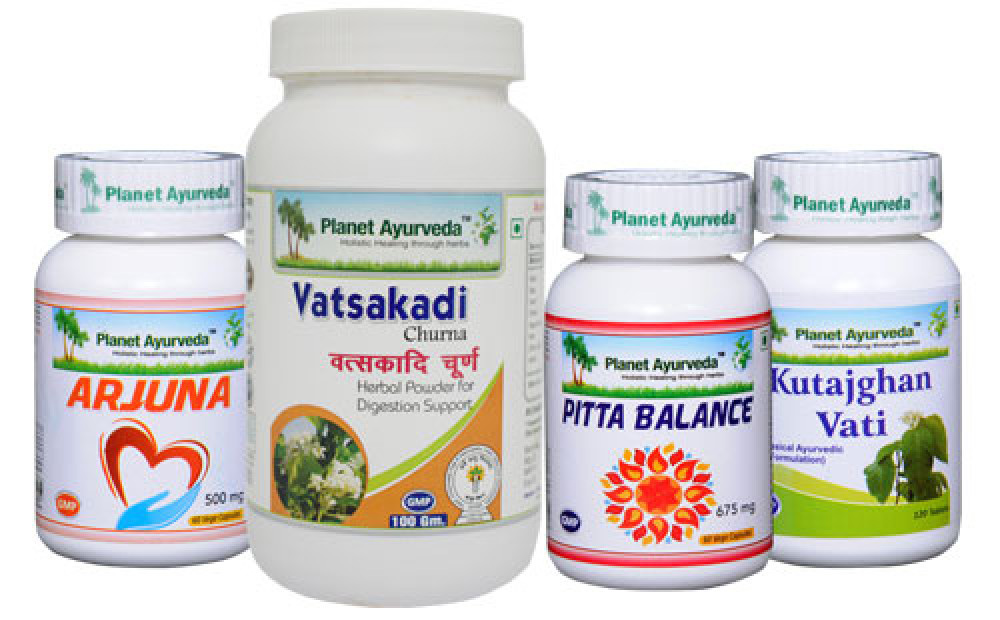
The Ulcerative Colitis Care Pack includes

  1. Capsule Arjuna
  2. Vatsakadi Churna
  3. Pitta Balance
  4. Kutajghan Vati

Alternative Medicines for for Ulcerative Colitis, IBD, Crohn's Disease

Herbal Remedies for ulcerative colitis

PRODUCT DESCRIPTION

1. Arjuna Capsule

Arjuna Capsules are prepared with standardized extract of Arjuna herb (Terminalia Arjuna).This formulation is soothing, nurturing and healing. Arjuna herb is cardio protective but also helps in relieving the gastric issues and burning sensations which is why it is useful in ulcerative colitis. It is also anti allergic and anti oxidant which also helps in dealing with all kinds of body pains, swelling and ulcers.

Dosage: 2 capsules twice daily after meals.

3. Vatsakadi Churna

Planet Ayurveda’s Vatsakadi Churna is a potent and safe formulation that has a combination of various herbs. The prime ingredients of this formulation are Kutaj (Holarrhena antidysenterica) and Bilwa (Aegle marmelos) which are great for anti dysenteric action and also helps in reducing the inflammation in the body which makes this formulation a prime choice for IBD issues.

Dosage: 1 tsp twice daily after meal with plain water

3. Pitta Balance

A vegetarian capsule by Planet Ayurveda made with Pitta balancing herbs with the purest extracts of the ayurveda herbs. This capsule will support digestion, maintain the intestinal mucosa. It is made with Praval pishti, mukta pishti and kamdudha ras. This formulation provides a cooling effect to the body and helps in dealing with ulcers. This herbal formulation helps in balancing the aggravated Pitta from the body which makes it a perfect choice for IBD.

Dosage: 1 capsule twice daily after meal with plain water.

4. Kutajghan Vati

Kutajghan Vati is a tablet formulation made from the classical Ayurveda texts with the prime ingredient as Kutaj herb. Kutaj (Holarrhena antidysenterica) as an herb has cold potency and pacifies Pitta and Kapha dosha both of which are aggravated in IBD cases. It also has dry nature with astringent taste and helps remove ama (toxins) from the body.

Dosage: 2 Tab twice daily after meal with plain water

CONCLUSION

To achieve a healthy body, every individual needs to have proper digestion and elimination. Disorders like IBD can affect these processes and thus the normal lifestyle. While one can always go for modern treatment but considering the side effects of mesacol (which contains mesalazine/Mesalamine), there are much safer ayurveda alternatives to mesalazine. These herbal alternatives along with diet and lifestyle corrections help in dealing with inflammatory bowel disease and associated complications.