Ulcerative Colitis: Causes, Symptoms, Diagnosis and Ayurvedic Treatment
Abstract
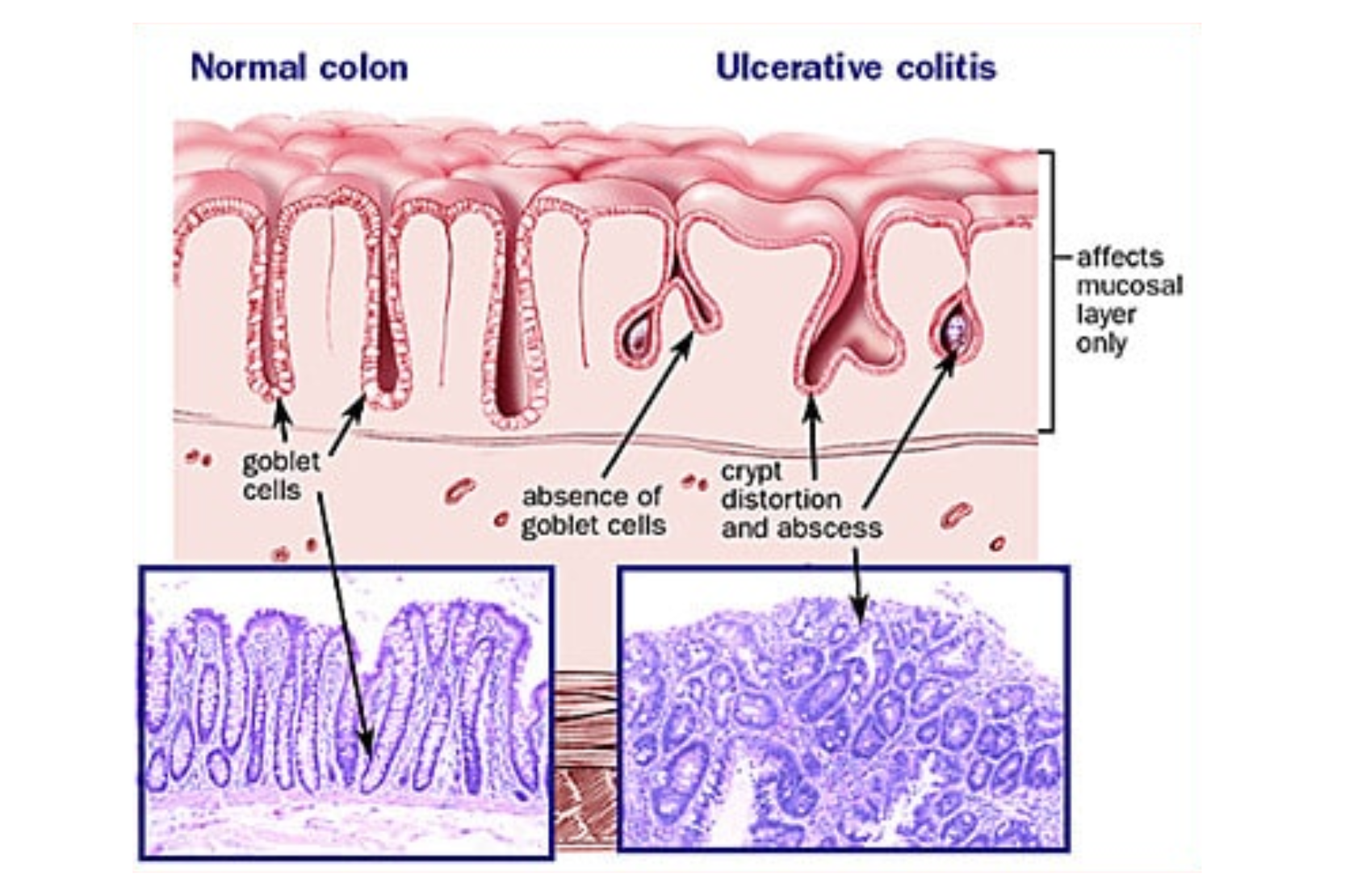
Ulcerative colitis is a Chronic Inflammatory Bowel Disease causing continuous mucosal inflammation, mucosal inflammation and ulcer in the colon & rectum (Auto-immune disorder). The global worldwide number of cases of ulcerative colitis is 5 million. In today’s world it has been increasing at a sky-rocking speed and the reason behind this is not exactly known as it’s an autoimmune disorder. Ayurveda says that Autoimmune disorders are caused due to accumulation of endotoxins (Ama) in the body. Why these endotoxins are forming in the body and why they are causing such chronic autoimmune diseases, Lets understand in this write up. Moreover we will also learn how ayurveda helps in managing such chronic autoimmune disorders. Let’s discuss!
Introduction
As we know Ulcerative Colitis is an autoimmune chronic inflammatory bowel disease (IBD) which cause inflammation and ulcer in the lining of the large intestine and rectum.The disease typically begins in the rectum and extends proximally in a condition pattern,affecting varying extents of the colon.Clinically, Ulcerative Colitis Presents with recurrent episode of bloody diarrhea, rectal bleeding, abdominal pain, urgency, tenesmus and varying degrees of systemic manifestations. If untreated, it may lead to complications such as severe haemorrhage, toxic megacolon,colorectal dysplasia and colorectal cancer. In the concept of ayurveda it is classified as Raktatisara (Hemorrhagic diarrhea) or at further stage of pittatisara (pitta aggravated diarrhea). And usually it is due to weak Agni,Aam Accumulation , colon tissue damage and aggravated vata in the body.According to Ayurveda, ulcerative colitis can be correlated with Raktatisara, which primarily results from the excessive consumption of Pitta-aggravating foods and dietary habits. The condition is characterized by the passage of blood-mixed stools, which may occur in large quantities. Clinical features resembling Jirnatisaara (chronic diarrhea) are commonly observed, along with rectal bleeding through the anal canal. Management is based on Rakta-stambhana (hemostatic therapy) and Pitta-shamana (pacification of aggravated Pitta), which are considered effective in controlling bleeding and alleviating the symptoms of the disease.
Causes
The exact cause of uc is not known but the risk factors are as follows:-
- Auto-immune disorder
- Gut Microbiome Imbalance
- Genetics
- Stress
- Improper diet
Symptoms
- Diarrhea
- Blood in stool
- Fatigue
- General body weakness
- Weight loos
- Frequency of stool increased
- Abdominal pain
- urning sensation in rectum & while passing stool
- Loss of appetite
- Thirst increase
- Mucus with stool
Diagnosis
Clinic Findings
- Number of Bloody stool
- Rectal examination
- Urgency to pass stool
- Abdominal pain or cramping
- Weight loos
- Fatigue
- Fevere
Physical examination
- Abdominal tenderness
- Sing of dehydration
- Pale skin color
Laboratory Investigations
- Complete blood count (CBC): Anemia, Elevated White Blood Cells
- C-reactive protein (CRP): Elevated In Active Inflammation
- Erythrocyte sedimentation rate (ESR): Increased
- Serum electrolytes: Assess Dehydration
- Liver function tests
- Serum albumin: Often Decreased In Severe Disease
Stool test
- Fecal calprotectin or fecal lactoferrin (markers of intestinal inflammation)
According to the ayurveda diagnosis of Ulcerative colitis
Ulcerative colitis is not described by the same name in classical Ayurvedic texts,but its features are commonly correlated with conditions such as Raktatisara, Pravahika and in chronic stages,Grahani involving predominantly pitta and vata imbalances. According to the ayurveda we can diagnose ulcerative colitis as per ashta prikisha
1. Nidana (Etiology Factors)
Assessment of causative factors:
- Excessively spicy,sour or oily food
- Irregular eating habits
- Psychological stress
- Suppression of natural urges
- Poor digestion(Mandagni)
- Seasonal influences
2. Dosha Assesment
- Pitta– Bleeding,burning sensation,loose stools
- Vata– Pain,urgency,tenesmus
- Kapha–mucus in stool
3. Agni Examination
Assessment of digestive fire:
- Vishamagni
- Tikshnagni
- Mandagni
4. Ama Assessment
In which there will be
- Coated tongue
- Indigestion
- Heaviness
- Foul smelling stools
- Fatigue
5. Mala Pariksha (Examination of stool)
- Frequency
- Consistency
- Presence of blood
- Mucus
- Color
- Odor
- Quantity
6. Dashavidha Praiksha (Tenfold Examination)
In which-
- Prakriti (Systemic )
- Vikriti (Current imbalance)
- Sara (Physical & mental strength )
- Samhanana (Structural build of the body )
- Pramana (Measurement)
- Satmya (Adaptability)
- Satva (Purity )
- Ahara shakti (Digestive fire )
- Vyayama Shakti (Physical capacity )
- Vaya (Age )
7. Ashtavidha Pariksha(eightfold examination)
In which
- Pulse(Nadi)
- Urine (Mutra)
- Stool (mala)
- Tongue (jihva)
- Voice(Shabda)
- Touch(Sparsha)
- Eyes(Drik)
- General appearance (Akriti)
8. Nadi Pariksha (Pulse examination)
Some Ayurvedic practitioners use pulse examination as part of an overall assessment of dosha imbalance. It is not considered a validated diagnostic test for ulcerative colitis in modern evidence based medicine.
Modern treatment
Modern management of Ulcerative Colitis (UC) follows a “treat-to-target” strategy aimed at achieving long-term, steroid-free endoscopic healing rather than just symptom control.
- For mild-to-moderate disease, treatment centers on 5-ASA anti-inflammatories (mesalamine) given orally or topically.
- For moderate-to-severe cases, or when 5-ASAs fail, therapy relies on targeted advanced therapies: injectable biologics—such as gut-selective anti-integrins (vedolizumab), IL-23 inhibitors (risankizumab, mirikizumab, guselkumab), and anti-TNFs (infliximab)—or fast-acting oral small molecules like JAK inhibitors (upadacitinib, tofacitinib) and S1P receptor modulators (ozanimod).
- Systemic corticosteroids (like prednisone) are strictly used short-term to bridge flares during induction, while surgery (colectomy) remains a curative option for refractory or complicated cases.
Ayurvedic Overview
According to the Ayurvedic concept, ulcerative colitis can be effectively managed and may improve significantly with proper treatment and lifestyle modifications. The first and most important step is to maintain a healthy and suitable diet (Ahar) by avoiding foods that may aggravate the condition and choosing easily digestible, nutritious meals. Along with dietary precautions, proper lifestyle practices (Vihar), such as maintaining a regular routine, managing stress, getting adequate sleep, and engaging in appropriate physical activity, are equally important. By following these dietary and lifestyle precautions consistently, along with Ayurvedic treatment, the symptoms of ulcerative colitis can be controlled and overall health can be improved.
Herbal Remedies For Ulcerative Colitis By Planet Ayurveda
Planet Ayurveda is an Indian herbal manufacturing and healthcare enterprise founded by Dr. Vikram Chauhan in Mohali, Punjab. The company specializes in producing 100% natural Ayurvedic herbal supplements made from carefully selected medicinal plants. Its product range includes standardized plant extract capsules, powders, herbal teas, and liquid formulations featuring herbs such as Ashwagandha, Curcumin, and Triphala. All products are manufactured without the use of chemicals, preservatives, artificial colors, or additives, ensuring purity and authenticity. In addition to manufacturing herbal products, the company offers Ayurvedic clinical consultations and exports its products to customers worldwide, promoting traditional Ayurvedic healthcare through natural, high-quality herbal formulations. Ayurvedic medicine for Ulcerative colitis are as follows:-
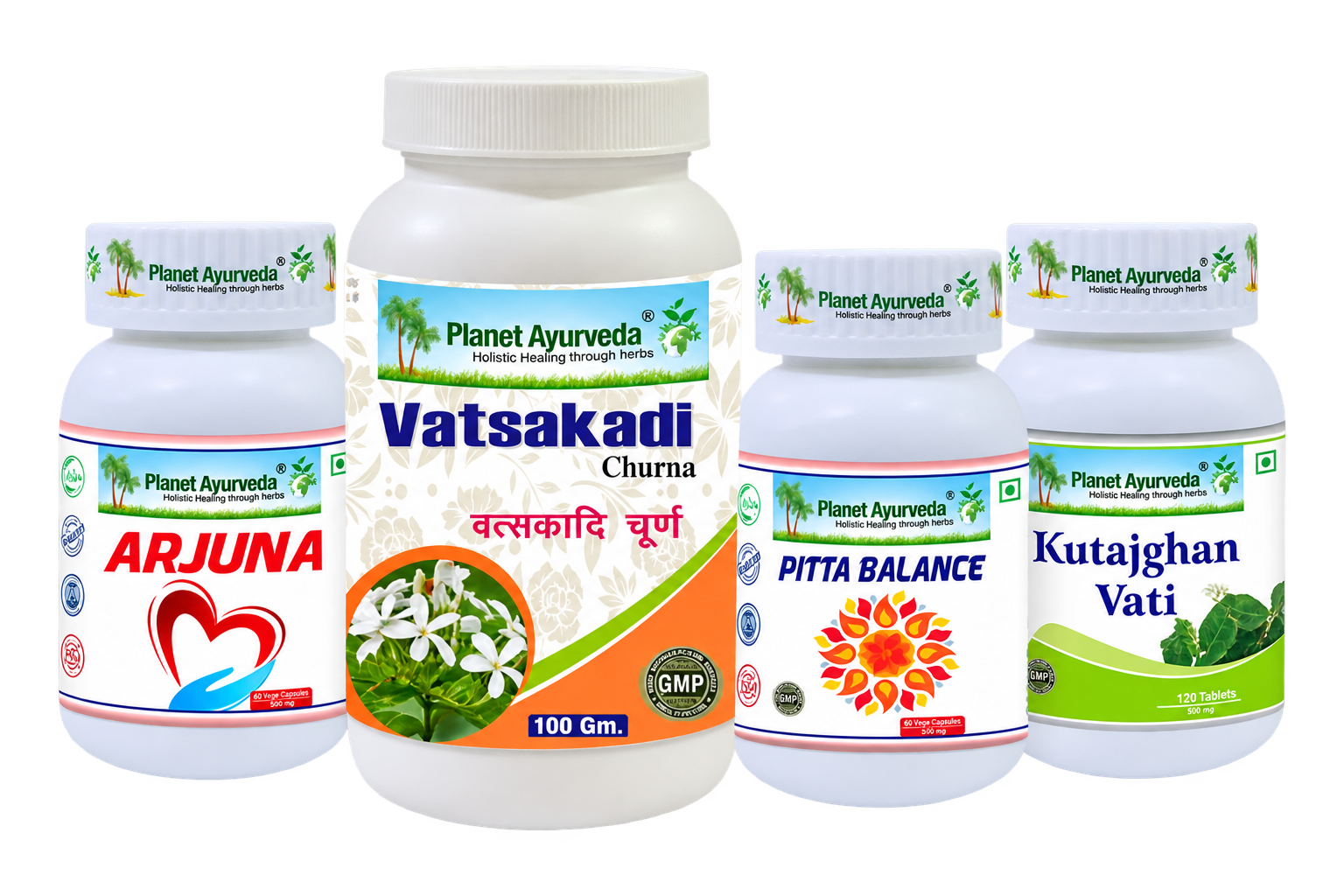
- Arjuna capsules
- Vatsakadi churna
- Pitta Balance
- Kutajghan vati
Ulcerative Colitis Care Pack

Detailed description on medicines
1. Arjuna capsules
Arjuna capsules by Planet Ayurveda are prepared using standardised extract of Arjuna (Terminalia arjuna). Its strong anti-inflammatory, antioxidant, and tissue-healing properties help in managing UC. This formulation possesses Astringent taste thus helps in managing Bleeding in stool and also helps in healing Ulcerations thus useful in managing symptoms of Ulcerative colitis.
Dose – 2 capsules twice daily with plain water after meal.
2. Vatsakadi Churna
This formulation is in Powder form and is prepared containing herbs like Kutaja (Holarrhena antidysenterica), Bilva (Aegle marmelos) and numerous other herbs. It is anti-diarrheal, antimicrobial and cooling in nature Thus helps in balancing Pitta dosha and improving symptoms.
Dose–1 teaspoonful twice daily with plain water after a meal or you can boil the powder – 1 teaspoonful in 400 ml water, keep it boiling until it remains 50 ml. Strain it and drink the water. Leave the residue. Do it twice daily. Make it fresh every time.
3. Pitta Balance
Pitta Balance is in capsule form and prepared usingJahar Mohra Pishti (Serpentine/Magnesium Silicate), Mukta Pishti (Pinctada margaritifera), Giloy Satva (Tinospora Cordifolia ) etc –It help in pitta management as its name indicates it helps in balancing pitts dosha and also its an amazing coolant thus possess astringent properties and helpful in controlling excess blood in stool.
Dose- 1 capsule twice daily with plain water after a meal
4. Kutajgha vati
Kutaj ghan vati is prepared using extract of Kutaj (Holarhena antidysentrica) which is anti-diarrheal in nature. Also it helps in Ama pachana (metabolization of endotoxins) and reducing the excess watery stools and managing diarrhea.
Dose-2 tablets twice daily with plain water after a meal.
Home Remedies by Planet Ayurveda
1. Coconut water
It having a great healing property,it provide cooling effect to your body and help to maintain the digestive fire and vitiated ama in the body which is main reason for ulcerative colitis.
Take at least 1-2 glass of coconut water daily.
2. Pomegranate juice
It is used for reducing the symptoms of ulcerative colitis such as dysentery and diarrhea.Even tea made from leaves of these fruits also help in treating digestion related problems. It help in reducing inflammation in body.
Take at least 1 glass juice or a cup of tea once daily.
Diet in Ulcerative colitis
Avoid
- Milk & Milk products
- Cucumber
- Brinjal
- Ginger
- Black gram
- Cashew
- Raisins
- Non-veg
- All citrics food & fruits 8.Red chillies
To Take
- Fresh curd
- Cow ghee
- Patato, beans
- Split moong daal
- Soaked Almonds
- Walnuts
- Banana
- Rice oil
- Poha
Conclusion
At last we can say, Ulcerative colitis is a chronic inflammatory bowel disease that affects the colon and rectum,causing symptoms such as bloody diarrhea,abdominal pain,urgency and fatigue.Early diagnosis and appropriate treatment and essential to prevent complication and improve quality of life.Modern medicine focuses on controlling inflammation maintaining remission, while ayurveda correlates the condition with Rakrarisara and emphasizes balancing pitta and vata,improving agni and adopting proper Ahar(diet) and vihar (lifestyle). A combination of evidence- based medical care,healthy dietary habits and supporting Ayurvedic measures under qualified medical supervision can help achieve better symptoms control and long-term disease management

