Low Fodmap Diet For Treatment Of Irritable Bowel Syndrome (IBS)
Abstract
The diet is the most important in the health of a person, intake of a healthy diet prevents dangerous conditions and diseases such as malnutrition etc. In today’s world the majority of people are consuming food rich in salts, energy, fats, free sugars and subsequently low consumption vegetables, fibres and fruits etc. To manage any type of the disease, food is the first medicine, a healthy diet with exercise prevents the risk of many diseases like: high blood pressure, high cholesterol, heart diseases, stroke and diabetes etc. The high FODMAP diet results in bloating, diarrhoea, stomach cramps, acidity and severe pain.
Let’s discuss in detail about the low FODMAP diet.
Introduction
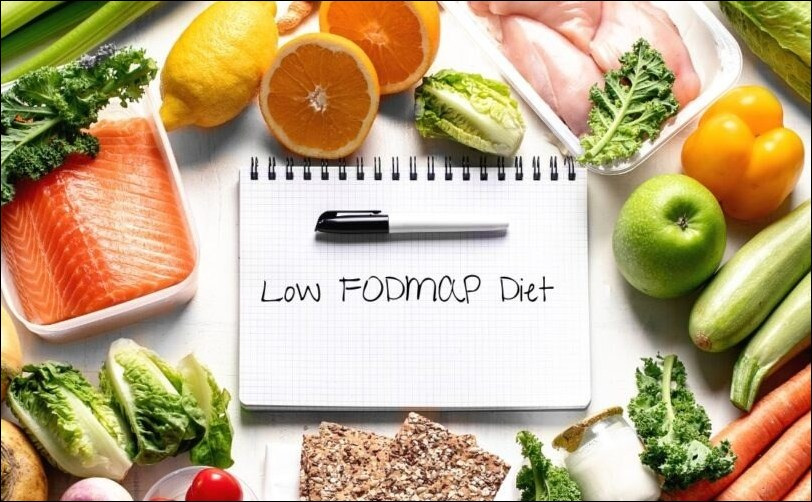
The word FODMAP stands for: Fermentable Oligosaccharides Disaccharides Monosaccharides And Polyols. The meaning of low FODMAP is, the reduction of some kind of carbohydrates which are hard for gut to digest. This diet is specially prescribed to the people, who have functional gastrointestinal diseases such as: IBS (Irritable Bowel Syndrome) and some of the food triggers disease. By avoiding usage of such an irritating carbohydrates, provide some time to mucus membrane of the gut to heal, so consuming low FODMAP diet is very helpful in relieving the symptoms. In Ayurveda, food is what makes us both healthy and unhealthy and our Acharaya’s has specially mentioned about: which food we have to take in which Ritucharya (Seasons). So if we have to stay healthy, it becomes very important to follow a diet which is simple, healthy and provide strength to body. In problems like Irritable bowel syndrome, there is a basic prevention of that food which worsens the condition.
What are FODMAPs?
Fermentable
The foods which gut the bacteria feed on, convert them into gases by a chemical process called fermentation.
Oligosaccharides
These are the soluble plant fibres called prebiotics, which feed the beneficial bacteria present in your gut eg, onion, many wheat products, beans, garlic and lentils etc.
Disaccharides
This group of sugar mainly includes lactose, sugar in dairy products and human milk. The lactose intolerance is very common food intolerances world wide
Monosaccharides
This group includes the fruit sugar (fructose sugar)
Polyols
his group mainly includes the artificial sweeteners also called as sugar alcohols, present naturally in some fruits.
Role of FODMAP in Aigestion
The FODMAPs are ones which are considered to be short chain carbs, generally the sugars in the food are broken down into a single molecule from a complex chain to be absorbed by the intestine very easily. But in FODMAPs, the breaking down does not happen, because they are already short chains, so it becomes very difficult for the intestines to digest specially in patients present with IBS which results in abdominal discomfort, indigestion, diarrhoea and severe pain etc diarrhoea.
Foods high in FODMAPs Are
- Dry fruits ie. cashew nuts, walnuts and peanuts etc. will add to problems.
- Dairy products which should not be taken are: butter, cheese, high fat milk and tea etc.
- The oils which increase the problem of IBS are: coconut oil, palm oil.
- The pulses ie. chickpeas, black gram and kidney beans contain high FODMAP.
- Red chillies should not be taken.
- Vegetables like: garlic, ladyfinger, onion and tomato should not be consumed.
- Drinks such as: sweetened drinks, canned soups, alcohol and carbonated drinks are not good for IBS patients.
- Citrus fruits ie. canned fruits, peaches, strawberries and pineapple should not be consumed.
Benefits of Low FODMAP Diet
The Low FODMAP diet is very beneficial for people who are suffering from irritable bowel syndrome and from small intestine bacterial overgrowth or other digestion issues. The Low FODMAP diet contain three phases
- Elimination Phase: In this phase there is a complete avoidance of the food, rich in FODMAP (mainly dairy products, fruits etc.)
- Reintroduction Phase: This is the second phase of low FODMAP diet and also called the challenge phase.
- Maintenance phase: This is the last phase of FODMAP and in this phase the patient eliminates the food which he/she is sensitive to and consumes the food which suits the patient.
Foods Low in FODMAP Are
- The spices like: fennel,cumin and coriander are good for the stomach.
- Dairy products which can be taken are cow ghee and dahi only.
- Pulses which can be taken are: washed dals and green grams.
- Fruits that can be taken by Irritable Bowel Syndrome patients include apple, banana, apricot, watermelon, pomegranate (without seeds), kiwi, plum, guava.
- Cereals include wheat, rice, pearl millet, amaranth, oats, quinoa and brown rice can be consumed.
- Vegetables which can be taken are: pumpkin, red onion, ginger, celery, cucumber, beetroot and carrot.
- Drinks like coconut water, sugarcane juices, green juices, home made juice, aloe vera juice can be enjoyed.
- Oils which can be consumed are: soybean oil, olive oil, mustard oil and cow ghee.
How Does the Low FODMAP Diet Work?
Low FODMAP is a Three-Step Elimination Diet
- Firstly you stop eating certain foods ( high FODMAP food)
- Then you slowly reintroduce them to see which ones are troublesome.
- Once you identify the foods which cause the symptoms then avoid or limit them.
Herbal Remedies for IBS By Planet Ayurveda
Planet Ayurveda is a US-FDA registered, GMP certified and ISO 9001:2015 certified company. All the products are formulated under MD Ayurveda experts, containing no preservatives, chemicals, colours, dyes and have no side effects. The formulations are in the form of liquids (asav, arishta, syrup and saar), vatis (tablets), churan (powder) and jams etc. Planet Ayurveda produces the IBS- care pack for irritable bowel syndrome, these herbal formulations are very effective in this condition and also boost the immune system.
IBS Care Pack
- Sanjivani Vati
- Digestion Support
- Kutajghan Vati
- Pitta Balance


Product Description
Sanjivani Vati
Sanjivani vati maintains a healthy body temperature and also supports the health of abdominal organs. The ingredients mainly involved are: Vidanga (Embelia ribes), Pippali (Piper longum),Haritaki (Terminalia chebula),Amlaki (Emblica officinalis) and Vacha (Acorus calamus) etc. All the ingredients of this formulation balances the digestive issues, enhances the digestive fire and also enhances the absorption of the food which is very important to manage the IBS.
Dosage: 1-2 tablets twice daily with lukewarm water after the meals.
Digestion Support
This product is very useful to maintain the healthy digestive system and maintain the condition of IBS. Ingredients involved in this formulation are : Sounf ( Foeniculum vulgare), Pippali (Piper longum),Jeerak (Cuminum cyminum), Dhania ( Coriander sativum) and Bahera (Terminalia billerica) etc. This formulation pacifies the tridosha (Vata, Pitta and Kapha). The herbs are effective to digest the complex sugars and are very useful in the management of Irritable bowel syndrome.
Dosage: 1 capsule twice daily, with plain water after the meals.
Kutajghan Vati
The Kutajghan vati pacifies the Pitta dosha and controls the excessive motions in IBS. The ingredient involved in this formulation is : Kutaj (Holarrhena antidysenterica). It contains properties like: anti-inflammatory, antibacterial, diuretic, immunomodulator and anti- helminthic etc. According to the classical text Kutaj is referred to as udarshoolhar (abdominal pain) and atisar (diarrhoea). This is also indicated in many intestinal disorders like: IBS and Ulcerative colitis etc. So this herbal formulation is very important in the management of Irritable bowel syndrome.
Dosage: 1-2 tablets twice daily with lukewarm water after the meals.
Pitta Balance
Pitta balance maintains the healthy digestion and the ingredients are : Kaharawa Pishti ( Natural calcium compound), Mukta Pishti (Natural calcium compound from pearls), Akik Pishti ( Natural calcium compound) and extract of Giloy Satva ( Tinospora cordifolia) etc. As its name suggests Pitta balance, which means it pacifies the aggravated Pitta dosha. In IBS there is irritation of intestinal mucus membrane which clearly defines the imbalance of Pitta dosha. Pitta balance provides a soothing and cooling effect to the intestines and is also useful in healing.
Dosage: 1 capsule twice daily with plain water after the meals.
Conclusion
According to our Acharyas, food is the first medicine, if we consume healthy food and do exercises our body will always remain healthy. Irritable bowel syndrome is a disorder which mainly affects the stomach, intestines and gastrointestinal tract which includes the symptoms of pitta aggravation such as : bloating, diarrhoea, hyperacidity and constipation. In this article we have discussed that in IBS the low FODMAP diet is necessary for absorption of nutrients and digest easily without any hindrance. And the high FODMAP diet results in pain and discomfort. In Ayurveda IBS is related with “Sangrahani”, in which the agni (ie. digestive fire) of a person is vitiated which arises from the aggravation of Pitta dosha leads to intestinal mucosal irritation and other symptoms. So, to manage the condition of Irritable bowel syndrome, Planet Ayurveda offers the IBS care pack which is very effective.