Category: Digestive Health

How to Reduce Pitta Immediately? Pitta Dosha Diet & Foods

Overview

Let’s discuss what Pitta is. It is one of the three doshas of a human body that controls the whole metabolism of the body, both physical and mental spontaneity are accessed by Pitta, making it move at a hectic pace, thus sometimes, it gets too aggressive and loses balance. Then the whole body has to suffer, making the immune system feeble and the toxins that are lurking outside the body attack it and causes a disease. You never know where they will strike.

In order to avoid all these hiccups, you need to pacify Pitta so that it doesn’t lose balance and keep the balance between the 3 doshas well maintained. So that, every part of the body functions normally. Thus keep the body fit & fine. The hot & sharp nature of Pitta needs to be soothed by the foods that have cooling effect and are dry, which can neutralize the oily nature of Pitta.

How to Reduce Pitta Immediately

Thus, it becomes mandatory to keep Pitta calm and enjoy the various benefits it bestows on our physical structure. To keep it calm some specific diet is recommended that will keep your Pitta constitution in equilibrium. Today, we are going to see which foods keep it calm and relaxed.

What Foods keep the Pitta calm?

Foods that keep Pitta calm:

  • Many foods appear cool, but if eaten can aggravate Pitta like fish and nuts. These sort of foods have a feature called ‘potency’ that is hot, making Pitta aggravated. Whereas fennel seeds give a sharp taste when chewed, but has a cool potency, keeping Pitta calm.
  • If you eat foods in excess, in spite of the fact that these foods have a cool potency like the milk products can calm Pitta, but for a short time. If you keep having them in excess for a long time, they tingle the top level of Pitta, which is required for the digestive system and this process causes indigestion. Better take a fore-warning, never eat anything in excess.

What Tastes, relax Pitta?

Tastes that keep Pitta placid:

  • Usually, Pitta is pacified by the sweet, bitter and astringent taste, but the salty, sour  and pungent tastes make it go aggressive. This knowledge does make one aware of the diet he/she has to consume that will keep his/her Pitta cool & calm.

What food to eat and what to avoid.

  • Use these guidelines to prepare your own diet menu that keeps Pitta calm.
  • Features of the sweet taste are it is touched to the ground, is cool and these days it is promoting longevity, health and provides strength to the tissues and fluids.  Its oily, moist and heavy qualities slow down digestion.
  • According to Ayurveda, the desert should be eaten first as an appetizer, when the metabolic fire is at the highest level.
  • The sweet taste can be found in foods like most fruits, root vegetables, most of the grains, fresh yogurt, ghee, milk, eggs, seeds, nuts and most of the oil except mustard oil.
  • When we discuss sweet foods, it doesn’t mean foods that taste sweet, but a sweet digestive effect as well. For example, sweet potatoes, white rice & whole grains. Sweet desserts cause indigestion when taken in excess. The sweet taste has the elements of Kapha, further aggravating it.
  • The bitter taste is rough, light, dry, cool and is usually reduced. It has almost all the qualities that keep the Pitta calm. Due to its unpleasant taste, it keeps missing from our dining table, but comes in handy when Pitta gets aggravated. When Pitta aggravates, its bitter taste makes it cool down. Our food does need the bitter taste that is provided by turmeric, fenugreek and bitter gourds.
  • Astringent taste is cold, dry and heavy to tackle aggravated Pitta. It can be found in foods like a raw banana, artichoke, beet root, jack fruit etc.
  • The sour taste wakes up the mind and its senses. It encourages digestive juices, enhances digestion and eradicates excessive air and gasses. If had in excess it also aggravates Pitta.
  • The sour taste is found in tamarind, lemon juice, apple cider vinegar, sauertraut, tangy orange, kiwi and pineapple.
  • The salty taste should be taken moderately, neither in excess nor in low quantity. Even when it gets aggravated it does so mildly.
  • Pungent spices often aggravate Pitta because of their hot nature.

What Foods keep the Pitta calm


What Should be the Environment to keep Pitta calm?

  • If you eat in a tranquilized atmosphere, chewing your food well, Pitta remains calm. Keep a nice balance between hot & cold food, hydrating and drying. Eating at regular intervals keeps the Pitta calm and the food gets well digested.
  • All foods do not make Pitta aggressive; occasionally when it becomes aggravated it can be cooled by pacifying foods and spices.
  • Better use sweet taste while digestion is taking place. If the Pitta is aggravated an abrupt fasting of water and other fluids can be beneficial for the body.
  • Fasting on raw fruits, coconut water and moong dal soup and vegetables can be a good choice. Don’t prolong your fast. The powerful Pitta will survive on eating your tissues.

What sort of Foods you need in your 3 meals to keep Pitta composed?

The breakfast:

  • Never skip the breakfast when Pitta is elevated. Have grains, dairy, barley, oats, whole wheat, egg whites, all are good choices. They provide carbohydrates, which release sugar in the blood, according to the needs. Sweet nuts like raisins and almonds are also nice.

Lunch:

  • Variety of grains like quinoa, wheat, barley and rice can be had in different forms. Beans and vegetables are also good and can be had with some meat, the one you love eating. Salads can be had as side dishes. Avoid spices, or very little amount can be used, they have a hot nature.

Dinner:

  • Dinner is a lighter version of lunch. Don’t make it heavy, but better make it nutritious. It has to sustain the balance of Pitta. A simple one like kichhadi, pasta or a mini version of lunch will do.

Soups and boiled veggies can be had as starters, it keeps a check on calorie intake and satisfies the Pitta digestive fire.

All these foods will keep Pitta calm & cool and maintain the body’s metabolism very well and the person stays fit & fine.

How Bilva is useful in Treating Irritable Bowel Syndrome (IBS)?

Bilva: Overview

Bilva or Bael fruit (Aegle marmelos) is considered to be a very beneficial fruit for good health, because of which it holds a special importance in ancient medicinal systems. The fruit is specifically capable of balancing the ‘Vata’ and ‘Kapha’ doshas of the body, and has proven abilities to treat different types of infections in the body, especially worm infestation and stomach related problems.

Some of the basic information about Bilva can be outlined as follows:

  • Bilva or Bael fruit is a sweet, aromatic fruit which is native to India and Southeast Asia.
  • It is believed to be a spiritual, religious and medicinal plant
  • It is known by different names, such as Bengal quince, golden apple, Japanese bitter orange, stone apple, wood apple, etc.
  • The fruit can be consumed fresh or dried, as well as in the form of juice.

The use of Bilva can be very beneficial for patients suffering from several diseases, because of its proven anti-microbial, anti-viral, anti-fungal, and anti-inflammatory properties.

Bilva is one of the few plants whose entire parts — root, stem, leaves, flower, fruit, etc. — can be used for treating different diseases. The root of Bilva can improve digestion, its stem is useful for treating heart problems, the leaves are beneficial in relieving pain, the flower is beneficial for managing Diarrhoea, and fruit is useful in treating digestion-related problems and balancing Vata and Kapha doshas.

In Ayurveda, Bilva has been used for the preparation of several herbal formulations since ancient times, particularly to treat gastrointestinal disorders like IBS. Ayurvedic experts believe that the use of unripe Bilva fruit is helpful in treating digestive disorders, while the use of ripe fruit is believed to have a laxative effect.

IBS Treatment in Ayurveda

How Bilva is useful in IBS?

Bilva is one of the ‘dashmool’ herbs, with remarkable medicinal properties to treat a number of health conditions, including:

  • Irritable Bowel Syndrome (IBS)
  • Ulcerative colitis
  • Asthma
  • Colds
  • Diabetes
  • Constipation
  • High cholesterol
  • Heart disease.

The use of Bilva is particularly beneficial in managing gastro-intestinal disorders like Irritable Bowel Syndrome (IBS), which is also known by some other names, including colitis, mucous colitis, spastic colon, or spastic bowel.

IBS is essentially a ‘functional bowel disorder’ which can be a long-lasting condition, but it is not life-threatening. The disorder generally results from the hypersensitivity of the colon, which may overreact to mild irritation. The condition leads to bowel muscle spasm, instead of slow, rhythmic muscle movements; thereby causing constipation or diarrhoea, or changes in stool.

IBS is typically characterized by chronic pain in the abdomen, discomfort, gas/bloating, heartburn, nausea, diarrhoea, constipation, rectal bleeding, and change of bowel habits. In addition, the other symptoms of the disorder are harder/loose stools than normal, and the sticking out of the belly. Some IBS patients may also have urinary symptoms or sexual problems.

The use of Bilva is recommended for the treatment of Irritable Bowel Syndrome (IBS) because of the following reasons:

  • Presence of substances like ‘tannins,’ which comprise a class of compounds that are known for their anti-inflammatory effects.
  • Presence of calcium, iron, phosphorous, protein and fiber
  • Abundant amounts of alakloids, polysaccharides, antioxidants, beta carotene, Vitamin B, Vitamin C, and many other bio-chemical substances.
  • Ability to protect the digestive system from ulceration.
  • Ability to reduce the frequency of IBS and intestinal spasm.
  • Beneficial in treating several infections of the Elementary canal.
  • Helpful in eliminating the old accumulated fecal matter from the bowels.
  • Ability to clean and tone the intestines by removing toxins.

Overall, Bilva is an excellent medicinal plant which can support intestinal biological formulations and reduce the frequency of Irritable Bowel Syndrome (IBS).

Benefits of Bilva in Treating IBS : Ayurvedic Viewpoint<

Ayurvedic practitioners have been using Bilva or Bael fruit for treating several disorders since ancient times because of the immense health benefits of the fruit. According to Ayurveda, Bilva has the following health benefits:

  • It can calm down the extra heat in the body.
  • It can correct gastric disturbances like irritable bowel syndrome (IBS), diarrhoea, and colitis.
  • Bilva leaves powder is useful in diabetes.
  • Bilva is used as a cardiac tonic.
  • Bilva is useful in treating ‘Vata’ disorders like epilepsy, hysteria, and insomnia.
  • Bilva roots can reduce swelling of the uterus, and is thus useful in pregnancy, leucorrhoea.
  • Bilva can be used as laxative.
  • It can be used for treating jaundice.

In Ayurveda, the use of Bilva is considered to be beneficial for Irritable Bowel Syndrome (IBS) which is called ‘Grahani.’ It is another name for the small intestine, and is chiefly linked to the small intestine’s capability to store and metabolize food. It is in the small intestine that the food is held for the time period until it gets digested. Hence, the small intestine sees a lot of enzymatic activity or ‘agni.’ However, if an individual is suffering from a health condition in which the ‘agni’ becomes weak because of the malfunctioning of the digestive enzymes, the food is released by the small intestine in an undigested form.

Hence, according to Ayurveda, a weak ‘agni’ leads to gastrointestinal conditions like IBS because it can result in the accumulation of toxins in tissues, blocking of circulation, imbalance of the nervous system, physical and mental stress, disruption of natural biological rhythms, and lowering of natural resistance and immunity.

Ayurveda practitioners may recommend the use of Bilva to IBS patients, along with asking them to avoid the consumption of foods which aggravate the body’s ‘Vata’ dosha.

Conclusion

  • Along with the benefits of the use of Bilva in treating Irritable Bowel Syndrome (IBS), it is also important to mention that the disorder can be effectively managed with some excellent herbal products available from herbal manufacturing companies.

Ayuredic Treatment For Irritable Bowel Syndrome(IBS)

Ayuredic Treatment For Irritable Bowel Syndrome(IBS)

Planet Ayurveda is one such renowned company which offers some beneficial formulations for managing IBS.

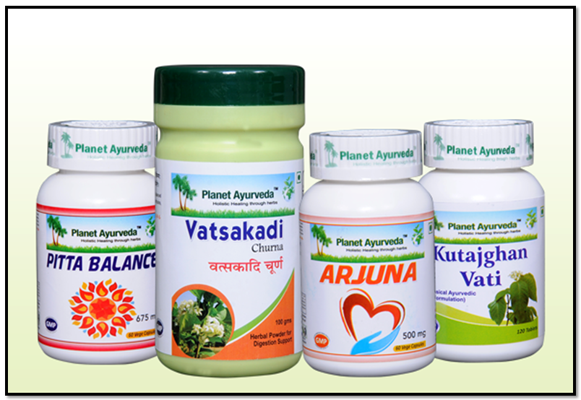
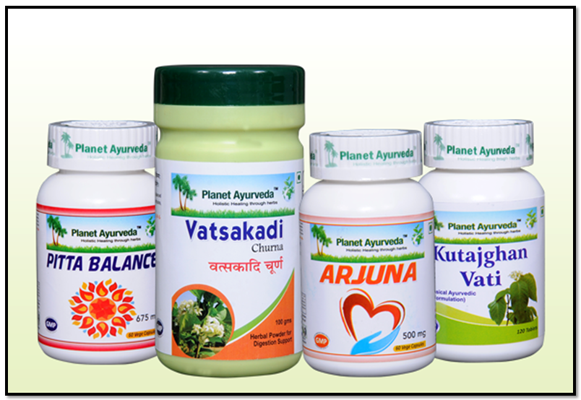
Our Products – These formulations Include

  1. Digestion Support capsules
  2. Pitta Balance capsules
  3. Kutajghan Vati tablets
  4. Sanjivani Vati tablets.

These products are prepared from standardized extracts of potent herbs, and other natural herbal components, which can be useful in treating IBS.

Herbs in IBS Care Pack

Some of the herbs which are used for preparing these formulations in particular include

  • Amalaki (Emblica officinalis)
  • Vibhitaki (Terminalia bellerica)
  • Haritaki (Terminalia chebula)
  • Guduchi (Tinospora cordifolia)
  • Shunthi (Zingiber officinale)
  • Pippali (Piper longum)
  • Jeerak (Cymium cumium)
  • Sounf (Foeniculum vulgare)
  • Bahera (Terminalia bellerica)
  • Dhania (Coriander sativum)
  • Kutaj (Halorrhena Antidysentrica)
  • Praval Pishti (Coral Calcium)
  • Akik Pishti (Agate Calcium)
  • Mukta Pishti (Pearl Calcium)
  • Jawar Mohra Pishti (an Ayurvedic Calcium compound)
  • Kamdhudha Ras (an Ayurvedic Calcium compound).

All the herbs and herbal components which are used by Ayurvedic experts at Planet Ayurveda for preparing the herbal formulations for managing IBS are clearly mentioned in ancient Ayurvedic texts for their immense health benefits.