Category: Ayurveda

Ayurvedic Aspects of Granulomatous Meningoencephalitis (Gme)

ABstract

Granulomatous meningoencephalitis is an idiopathic inflammatory central nervous system of dogs. It commonly shows neuropathic changes in dogs and cats. The central nervous system includes the spinal cord and the brain which controls the essential functions of life which include the cerebrum and cerebellum. Specialized tissues known as meninges cover the brain and spinal cord and have cerebrospinal fluid. The peripheral nervous system has nerves which coordinate the rest of the body. Neurons connect with each other and form the neurological unit which has 2 units known as dendrites and axons. It can be due to infections or immune-mediated causes and contains three layers which are dura (outer layer), arachnoid (internal thin meninge) and Pia mater (thin and highly vascular membrane). In this article, we are going to discuss the causes, symptoms and ayurvedic aspects of granulomatous meningoencephalitis in detail.

INTRODUCTION

Granulomatous meningoencephalomyelitis is an inflammatory condition of the central nervous system which is mainly characterized by focal lesions which are present in the brain and spinal cord. It was first reported by Braund and his colleagues in 1978. Commonly seen in female dogs of young and middle age. The focal lesions are mainly seen in the white matter of the cerebrum, brainstem and in cerebellum. It commonly involves the infiltration by mononuclear cells which destroys the debris. In granulomatous inflammation, there are cuffs which are around the blood vessels of the brain and spinal cord. In pug dog encephalitis it is an idiopathic inflammatory disease which usually affects the prosencephalon which is commonly known as necrotising meningoencephalitis. It only differs from GME in more breakdown of the tissues and increase in eosinophils. The cells of the immune system release destructive biochemicals which invade the organisms of the disease’s tissue.

Granulomatous meningoencephalitis in Dogs

TYPES

1. Disseminated

It is the diffuse type of disease present throughout the Central nervous system. It is also known as inflammatory reticulosis. Accumulation of mononuclear cells and neutrophils around the blood vessels in the form of meningitis which causes fever and neck pain.

2. Focal

It is present as granuloma which sometimes mimics tumors found in the cerebellopontine angle. It is a chronic progressive disease (3-6 months).

3. Ocular

It is the uncommon form of Granulomatous meningoencephalitis which shows sudden blindness which is due to neuritis. This retinal detachment and secondary glaucoma are seen in this type.

PATHOLOGY

In granulomatous meningoencephalitis, it occurs mainly within the white matter of the CNS (Central nervous system) which is characterized by dense inflammatory cells which are arranged in whorling patterns. There are varying numbers of Lymphocytes, monocytes and multinucleated giant cells which are mainly seen in the cerebrum, cerebellum and in the cervical spinal cord. These perivascular cuffs merge at blood vessels to form the whorls which form nodules which is due to the MHC class 2 and CD3+ T cells hypersensitivity reaction. Granulomatous lesions get compressed and get invaded in CND parenchyma which results in necrosis and oedema. The lesions are seen in the brain stem especially the pontomedullary region and white part. This lesion is usually detected by CT and MRI techniques.

PUG DOG ENCEPHALITIS

A pug dog is a beautiful family dog which is associated with a rare neurological disease which is mainly fatal. Encephalitis is the inflammation of the brain tissue which tends to strike at 2-3 years of age. It causes inflammation and death of the brain tissue. Affects small dog breeds including Maltese, Chihuahuas and Yorkshire terriers. It is usually an auto-immune inherited disease, an idiopathic inflammatory disease which usually affects the prosencephalon (forebrain and thalamus). Also known as necrotising meningoencephalitis. The prevalence of pug dog encephalitis is about 1 % which differs from granulomatous meningoencephalitis which leads to breakdown and increase in the number of white blood cells (eosinophils).

SYMPTOMS

  1. Disseminated-
  2. Fever
  3. Pain in the neck region
  4. Loss of balance
  5. Depression
  6. Seizures

1. Focal

It usually affects the discrete bone area which resembles a tumor. Various symptoms include are

  • Blindness
  • Progressive weakness
  • Loss of balance
  • Dementia
  • Neurological signs

2. Ocular

It usually causes retinal detachment and glaucoma

  • Affects the nerves which are supplied to the eyes.

DIAGNOSIS

  1. Cerebrospinal fluid Analysis (CSF)
  2. Brain biopsy
  3. CT Scan (Computed tomography)
  4. MRI (Magnetic resonance imaging)

TREATMENT

  1. Corticosteroid with immunosuppressive drugs.
  2. Cytosine arabinoside
  3. Radiation therapy
  4. Procarbazine
  5. Cyclosporine
  6. Surgical removal of the brain Granulomatous meningoencephalitis (GME) lesion.

AYURVEDIC ASPECT

Ayurveda is the oldest system of holistic medicine which means Science (ved) of life. Ayurveda in veterinary medicine has mainly focused on animal welfare, treatment therapies and management. In Rigveda, physicians described the treatment for both animals and humans and Salihotra was the first credited as an animal healer and wrote a book on veterinary medicine. Pandavas (Nakul and Sahadev as experts treated animals and the ayurvedic treatment for animals in modern science is known as Pashu Chikitsa. Pashu Chikitsa has been a vital part of Indian history and many animals are considered vehicles of dogs and goddesses, which shows the importance of animals.

Granulomatous meningoencephalitis is a dog’s condition which affects the nervous system and in ayurveda, it generally relates to inflammation which is due to vitiated pitta doshas, the vitiation of Kapha doshas (shows numbness as the primary symptom) along with Vata doshas. However, it shows the vitiation of tridoshas and the treatment will be advised to balance the imbalance doshas which is seen in dogs. Animals too have three primary types of Prakriti (Vata, Pitta and Kapha). Ayurveda has a history of extensive veterinary treatment systems which makes sense to discover from ancient texts and bring out the natural and side-effect-free treatment for our pets. The various medications which are useful for the management of Granulomatous meningoencephalitis are-

  1. Dashmoolarishta
  2. Triphala Churna
  3. Giloy ghan vati
  4. Brahmi Ghrita
  5. Shankhpushpi Churna

HERBAL REMEDIES BY PLANET AYURVEDA FOR GRANULOMATOUS MENINGOENCEPHALITIS

Planet Ayurveda is an emerging US-FDA-registered, GMP-certified ISO 9001:2015 registered ayurvedic company which formulates its own medications as described in the ancient ayurvedic texts books. These formulations are prepared without any preservatives which cause any harmful effect on the human body. Products which are manufactured are pure and devoid of any kind of adulteration. For granulomatous meningoencephalitis in dogs, planet ayurveda provides many herbal formulations which are causing no side effects and are useful for dogs.

PRODUCTS LIST

  1. NEURO PLAN SYRUP
  2. BRAHMI CAPSULES
  3. ASHWAGANDHA CAPSULE
  4. VRIHAT VATCHINTAMANI RAS

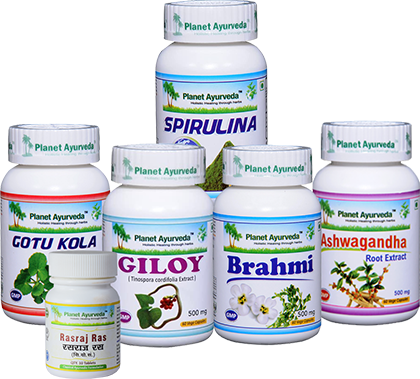
herbal supplements for Granulomatous meningoencephalitis

Herbal Remedies for Granulomatous Meningoencephalitis

PRODUCTS DESCRIPTION

1. Neuro Plan Syrup

Neuroplan Syrup is a herbal syrup which is formulated by planet ayurveda using ingredients such as Brahmi (Bacopa monnieri), Bhojpatra (Betula utilis), Sonth (Zingiber officinale) and many more. Neuro plan syrup is helpful in maintaining pressure and stress on the nervous system. Enhances the power of nerves and strengthens memory and promotes energy. Has a soothing effect and relieves any kind of inflammation in the central nervous system.

Dosage- 10 ml teaspoon twice daily.

2. Brahmi Capsules

Brahmi Capsules are single herbal capsules made by planet ayurveda using a standardized extract of Brahmi (Bacopa monnieri). These capsules are working as rejuvenating for the nervous system, used in ancient times as a brain tonic so known as a memory enhancer. Brahmi Capsule is a good supplement for the liver and is helpful in detoxifying it and enhancing the period of life.

Dosage– 2 capsules twice daily after meal with plain water.

3. Ashwagandha Capsules

Ashwagandha Capsules are single herbal capsules from planet ayurveda which contain standardized ingredients such as Ashwagandha (Withania somnifera). These capsules increase stress resistance and improve memory-related performances and perform the normal functioning of the nervous system. Provides calmness and mental satisfaction. Provides proper nourishment to the brain for proper functioning.

Dosage– 1 capsule twice daily after meal with plain water.

4. Vrihat Vatchintamani Ras

Vrihat Vatchintamani Ras is a classical ayurvedic product which is prepared by planet ayurveda using Swaran Bhasma (Calx of gold), Mukta Bhasma (Calx of pearl), Loha Bhasma (Calx of iron) and many more. These tablets are helpful in treating imbalanced Vata dosha and pitta doshas. Rich in antioxidants which act as a nerve tonic and strengthen the muscles of the heart. Has a cooling effect which reduces the aggravated heat from the body.

Dosage– 1 tablet twice daily after meal with plain water.

Contact Planet Ayurveda to provide you the costing / ordering and delivery information at – costing.planetayurveda@gmail.com or call at +91-172-5214040 Or Check Website – www.PlanetAyurveda.com

CONCLUSION

Granulomatous meningoencephalitis is an idiopathic inflammatory central nervous system of dogs. It commonly shows neuropathic changes in dogs and cats. Commonly seen in female dogs of young and middle age. The focal lesions are mainly seen in the white matter of the cerebrum, brainstem and in cerebellum. And the ayurvedic treatment for animals in modern science is known as Pashu Chikitsa. Pashu Chikitsa has been a vital part of Indian history and many animals are considered vehicles of dogs and goddesses, which shows the importance of animals. For the treatment of granulomatous meningoencephalitis planet ayurveda provided many herbal products which are useful in this without causing any side effects.

What is Munchausen Syndrome(Factitious Disorder),Symptoms, Causes and Ayurvedic Treatment

Abstract

Munchausen Syndrome is a psychotic disorder in which a person tries to get attention by claiming themselves sick. It is very difficult to diagnose this condition and it is more difficult to treat it. The person is purely dishonest about his/her health condition and progression. In this article, we will discuss all of Munchausen Syndrome and also its management in Ayurveda.

Introduction

Munchausen Syndrome is a psychotic condition in which a person pretends to be ill or deliberately produces symptoms of illness. Their main intention is to be the center of attention. They lie about the medical test reports and may harm themselves to get the symptoms. Munchausen Syndrome is also known as a factitious disorder imposed on the self. The person may undergo painful tests and surgeries just to prove themselves right. They may also harm themselves to get the symptoms and pretend to be seriously injured or ill. Some patients can claim to have symptoms that cannot be physically checked such as stomach ache, headache, feeling of nausea, vision problems, and many more.

Munchausen Syndrome

Ayurvedic aspect

In Ayurveda, three mental Gunas named as- Sattva Guna, Rajas Guna, and Tamas Guna are categorized for the mind. These gunas have their distinctive qualities and the state of our mind totally depends upon the aggravation and calmness of the Gunas. Sattva guna is considered to be flawless while Rajas represents agony and action) and Tamas guna represents dormancy and passivity. Sattav guna is considered pure and superior to Rajas and Tamas guna. All 3 gunas have the subtypes that make them 16 in total. We can correlate these psychotic disorders to get attention under Rajas and Tamas guna manodasha. These two gunas are responsible for all types of mental disorders. When these gunas increase to a level that is uncontrolled by our mind and they overlap the satv guna in the mind. Total loss of satv guna and aggravation of rajas and tamas guna along with aggravation of Vata dosha in the body causes these psychotic disorders.

Causes

Munchausen Syndrome can be caused due to

  • Childhood traumas may include-
  • Parental neglect
  • Abandonment
  • Unresolved issues with parents
  • The improper upbringing of the child
  • Environmental factors

Symptoms

The main symptoms of Munchausen Syndrome are

  • Having symptoms that do not match the test reports
  • Frequent visits to many hospitals in different areas
  • Complaining of serious symptoms with a complex medical history
  • The person has very good medical knowledge
  • Symptoms worsen without any strong reason and pathology
  • Symptoms don’t quite fit in any disease

Diagnosis

  • Munchausen Syndrome is diagnosed based on the clinical and behavioral assessment of the person.
  • The person pretends to be ill and no symptoms are seen in reality.
  • The patient may convince the doctor often but the diagnosis is to be very clear to prove the condition.

Treatment

The treatment for Munchausen Syndrome includes

  • Psychotherapy
  • Cognitive behavioral therapy
  • Antipsychotics
  • Antidepressants

Ayurvedic Treatment

Ayurveda offers various treatment modalities for such mental disorders that includes

1. Yoga and Meditation

Doing yoga and meditation regularly by managing time from the busy day schedule implies one cares for their body. They help by enhancing body fitness physically and relaxing the mind.

2. Diet plans

Since Munchausen Syndrome occurs due to Tamas and Rajas guna. The satvik diet can help reduce the symptoms. Satvik diet enhances Sattav guna in the body which ultimately increases harmony, and maintains balance in the mind of the person. You can get a recommended diet from Planet Ayurveda’s experts.

3. Satvavajaya Chikitsa

Mental conditions occur due to lack of Satwa within the mind, along with disbalance of gunas due to stress in everyday life. Satvavajaya Chikitsa plays an important role in treating such mental disorders. The concept of Satvavajaya Chikitsa works on balancing the nature of the mind through non-pharmacological methods. It can be defined as ayurvedic psychotherapy. Since Sattav, Rajas, and Tamas guna are displayed by god in our minds. Praying to god for goodwill and positivity in your life can help the person recover in a better way and in less time. This spiritual practice is indicated in most diseases along with mental disorders.

4. Spiritual Therapy

As discussed before in the article, Rajas and Tamas guna is the cause of disease. While satwa guna is the sole cause of health. The actions of the Tamas and Rajas guna person lead to the imbalance of tridosha and thus the occurrence of diseases. Spiritual therapy allows us to move from darkness to light which means to move away from ignorance towards the light of awareness. The disease cannot affect the person who has awakened into the light of realization – Sattvik person. This is possible by making a connection with the environment, practicing yoga and meditation, following dincharya, and using aroma and color therapies. Yet, it may be difficult to adopt a harmonious lifestyle but it is not impossible. Once you reach that level of spirituality, leave behind the darkness of Rajas and Tamas and proceed further in life with quality of clarity and purity.

Herbal Medications for Munchausen Syndrome by Planet Ayurveda

These medicines are patent products of Planet Ayurveda which is a leading manufacturing company in India. All its medicines are 100% vegetarian and free of any kind of chemicals, preservatives, and adulteration. All these medicines are pure and launched in the market after their efficiency test. Our drugs are fully potent to heal the condition they are meant to be prepared for plus also enhance and favor other organs functioning. In addition, their properties are very well studied and implemented according to the disease’s cause and dosha involvement in it. The basic treatment includes the following medicines –

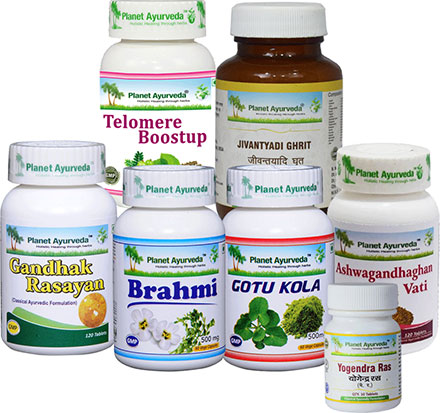
Herbal Remedies for Munchausen Syndrome

Alternative Treatment for Munchausen Syndrome

1. Gotukola Capsules

These capsules are prepared from the standardized extracts of Gotukola (Centella asiatica). They balance all three doshas of the body along with all three psychic energies that help in maintaining a healthy nervous system and brain. It maintains proper blood flow to the brain and eases symptoms of tiredness, frustration, lack of energy, insomnia, negative thoughts, etc that may help in relieving symptoms of Munchausen Syndrome.

2. Neurogenie Capsules

These wonderful capsules are made with Brahmi (Bacopa monnieri), and roots of Ashwagandha (Withania somnifera). These herbs are very efficient in treating brain disorders. In psychotic patients, it helps to gain control of their thoughts.

Dosage- Have 2 capsules twice daily after meal with Plain Water.

3. Sarotovahi Capsules

These capsules are prepared from herbs such as Shilajit (Asphaltum), Guggul (Commiphora mukul), Haridra (Curcuma longa), Marich (Piper nigrum), etc. These capsules give a positive impact on all microchannels that connect the brain to the body. Also, they maintain healthy flow in the Strotas by removing the blockage from them.

Dosage– Take 1 capsule twice daily after meal with Plain Water .

4. Mahakalyanak Ghrit

This formulation is prepared with kwath of various dravyas- Shwet sariva (Hemidesmus indicus), Shalparni (Desmodium gangeticum), Priyangu (Callicarpa macrophylla), Jati (Jasminum officinale), Gaughrit (Cow ghee), Padmak (Prunus cerasoides), Gaudugdha (Cow milk), etc and kalks of dravyas like – Medha (Polygonatum cirrhifolium), Kakoli (Lilium polyphyllum), Karkatshringi (Pistacia integerrima), etc. Consuming this ghrit regularly strengthens the brain and helps the person to have more positive emotions, thoughts, and behavior and visualize reality to the person.

Dosage- Take 1 teaspoon of ghrit twice daily with warm water or warm milk.

Contact Planet Ayurveda to provide you the costing / ordering and delivery information at – costing.planetayurveda@gmail.com or call at +91-172-5214040 Or Check Website – www.PlanetAyurveda.com

Conclusion

Various ayurvedic formulations are being used in several mental disorders. Ayurveda treatment aims at treating the root cause of the disease by using various strategies that include dietary management, lifestyle modification (including yoga and spiritual therapy), and herbal treatment. Diets and lifestyles are recommended according to each person’s disease condition (extent) and individual Prakriti. It promotes physical health and healing of the mind through various methods. It also offers various methods to manage Munchausen Syndrome. Medications reduce the symptoms very effectively. Yet, few patients may need a full treatment plan along with diet plans and other therapies including yoga and meditation