Tulsi (Holy Basil): Ayurvedic Herb for Immunity & Health
Abstract
Tulsi is strongly interlinked with Hindu tradition and is widely present across India, reflecting holiness and spiritual importance. The name Tulsi has its origin in a Sanskrit term that represents “the incomparable one,” signifying its importance in both cultural beliefs and medical traditions. In addition to Ayurveda, Tulsi has been widely used in classical medical traditions, including Greek, Roman, and Unani therapies. Tulsi’s botanical name is Ocimum sanctum.
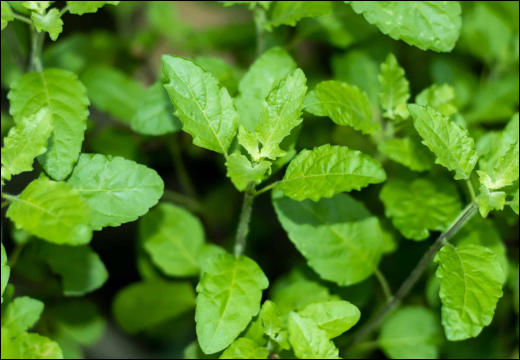
In warm and tropical weather, Tulsi grows abundantly, carrying a distinct and pleasing aroma. This aromatic herb grows erect with abundant branching, typically standing 30 to 60 cm tall. Its leaves are simple and elliptic to oblong in shape, with either entire or mildly serrated margins, positioned in opposite pairs. Due to their high essential oil content, the leaves give off a potent, refreshing scent and are generally about 5 cm long. Tiny purple flowers bloom on extended racemes, clustered closely in whorl-like formations. The fruits are small, each holding reddish-yellow seeds.
Description
Tulsi is considered as Queen of Herbs of India and is considered one of the holiest and most health-giving herbs. Renowned in Ayurvedic and Unani traditions, Tulsi plays a crucial role in maintaining health and enhancing the body’s natural healing processes. Present all over India, this diminutive plant is both cultivated and respected in the temples and homes of Hindus. The classical categorization of tulsi in Ayurvedic texts includes the groups Surasadi gana in the Vagbhata Samhita and Sushruta Samhita, Svasahara gana in the Charak Samhita. Tulsi belongs to the Lamiaceae family. Ocimum sanctum consists of two varieties – Green (Ram Tulsi) and Black (Krishna Tulsi). Both varieties share closely aligned chemical compositions and therapeutic effects. Genus Ocimum has various species such as Ocimumsanctum L (Tulsi), O. gratissimum (Ram Tulsi), O. bascilicum (Ban Tulsi), O. canum (Dulal Tulsi), O. kilimandschricum, O.viride, O.americanum.The Tulsi plant is known to have various properties. It is used for cold, cough, fever, and bronchitis. It is an anti-helminth, insecticide, and has also been used as a laxative, stimulant anti-inflammatory, cardiac tonic, and also acts as a blood purifier in hepatic disorders. It can be used for diminished appetite, indigestion, and diverse states of physical or mental discomfort. Applied on the skin, the oil aids in addressing chronic ulcers, inflammatory reactions, and dermatological concerns.
Synonyms
- Surasa: The herb that is delightful to the Gods
- Gramya: Commonly found in rural areas
- Sulabha: Readily accessible
- Bahumanjari: numerous small flower spikes in clusters
- Apeta-Rakshasi: ward off negativity, infections, and harmful energies
- Gauri: clarity, cleanliness, and auspiciousness
- Bhutaghni: Destroyer of harmful entities or disease-causing organisms
- Devadundubhi: Signifies something sacred and spiritually uplifting
Vernacular Names of Tulsi
- English: Holy Basil
- Sanskrit: Vrinda, Sugandha, Amrita, Patra Pushpa
- Hindi: Tulsi
- Gujarati: Tulas
- Marathi: Tulsa, Kala Tulsi
- Bengali: Tulsi, Kural
- Telugu: Vrinda, Gagera, Krishna Tulsi
Types of Tulsi
Although basil has many regional varieties, they mainly fall under two categories—Holy Basil (Ocimum sanctum) and Mediterranean Basil (Ocimum basilicum).
1. Holy Basil (Ocimum Sanctum)
It is the type of tulsi found abundantly in India.
1. Rama Tulsi (Ocimum sanctum): Rama Tulsi, which is also called Sri/Lakshmi Tulsi or Green Leaf Tulsi, grows mainly in Brazil, China, Eastern Nepal, and the Indian regions of Bengal, Bihar, and the southern states. Its leaves let out a rich fragrance when crushed, making it recognizable among Tulsi varieties. This tough, sun-loving herb tolerates a wide range of weather conditions, but needs sufficient water and manure for cultivation. With its sweet, soothing taste, Rama Tulsi is highly valued in households for inviting harmony, wealth, and positivity.
2. Krishna Tulsi (Ocimum tenuiflorum): Krishna Tulsi is easily differentiated by its deep purple leaves and dark stems, which is why it is often known as Purple Leaf Tulsi. Its flowers appear as small, elongated purple racemes arranged in tight whorls. This variety grows best in full sunlight and nutrient-rich soil. Seed sowing is commonly done in the spring months. While regular watering is essential during the early growth phase, it can be reduced to two or three times a week once the plant is well established.
3. Vana Tulsi (Ocimum gratissimum): Vana Tulsi, also known as Wild Leaf Tulsi, is a natural variant of Holy Basil naturally occurring in India and East Africa. Its highly noticeable aroma can be sensed even from 100 meters away. The plant bears small tubular flowers in white or purple, paired with green or pinkish sepals. It grows well in well-drained, nutrient-rich soil with a neutral pH between 6.0 and 7.5. Vana Tulsi grows optimally in full sunlight, needing at least four hours of direct sun daily. During winter, it is best to stay indoors at temperatures above 10°C. Water only when the soil dries out in summer, and reduce watering in colder months.
4. Karpoor Tulsi (Ocimum tenuiflorum): Karpoor Tulsi, which is also known as Camphor Tulsi, has taken its name from the Sanskrit word Karpoor, symbolizing camphor. This fragrant Tulsi variety is marked by a cooling, camphor-like aroma and is often planted in homes and temples for purification and spiritual purposes. Its essential oil is rich in antimicrobial, anti-inflammatory, and congestion-relieving properties. Ayurveda praises Karpoor Tulsi for easing respiratory disorders such as colds, coughs, and asthma, as it also calms the mind, enhances concentration, and promotes holistic well-being.
5. Amrita Tulsi (Ocimum tenuiflorum): Amrita Tulsi (Ocimum tenuiflorum) is a blended Tulsi cultivar that carries the traits of both Rama and Krishna Tulsi. Known for its mild fragrance and potent therapeutic effects, it is widely utilized in Ayurveda to boost immunity, enhance respiratory function, and ease stress. It improves the body’s ability to cope with stress due to its adaptogenic quality, and its antimicrobial and antioxidant benefits support complete vitality. With effortless cultivation, Amrita Tulsi becomes a popular choice for teas, kadhas, health blends, and spiritual uses, serving as a well-rounded herb for everyday wellness.
2. Mediterranean Basil (Ocimum basilicum)
It is found all over the world, including Europe, Asia, Africa, and America.
1. Thai basil (Ocimum thyrsiflora): It is a perennial, aromatic, and culinary type of basil. The plant has green color pointed leaves, reddish purple color stems, and dark purple color flowers. It grows in the outside environment and is fully exposed to sunlight. Thai Basil needs daily watering in the summer seasons, but during winter, watering can be done alternately. It can survive in a temperature range of 10-35 degrees Celsius.
2. Purple basil (Ocimum basilicum): It is a commonly grown perennial, aromatic, and culinary type species of basil; the plant has bigger, purple color leaves and stems. This basil type can be grown in outdoor environmental conditions and is fully exposed to sunlight. During winter, avoid watering this plant. The temperature range for this can vary from 10to35 degrees Celsius.
3. Lemon basil (Ocimum citriodorum): The plant is an aromatic, perennial, and culinary species of basil. It has green leaves and white flowers. It gives a strong lemon fragrance, and all parts, including leaves, stems, and flowers, are edible. Commonly known as Lemon Basilit is a hybrid between Sweet Basil and American Basil. This basil can be grown in outdoor environmental conditions and is fully exposed to sunlight. Watering during the winter season is to be avoided. The temperature range for this can vary from 10to35 degrees Celsius.
4. Vietnamese basil (Ocimum cinnamon): It is a perennial, aromatic, and culinary basil species, recognized by vibrant green leaves, striking reddish-purple stems, and soft pink flowers. Known for its refreshing fragrance, all parts of the plant—including leaves, stems, and flowers—are edible and widely used in culinary dishes and herbal preparations.
5. American basil (Ocimum americanum): It is a perennial, aromatic, and culinary basil species, highly valued for its rich color, sweet flavor, and uniform particle quality. This premium variety features pointed green leaves, striking purple stems, and vibrant purple flowers. Its appealing appearance, flavor, and consistency make it a preferred choice for culinary uses, herbal preparations, and ornamental planting.
Chemical constituents
Major chemical constituents are Bornyl acetate, cadinene, camphene, Camphor, Carvacrol, β- caryophellene, eugenol, methyl ether, humulene, Methyl chavicol, and Limonene.
Scientific Classification
- Kingdom: Plantae
- Subkingdom: Tracheobionta
- Superdivision: Spermatophyta
- Division: Magnoliophyta
- Class: Magnoliopsida
- Order: Lamiales
- Family: Lamiaceae
- Genus: Ocimum
- Species: sanctum
Ayurvedic properties of Tulsi
तुलसी सुरसा ग्राम्या सुलभा बहुमञ्जरी। अपेतराक्षसी गौरी भूतघ्नी देवदुन्दुभिः ॥ ६२ ॥
तुलसी कटुका तिक्ता हृद्योष्णा दाहपित्तकृत् । दीपनी कुष्ठकृच्छ्रास्त्रपाश्र्वरुक्कफवातजित् ॥
शुक्ला कृष्णा च तुलसी गुणैस्तुल्या प्रकीत्तिता ॥ ६३ ॥
Tulsi (Holy Basil) is described as a sacred, easily available, divinely protective herb with pungent and bitter taste and hot potency. It enhances digestion, benefits the heart, and effectively pacifies Kapha and Vata disorders such as respiratory issues, skin diseases, urinary problems, and pain. Both white (Rama) and black (Krishna) Tulsi are said to have equal medicinal properties.
Pharmacological properties
- Rasa (Taste): Bitter (Tikta) and pungent (Katu).
- Guna (Quality): Light (Laghu), Piercing (Teekshna), Dry (Ruksha).
- Virya (Potency): Hot (Ushna)
- Vipaka (Post-digestive effect): Pungent (Katu).
- Dosha Effect: Exerts a strong harmonizing effect on Kapha and Vata imbalances. Excessive usage
- may trigger Pitta-dominant symptoms.
Benefits of Tulsi
1. Antistress properties: Tulsi reduces stress by balancing cortisol levels, calming the mind, and supporting healthy adrenal function. The stress-regulating effect of tulsi helps the body cope with physical and emotional stress.
2. Respiratory disorders: Tulsi supports respiratory health by reducing cough, easing asthma, relieving congestion, fighting infections, decreasing airway inflammation, and boosting lung immunity.
3. Oral health: Tulsi promotes oral health by reducing plaque and bad breath, preventing dental infections, reducing gum swelling, preventing painful mouth sores, and strengthening teeth and gums through its anti-inflammatory, antimicrobial, and healing properties.
4. Anti-microbial activities: Tulsi helps treat many bacterial, viral, and fungal infections. Typhoid, Dengue, Flu, Ringworm, and any type of skin disorder can be treated with the help of Tulsi.
5. Anti-cancer properties: Tulsi helps in the prevention of cancer by slowing the growth of tumors, regulating cell functions, and also helps in reducing oxidative stress. Compounds like ursolic acid and eugenol protect DNA, help in fighting against inflammation.
6. Headaches and fever: Tulsi naturally lowers fever with its antipyretic effects and fights infections. Its anti-inflammatory, pain-relieving, and stress-moderating properties ease headaches, including migraines, while enhancing immunity and promoting overall health and recovery.
7. Cardiac benefits: Tulsi promotes cardiovascular health by reducing blood pressure, regulating cholesterol, and protecting heart tissue from oxidative stress. It also improves circulation, lowers stress-induced cardiac strain, and supports overall heart function.
Part used and Dosage
- Fresh Juice 10-20 ml
- Root decoction 50-100 ml
- Seed powder 3-6 g.