Category: Brain / Memory Health

Transient Ischemic Attack ?-How can it be Treated with Ayurvedic Herbs?

Abstract

There are various health conditions a person is prone to. With food that is contaminated and adulterated, health issues are inevitable to emerge. So it becomes a duty of a person to live a life by consuming a healthy diet. As the unhealthy diet is the mother of various diseases. Transient Ischemic Attack (TIA) is also a diseased condition that is directly linked to a junk diet a person has been consuming. In a Transient Ischemic Attack blood supply to the brain is hampered by microembolism (blood clots).

That results in temporary reduction of blood supply to the brain which results in some symptoms for a minute or a little longer. This is a low level stroke but can severely damage the brain. It is an emergency condition and thus requires immediate care. In the following text we shall see some details of  Transient Ischemic Attack and its management in the contemporary system of medicine as well as in the ayurvedic system of medicine. Let’s see!!

Transient Ischemic Attack (TIA)

Introduction

Transient Ischemic Attack develops as a result of temporary blood supply to the brain. Blood supply is hindered by microemboli in the artery that supplies the brain. This is also known as ‘Ministroke’. It can be considered as a warning sign of a future stroke. Thus it becomes important to take immediate care of the condition as it is a medical emergency. Transient Ischemic Attack is associated with brain dysfunction in a circumscribed area that is caused by a regional decreased blood flow,thus oxygen supply to the part is hampered, which results in minor clinical symptoms. Symptoms persist for a shorter period of time. And it is fully resolved within twenty four hours. 80% of strokes after Transient Ischemic Attacks are preventable. Therefore, early diagnosis and treatment are essential to minimise the risk of getting an disabling attack of a stroke.

Causes of Transient Ischemic Attack (TIA)

  • Carotid artery stenosis is the prime cause of transient ischemic attack.
  • Blockage of an artery by blood clots or some fatty substance.
  • Arteriosclerosis.
  • High blood pressure can lead to TIA.
  • High cholesterol levels is another causative factor.
  • Excessive alcohol consumption can lead to TIA.

Risk factors

  • TIA is usually occurs in obese persons beecaus fat accumulation around the arteries.
  • Tendency of TIA is increased in smokers.
  • Diabetes patients are prone to get TIA.
  • Atrial fibrillation.
  • Increased blood pressure on the arteries is another factor that can result in TIA.

Signs and Symptoms

  • Patients feel dizziness or loss of consciousness can occur.
  • Paralysis or weakness and numbness can be experienced in the face, arms or lower extremities, usually referring to only one side.
  • Blindness can occur.
  • Double vision can be there.
  • Slurring of speech. The patient’s speech is not clear generally.
  • Nonfocal neurological symptoms can emerge as generalised weakness, fainting, lightheadedness, blackouts or bladder or bowel symptoms.

Diagnosis

  • Complete blood count on the necessary basis as it can indicate the level of haemoglobin used for anaemia screening. Platelet count is useful in detecting thrombocytosis as it is a cause of Transient Ischemic Attack.
  • Coagulogram is required to check partial thromboplastin time (PTI), international normalised ratio (INR). Further investigations regarding coagulopathies are advised according to the condition.
  • Blood glucose level needs to be monitored because hypoglycemia and hyperglycemia can mimic Transient Ischemic Attack, particularly hypoglycemia.
  • Lipid profile is needed to check the lipid levels like cholesterol, triglycerides etc.
  • ECG and blood oxygen saturation is  useful to identify Transient Ischemic Attack and pulmonary embolism or myocardial infarction.
  • CT brain and CT angiography is usually needed in high risk patients who can develop recurrent strokes.

Prognosis

Approximately 90% of the patients who have experienced a ministroke, which is Transient Ischemic Attack, have a higher chance to experience a stroke in the next ninety days. Thus TIA is a medical emergency that needs sudden medical care.

Management

  • Treatment includes revascularisation (that is restoring blood flow in blocked veins and arteries) in patients who have symptoms associated with carotid artery stenosis.
  • Anticoagulation in patients by atrial fibrillation and antiplatelet agents can be used. (Clopidogrel 75mg per day). Aspirin with 75 mg can be initiated.
  • Statins are used in hypertensive patients.
  • Lifestyle changing by avoiding alcohol, junk food and stopping smoking.

Herbal Remedies for Transient Ischemic Attack by Planet Ayurveda

Planet Ayurveda is an esteemed GMP certified, US-FDA registered and ISO 9001:2015 certified Ayurvedic Company, which observes the aim of manufacturing quality Ayurvedic medicines as described in the different ancient texts of Ayurveda. Medicines are manufactured without additives and preservatives and other kinds of chemicals or flavour enhancers which cause many side effects on the human body. Products prepared at Planet Ayurveda are pure and devoid of any adulteration. Planet Ayurveda has manufactured the following products using the herbs beneficial for cardiac muscle and heart health as well as for blood purification. Following is the list of formulations that is going to help in treating the Transient Ischemic Attack and its further complications which can result in a full blown disabling stroke.

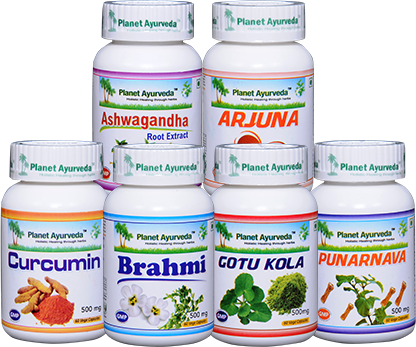
Product List

  1. Ashwagandha capsules
  2. Brahmi capsules
  3. Arjuna capsules
  4. Punarnava capsules
  5. Curcumin capsules
  6. Gotu Kola capsules

herbal remedies for transient ischaemic attack

Herbal Supplements for Transient Ischemic Attack

1. Ashwagandha Capsules

It contains ashwagandha (Withania somnifera). These capsules are filled with the robust properties of Ashwagandha. It improves the quality of blood. It also improves blood flow in the body.

Dosage : 2 Capsules twice daily with plain water after meals.

2. Brahmi capsules

It is composed of a single herb namely brahmi (Bacopa monnieri).  It is beneficial in reducing blood pressure. This is beneficial in hypertensive patients. Brahmi calms the mind and relieves symptoms of anxiety and stress.

Dosage  :  2 capsules with plain water two times a day after meals.

3. Arjuna Capsules

It is a single herb capsule composed of Arjuna (Terminalia arjuna). It is the herb of choice in heart conditions. It is a herb that provides strength to the cardiac muscles.

Dosage: 2 capsules with plain water 2 times a day after 30 minutes of meals.

4. Punarnava Capsules

It contains punarnava (Boerhavia diffusa) extract. It helps in maintaining a good cardiovascular system. It is beneficial in hypotensive patients. It also increases haemoglobin in anaemic patients. Punarnava is also advantageous in neurological problems that can arise due to Transient Ischemic Attack.

Dosage : 1 Capsule twice daily with plain water after meals.

5. Curcumin Capsules

It consists of Harida (Curcuma longa), which enhances blood circulation. It has anti-inflammatory properties thus alleviates inflammation anywhere in the body. Furthermore it pacifies all three doshas i.e. vata, pitta and kapha. As it improves the blood circulation in micro blood vessels, which makes it beneficial in Transient Ischemic Attack.

Dosage : 2 Capsules twice daily, with plain water, after meals.

6. Gotu Kola Capsules

These capsules are filled with Gotukola (Centella asiatica). Gotukola is known to be a ‘hridya’ which means cardiac health well being enhancer. It is useful in ‘raktapitta’, which is a bleeding disorder. Therefore it is beneficial in Transient Ischemic Attack.

Dosage :  2 Capsules twice daily, with plain water, after meals.

Contact Planet Ayurveda to provide you the costing / ordering and delivery information at – costing.planetayurveda@gmail.com or call at +91-172-5214040 Or Check Website – www.PlanetAyurveda.com

CONCLUSION

As we have discussed, Transient Ischemic Attack is known as ‘ministroke’ which is less drastic than the full blown disabling stroke. As it is a warning sign of a stroke, it becomes essential to take immediate care about the condition. As mentioned above, the management plan in the contemporary medicine system and ayurvedic system. Ayurvedic management is based on treating the root cause of the disease as well as symptoms of a medical condition. Moreover, there are numerous health benefits of a single herb other than the main action. Therefore, the above mentioned herbal capsules act mainly on the cardiovascular system and improve its wellbeing.

Hence advantageous in curing and preventing the Transient Ischemic Attack and further stroke.  In conclusion, aforesaid herbal capsules prepared by Planet Ayurveda provide relief from Transient Ischemic Attack and provide other numerous benefits.

Alternative Treatment For Demyelinating Diseases With Herbal Remedies

Abstract

Demyelinating Diseases include the conditions that are associated with the damage of myelin sheath which affects the Brain health. Brain health is the critical piece of your overall health that is a base on how you communicate, how you make decisions, live a productive life and good problem solving. The Brain is responsible for maintaining the whole functioning of the body and potentially considered as the valuable organ of the human body. So the Brain health is considered as the important one for the overall healthy functioning of the body. Now let’s discuss in detail about Demyelinating diseases, their types and ayurvedic management.

demyelinating diseases

Introduction

Demyelinating diseases include any of the conditions which causes damage to the myelin sheath- a protective covering of the nerve fibers mainly includes nerves leading to the spinal cord and eyes. The myelin sheath acts like electric wires that help in transferring of signals from the brain to the whole body. The damage to myelin sheath causes slow down and even stopping of nerve impulses which leads to neurological diseases. When the damage occurs in myelin sheath there is a scar formation which further leads to hindrance in the movement of signals thus the nerves do not work well as they have to perform. Now further let’s discuss all about Demyelinating diseases and how ayurveda helps in the management of the same.

Types of Demyelinating Diseases

1. Multiple Sclerosis

This is a chronic condition which involves the CNS (central nervous system). In this condition the immune system attacks the myelin sheath and leads to degeneration of myelin sheath. In this condition firstly temporary lesions occur and inflammation occurs in the myelin sheath. After some time it leads to long lasting lesions after the scar formation that make it hard for the brain to pass proper signals to the whole body.

Symptoms of Multiple Sclerosis: People with Multiple Sclerosis experience symptoms in a wide range. As the nature of the disease is different the symptoms may vary from person to person. The severity also varies from year to year and from month to month. Following are some of the main symptoms of Multiple Sclerosis

  • Fatigue
  • Difficult walking
  • Vision problems
  • Sleep issues
  • Tremors
  • Uncontrolled bladder habits
  • Difficulty chewing
  • Difficulty swallowing
  • Cognitive issues

2. Acute Disseminated Encephalomyelitis (ADEM)

ADEM is a neurological condition which involves a severe streak of inflammation in CNS (Central Nervous System). It includes parts like the spinal cord, brain and optic nerves sometimes. The swelling occurs on ADEM damage the myelin sheath thus leads to various symptoms.

Symptoms of ADEM: People over 50% experience symptoms within two weeks of condition and usually a viral or bacterial infection in the upper respiratory tract. The symptoms experienced by a patient of ADEM are written as follows:

  • Headache
  • Fever
  • Stiff neck
  • Balance problems
  • Drowsiness
  • Difficulty swallowing
  • Difficulty speaking

3. Neuromyelitis optica (Devic’s Disease)

This is also one of the diseases associated with CNS which affects the optic neuritis (eye nerves) and the spinal cord. This condition is also one of the autoimmune conditions in which the immune system reacts against the CNS cells, mainly the spinal cord, optic nerves and sometimes the Brain. Its cause is usually unknown and sometimes it occurs after an infection and may be associated with some other autoimmune condition.

Symptoms of Neuromyelitis Optica: Neuromyelitis optica cause blindness, weakness in arms and legs, paralysis in arms and legs, loss of sensation, painful spasms, uncontrollable vomiting, bowel or bladder dysfunction, hiccups, spinal cord damage. Most of the children get affected with this condition and face seizures, confusion and coma. The flare-up of neuromyelitis is reversible but it may cause permanent problems with walking and permanent vision loss.

4. Transverse Myelitis

It is the rare disease which includes inflammation that leads to injury of the spinal cord. This condition includes sensory alterations, weakness, autonomic dysfunction which includes involuntary activities like breathing, heart pumping, the digestion, absorption, etc. So it’s obvious if a person has a condition of Transverse Myelitis then one must face difficulty in the autonomic body functioning.

Symptoms of Transverse Myelitis: This condition may affect at any age, any race and any gender. It is not genetic and not run in families. It usually occurs between the age of 10 – 19 yrs and 30 – 39 yrs. The symptoms typically faced by the affected person are as follows:

  • Sensory problems
  • Pain
  • Bladder and bowel issues
  • Weakness
  • Paralysis

5. MOGAD (MOG Antibody Disease)

This is an immune-mediated neurological disorder which consists of the inflammation of optic nerve, brain and spinal cord. MOG is a protein named Myelin Oligodendrocyte glycoprotein which is present at the surface of myelin sheath. Its function is not actually known but basically in this disease this protein is a target. The severity of the disease varies from person to person and the diagnosis of the condition is done by the presence of MOG antibodies in the blood.

Symptoms of MOGAD: Following symptoms are faced by the affected person in case of MOGAD:

  • Loss of coloured vision
  • Blurring of vision
  • Loss of vision
  • Weakness in limbs
  • Paralysis of limbs
  • Seizures
  • Loss of bladder control
  • Loss of bowel control
  • Loss of sensation
  • Bladder retention

6. Balo’s Disease

This condition is also the autoimmune demyelinating condition in which the immune system attacks the healthy tissue of brain and spinal cord that cause inflammation and then scars. The difference in Balo’s disease and other demyelinating diseases is that it also damages the tissue along with the myelin sheath and the lesions look like a spot, blotches or bull’s eye marks.

Symptoms of Balo’s Disease: Many of the symptoms are same as that of Multiple Sclerosis and the mostly included symptoms are as follows:

  • Headaches
  • Muscle pain
  • Muscle spasm
  • Seizures
  • Muscle weakness
  • Paralysis
  • Trouble speaking
  • Behavioral changes
  • Trouble thinking

Above explained are the different types of demyelinating diseases along with the cause and its symptoms. Now let’s discuss the diagnosis and ayurvedic view of Demyelinating diseases.

Diagnosis

The diagnosis of Demyelinating Diseases is done by using several different diagnostic techniques. A proper medical and physical history is needed which includes brain, optic nerves, spine and peripheral nerves. A clinical diagnosis is done by asking a few questions about the symptoms, any infection history, family history, checking the muscle strength, ability to walk, coordination, eye examination, etc. Proper imaging is done for checking any kind of demyelination such as MRI which shows different patterns of demyelination that differentiate the different types of demyelination.

Ayurvedic View

Demyelinating disease is basically a neurological disorder and as per Ayurveda it can be correlated to vata vyadhi. Basically the demyelinating disease has a degenerative effect on myelin sheath so that vata dosha aggravation is the reason behind it. When the vata dosha aggravates it directly causes depletion of dhatus, be depletion of dhatus the degeneration occurs, so it may cause demyelination of myelin sheath. So basically the management of Demyelinating Diseases as per ayurveda is to balance the vata dosha. Let’s discuss the management of Demyelinating Diseases by Planet Ayurveda.

Herbal Remedies By Planet Ayurveda For The Management of Demyelinating Diseases

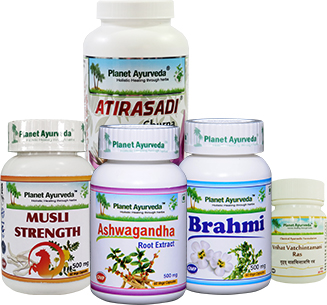
Planet Ayurveda is a clinic with GMP certification which formulates their own herbal supplementations for several health concerns. All the herbal remedies are devoid of any kind of added preservatives, color, fiber, gums, resins and any kind of synthetic materials. For the purpose of managing the Demyelinating diseases Planet Ayurveda provides 5 herbal remedies that we will discuss below in detail how all these remedies work alone in the management of Demyelinating Diseases.

  1. Brahmi Capsules
  2. Ashwagandha Capsules
  3. Vrihat Vatchintamani Ras
  4. Musli Strength Capsules
  5. Atirasadi Churna

demyelinating diseases care pack

Product Description

1. Brahmi Capsules

Brahmi Capsules by Planet Ayurveda is a miraculous herbal remedy which consists of standardised extract of Brahmi (Bacopa monnieri). Brahmi consists of potent brain boosting properties and is used as a memory enhancer, aphrodisiac and a health tonic. These herbal capsules possess very miraculous antioxidant effects that reduce formation of free radicals and prevent oxidative stress. It is useful in conditions that are related to neurodegeneration. It has a wonderful anti-inflammatory so we can use brahmi capsules in case of Demyelinating diseases.

Dosage: 2 capsules twice daily with plain water after meals.

2. Ashwagandha Capsules

Ashwagandha capsules is a herbal remedy by Planet Ayurveda consisting of standardised extract of Ashwagandha (Withania somnifera). Ashwagandha is a miraculous adaptogenic herb which aids in decreasing any kind of stress in the body which is the main cause behind any degeneration in the body. It also provides strength and immunity to the body and relieves associated symptoms of demyelinating diseases such as muscle pain, weakness, spasm, weakness in limbs, and various other symptoms.

Dosage: 1 capsule twice daily with plain water after meals.

3. Vrihat Vatchintamani Ras

Vrihat vatchintamani ras is a classical ayurvedic formulation which is formulated by Planet Ayurveda under the strict observance of M.D. Ayurveda practitioners. This ayurvedic formulation is present in tablet form and consists of ingredients such as swarna bhasma (calyx of gold), rajat bhasma (calyx of silver), loha bhasma (caly of iron), kumari ras (Aloe barbadensis) and various others. These tablets have been used for pacifying vata dosha and various neurological disorders since ancient times. As we have studied earlier, vata dosha aggravation is the main cause behind the demyelination of the myelin sheath, so vrihat vatchintamani is considered as an effective remedy.

Dosage: 1 tablet twice daily with plain water after meals.

4. Musli Strength Capsules

Musli strength capsules by Planet Ayurveda is a miraculous capsule formulation of boosting strength and immunity. These herbal capsules consist of standardised extract of two herbs such as safed musli (Chlorophytum borivilianum) and gokshura (Tribulus terrestris). The herbal formulation consists of adaptogenic, immunomodulatory, strengthening, antioxidants and anti inflammatory. These properties help in alleviating the inflammation, reduces the scars in myelin sheath, regenerates myelin sheath and releve the associated symptoms.

Dosage:  2 capsules twice daily with plain water after meals.

5. Atirasadi Churna

Atirasadi churna by Planet Ayurveda is a herbal formulation prepared in powder form. This herbal powder consists of ingredients like safed musli (Chlorophytum borivilianum), kali musli (Curculigo orchioides), gokshura (Tribulus terrestris) and various others. This churna contains immune boosting and strengthening properties which aids in boosting the immunity of the person affected with demyelinating disease as well as it prevents the degeneration of myelin sheath. Atirasadi churna is very effective in providing strength and alleviating symptoms such as muscle weakness, pain, muscle spasm, fatigue and various associated conditions.

Dosage: 1 tsp twice daily with plain water after meals.

Conclusion

Demyelinating diseases include any of the conditions which causes damage to the myelin sheath- a protective covering of the nerve fibres mainly includes nerves leading to the spinal cord and eyes. It includes various types such as Multiple Sclerosis, Transverse Myelitis, ADEM, Neuromyelitis optica, Balo’s disease and some others. The main cause of the demyelinating disease is autoimmune conditions. The symptoms mainly consist of weakness, spasm and pain in limbs, disturbed bowel and bladder functioning, paralysis and some other. For the management of Demyelinating Diseases Planet Ayurveda Provides herbal remedies that generally pacifies vata dosha, provides strength and boosts the immunity of the patient. These herbal remedies are devoid of any kind of added preservatives and synthetic material due to which these remedies are free from any kind of side effects. So feel free to consume these herbal remedies and if you feel any query while taking the herbal remedies you can contact us on www.planetayurveda.com.