Category: Pets and Animals

What is Potomac Horse Fever?- Treatment With Herbal Supplements

Potomac-horse-fever

Abstract

Summer and fall are thrilling months for horse owners as they gear up for a host of equine activities such as racing, competitions, sales prep, and even some laid-back horse watching. However, amidst all the excitement, it’s important to keep a close eye on your horse’s health. Unfortunately, Potomac horse fever (PHF), caused by the intracellular rickettsial organism Neoricketsia ristcii, is a potential threat to horses, particularly during the warmer months. This disease tends to occur near muddy areas such as rivers, streams, and marshes, and most of the cases are seen in the United States. PHF can cause a range of symptoms, including decreased appetite, malaise, fever, diarrhea, and even laminitis. However, with prompt recognition and appropriate treatment, PHF can be managed with supportive care. By keeping a watchful eye on your horse’s health, especially during the summer and fall months, you can help keep them safe from this disease. In this article we are going to discuss its causes, symptoms and treatment by natural methods or herbal formulations.

Potomac-horse-fever

Introduction

Potomac horse fever (PHF) is a disease that affects horses of all ages, characterized by mild colic, fever, and diarrhea, and in pregnant mares can result to abortion. The primary cause of PHF is the bacteria Neorickettsia risticii, which infects the enterocytes of the small and large intestine, leading to acute colitis – a key symptom of the disease. The disease typically occurs during the pre-summers, summers and in pre-winters and is common in marshy lands.

Causative factors

The process of PHF transmission is a little bit complex. Horses become infected by consuming mayflies and/or caddisflies that carry the rickettsial organism.

Infection can occur through ingestion of other hosts involved in the life cycle. After the organism is consumed, it invades the cells lining the gastrointestinal tract, particularly affecting the mucosal cells in the large colon.

End result is colitis that inhibits the absorption of nutrients and leads to loose motions. Causative Organism found in Stools of diseased horses but reason behind this is still unknown.

PHF is not contagious horse-to-horse, but horses in the same location may be at risk due to the presence of N. risticii in the environment.

Incubation period

It is in or around 1.5 to 3 weeks

Clinical Findings

Initial symptoms that are present

  • Potomac horse fever (PHF) typically represents with mild depression and loss of appetite as initial clinical features.
  • This is followed by a fever ranging from 102°F to 107°F
  • Intestinal sounds may be decreased at the time of fever
  • Within one to two days, around 60% of affected horses develop moderate to severe diarrhea.
  • The consistency of feces can range from soft piles to watery.
  • Diarrhea can be associated with mild abdominal discomfort

Some of the horses may show some severe clinical symptoms like

  • Sepsis and dehydration
  • Enterocolitis
  • Laminitis

Prevention

  • Prevention of PHF primarily depends on management strategies.
  • Although a PHF vaccine is available, its effectiveness is uncertain.
  • Turning off barn lights at night or replacing them with blue lights can reduce the number of Mayflies and Caddisflies attracted to the barn.
  • Keeping feed covered and insect-free can also lower the risk of infection.
  • Early detection of PHF symptoms is essential for timely treatment and to reduce associated complications.

Treatment – In Modern medicines

  • Treatment for PHF involves a range of therapies, such as antibiotics, anti-inflammatories, IV fluids, electrolyte supplementation, anti-diarrhea medications, and ice boot therapy.
  • The severity of the case determines the extent of treatment, and hospitalization may be necessary for intensive care.
  • While severe cases may have a poor prognosis due to severe colitis and/or laminitis, early treatment can improve the chances of recovery.
  • Prompt treatment is essential to prevent the spread of the disease and minimize the risk of complications.
  • With proper care and management, horses with PHF can make a full recovery and return to their normal activities.

Ayurveda says, in the context of managing Potomac horse fever, Ayurvedic principles could potentially be applied to support the overall health and immune function of horses, which may help reduce the risk of infection and improve outcomes if infection occurs. This can be achieved through a variety of methods, including diet, lifestyle practices, and herbal remedies. Planet Ayurveda provides some specific herbal formulations to combat this disease.

Herbal remedies by Planet Ayurveda for Potomac Horse Fever

Planet Ayurveda is a GMP certified herbal manufacturing company, where medicines are carefully prepared using traditional Ayurvedic techniques that have been passed down through generations. These methods involve using a combination of herbs and natural ingredients to create powerful formulations that target specific health conditions. All medicines that are prepared here are cruelty free, chemical free, and even free of side-effects. Some of the effective formulations are mentioned below for this condition

Product List

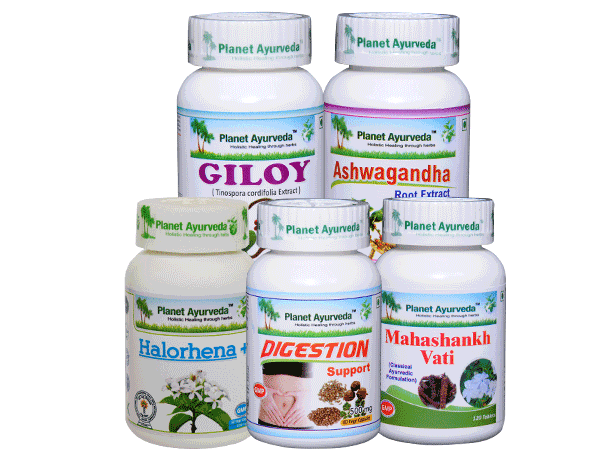
  1. Giloy Capsules
  2. Ashwagandha Capsules
  3. Halorhena + Capsules
  4. Digestion Support
  5. Mahashankh Vati

Herbal Supplements for Potomac Horse FeverBuy Now: Herbal Supplements for Potomac Horse Fever

PRODUCTS DESCRIPTION

1. Giloy Capsules

Planet Ayurveda prepared giloy capsules by standardized extract of herb giloy Tinospora cordifolia. This herb is named as amrita in sanskrit language which means it can provide longevity to the one. It is hot in potency and its tryadoshahara means balances all the three doshas.

Dosage: 6 Capsules twice daily, with meals.

2. Ashwagandha Capsules

Planet Ayurveda prepared it as a single herbal formulation that is prepared by using the standardized extract of Ashwagandha Withania somnifera. This herb is called as medhya which enhances the memory, rasayan is rejuvenator and is dhatupushti karak strengthens the dhatu of our body.

Dosage: 4 Capsules twice daily, with meals.

3. Halorhena + Capsules

These capsules are made by single herb Kutaj Holarrhena antidysenterica. In Sanskrit this herb is named as vatsak. Our Acharyas categorized this herb as asthpanopag, kandu ghana. Well known herb that is used in intestinal diseases like diarrhea, or undigested toxins./

Dosage: 4 Capsules twice daily, with meals.

4. Digestion Support

Planet Ayurveda provides this miraculous herbal formulation that is prepared by seven wonderful herbs, some of them are Amla Emblica officinalis, haritaki terminalia chebula etc. These herbs are helpful in making our digestion powerful and helps us to fight with infection, Amla is also used as an immunomodulator plant.

Dosage: 2 Capsules twice daily, with meals.

5. Mahashankh Vati

This is a classical herbal blend consisting of various herbs like Shunthi zingiber officinalis, etc. these formulations help us to solve the discomforts of horses. Vomiting, diarrhea, loss of appetite or anorexia can be relieved by our medicine. Blood related disorders can also be solved by this formulation.

Dosage: 6 tablets twice daily, with meals.

Contact Planet Ayurveda Support Team to provide you the costing / ordering and delivery information at – costing.planetayurveda@gmail.com or Call at 0172-521-4030 (India), +91-172-521-4030 (Outside India) or Whatsapp at (+91) 9915-593-604

Conclusion

In summary, Potomac horse fever can be managed by Ayurvedic herbal supplements as well as additionally by feeding a balanced diet that is tailored to the horse’s specific needs and includes nutrient-dense foods such as fresh vegetables and herbs. Providing regular exercise and opportunities for rest and relaxation to support overall health and wellbeing. Use Ayurvedic herbs and supplements, such as ashwagandha, guduchi, and triphala, to support immune function and reduce inflammation.

Diseases of Horses Affecting the Hock Joint- Treatment With Herbal Products

Diseases of Horses Affecting the Hock Joint

Abstract

The Hock joint in the horse is a complex joint and is used to generate power to jump and to sit. The hock joint is prone to injury and degeneration. As the weight of the body of a horse puts pressure on joints. Thus the long-term pressure on joints or some infection may lead to the deprived status of joints. The weight of a horse’s body puts a lot of pressure on its joints. Healthy joint cartilage can withstand this pressure, but long-term inflammation damages the cartilage and other joint tissues. The loss of cartilage in arthritic joints results in impaired function. Our ancient classical texts have ample episodes of our beloved friends and athletes. We all heard about Maharana Pratap’s Chetak, an Epitome of Love and Valor, an obedient friend who fought for his rider till its last breath.

Diseases of horses affecting the hock joint

Introduction

The horse’s hock is composed of 10 bones and 4 joints and is equivalent to the ankle of a human on the basis of evolution. These bones and joints are connected and supported by several ligaments. The upper part of the hock joint is formed by Tarso crural joint (TCJ), which is the largest joint with a ball and socket mechanism. It is a high-motion joint due to its greatest movement range. The other joints are PIT (proximal intertarsal), DIT (distal intertarsal), and tarsometatarsal (TMT) joint. These 3 joints act as low-motion joints and shock absorbers as well. The anatomy of the Hock joint is important to understand as to mark which part of the joint is affected the most. Horses of all disciplines can suffer from this problem as they always work heavily on the hind. Thus this is a brief about the general anatomy of the Hock joint of horses and later we will discuss the disease of the Hock joint with their ayurvedic approach to management. Let’s read

Clinical features

  • Pain in the Hock joint
  • Loss of performance
  • Lameness which can be intermittent
  • Swelling
  • Feeling of heat in the joint
  • Difficulty in going downhill
  • Feeling of lower back pain for compensation for hocks

Diseases associated with the hock joint

The following are the diseases associated with the hock joint in horses. We will discuss a few of the diseases here in this article

  1. Bog spavin
  2. Bone spavin
  3. Curb
  4. OCD

1. Bog spavin

Bog spavin is associated with tibiotarsal joint swelling of the hock of a horse. The joint of the horse becomes distended by synovial fluid. In younger horses, Bog spavin is caused by the defective tibiotarsal joint whereas in mature and old horses it is due to joint capsule chronic strain. The general causes include synovitis, joint degeneration, and regular/long-term strain of the capsule of the joint. There are no such significant changes in bone status in bog spavin. Trauma, infection, and the congenital joint defect can be the other underlying causes that may cause Bog spavin. In some horses swelling of the joint is also observable with the middle back surface of the hock. The bog spavin indicates that the horse is suffering from joint disease. The lameness may or may not be present, but in case of a heavy workload, the lameness may be seen. X-rays can be done to find out any change in the structural status of the joint.

2. Bone spavin

Bone spavin is the growth of the bone in the lower hock joint of the horse. The most possible causes of bone spaviness are cartilage compression, uneven loading, dressage, and Standardbred racing. It is a degenerative and non-septic type of arthritis. It is the basic lameness of hindlimb and is seen mainly in ponies and older horses as well. The lameness can be moderate to severe and can be associated with one or both joints. The lameness can range from mild stiffness with toe dragging to quite severe. Bone spavin is osteoarthritis and thus a degenerative condition of the bones and joint cartilage. The loss of cartilage gradually is the reason for the lameness.

3. Curb

Curb can be simply defined as collective injuries associated with soft tissues of the long plantar regions. The basic cause behind the curb is strain. There is associated thickening of the plantar tarsal ligament that runs down the back of the hock. The cause is typically strain. The other possible causes are falling, jumping, or pulling. The poor conformation of the hock joint increases the chances to develop the conditions. So the swelling in the distal lateral hock region area is the curb. This ligament may become inflamed and thickened after falling, slipping, jumping, or pulling. The condition is most common in Standardbreds, in which poor conformation of the hock makes the horse more prone to develop the condition. When we observe the horse from any side we can observe an enlargement or protrusion over the bone 10 cm below the hock point. A newly formed curb can show inflammation and lameness. Chronic curb may not show much lameness. The horse stands and favours the limb with the heel elevated. In cases of chronic curb, there is rarely any lameness or pain.

4. Osteochondritis dessecans (OCD)

Osteochondritis is a problem of abnormal joint development. This is a progressive condition associated with pain and inflammation. In this condition due to abnormalities of bone and cartilage, small fragments may result in breaking off and seen floating around/inside the joint. OCD is generally seen in young horses and foals. The other causes are nutritional issues, hormonal imbalances, or trauma due to overexertion. It is a type of developmental disorder.

5. Osteoarthritis (OA)

OA arises production of additional bone, due to additional bone and arises in the lower hock. Due to new bone formation, joint movement is restricted with pain and lameness. Horses who are involved in high-intensity workouts are more prone. Other associated factors for OA are poor conformation such as cow hock (conformational deformity of tarsals). Although it is also evident that horses undergoing low levels of workout may also suffer.

The ayurvedic aspect of horse hock diseases

Pashu chikitsa in Ayurveda shows the extension of Ayurveda. It is the developmental work done by Acharayas by virtue of their intellect that is always commendable. The origin of Pashu chikitsa and its development shows an association between humans and animals. Ancient texts are loaded with information about animal care. Sandhi roga in horses is prevalent due to the vitiation of doshas, especially the Vata dosha. Excessive exertion leads to an increase in the Vata dosha and reduced Kapha lead to the degreasing of the joints. The aggravated Vata causes pain and leads to the deprived status of the hock joint. The care of an animal by humans and vice versa shows our rich culture and high moral values. Planet ayurveda is following the principles of Ayurveda for the well-being of creatures, humans as well as our beloved pets.

Herbal remedies by Planet Ayurveda for horse hock diseases

Planet Ayurveda is a GMP-certified hub for the manufacturing of best-quality herbal remedies. The prime motive and ambition of Planet Ayurveda are to promote Ayurveda in each and every household of the world. We care for the pets because of the love and the companionship and want pet parents to prefer more herbal ways rather than synthetic herbs. Below are the herbs for the management of hock joint diseases in horses

Product List

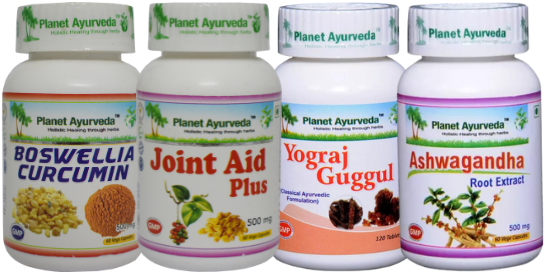
  1. Yograj Guggul
  2. Joint Aid Plus
  3. Boswellia Curcumin
  4. Ashwagandha Capsules

Herbal Products for Diseases of horses affecting the hock jointBuy: Now: Herbal Products for Diseases of horses affecting the hock joint

Brief explanation

1. Yograj guggul

Yograj guggul is a polyherbal formulation having Commiphora mukul, Cyperus rotundus, Plumbago zeylanica, Emblica Officinalis, Terminalia bellirica, Terminalia chebula, Piper longum and many more as the chief ingredients. Yograj guggul helps to relieve the pain and inflammation in the body. It is helpful to manage the autoimmunity conditions in the body. Thus yograj guggul has the ability to counter the issues of pain. It helps to prevent the status of excessive pain due to Vata pacifying properties.

Dosage– 6 tablets twice daily.

2. Joint aid plus

Joint Aid plus of Planet Ayurveda is a natural formulation of Planet Ayurveda having Nirgundi (Vitex negundo), Shallaki (Boswellia serrata), Guggul (Commiphora mukul), Sonth (Zingiber officinale), Ashwagandha (Withania somnifera) as a chief ingredient. This formulation is useful for the better status of joints in horses. The Vata pacifying properties of the added herbs are used to reduce joint pain and have good results in the diseases associated with hock joints in horses.

Dosage– 4 caps twice daily.

3. Boswellia curcumin

The Boswellia Curcumin of Planet Ayurveda is a herbal formulation loaded with pure extract of Boswellia and Curcumin. This herbal formulation is able to manage the conditions associated with inflammation in the body. Boswellia itself is an analgesic and curcumin has anti-inflammatory properties. Boswellia curcumin also helps to prevent aggravated inflammation. Very useful anti-inflammatory supplement and helps to reduce the pain and swelling in the hock joint.

Dosage– 4 caps twice daily.

4. Ashwagandha capsules

The chief ingredient of the Ashwagandha capsule is the standardised extract of Ashwagandha (Withania somnifera). Ashwagandha is known to reduce inflammation and act as a pain reliever. The presence of Withanolides in ashwagandha helps to reduce inflammation. Also ashwagandha acts as a powerful analgesic which is evident to soothe the nervous system and reduce pain as well. Ashwagandha is also denoted as the scent of a horse and is referred to as increased strength as well.

Dosage– 4 caps twice daily.

Contact Planet Ayurveda Support Team to provide you the costing / ordering and delivery information at – costing.planetayurveda@gmail.com or Call at 0172-521-4030 (India), +91-172-521-4030 (Outside India) or Whatsapp at (+91) 9915-593-604

Conclusion

Horses are prone to hock diseases due to long-term exertion throughout their whole life. Certain factors like joint defects, infections, and poor posture are the leading causes. The herbal remedies of Planet Ayurveda are helpful to manage the status of horses, our friends, and riders. It is our duty to inform the horse masters about the herbs for disease-free riders. Herbs promote long and disease-free life and prevent pets from the side effects of synthetic herbs.