Category: Arthritis / Bone / Joint Health

Effective and Safe Management of Rheumatoid Arthritis with Ayurveda

ABSTRACT

Rheumatoid arthritis is an autoimmune disease that causes pain, swelling and stiffness in the lining of joints (synovium). Joints inflammation over the time leads to destruction of Joints and loss of cartilages and bone erosion. RA with the symptoms duration of fewer than six months is considered as early RA and when the symptoms have been present for more than six months then it is considered as established RA. If RA is left untreated then it is progressive disease with morbidity and increased mortality. So, here we will discuss this more in detail with its ayurvedic point of view.

Rheumatoid Arthritis, autoimmune disease, Joints inflammation, Systemic Autoimmune disease, Diagnosis of Rheumatoid Arthritis, Treatment for Rheumatoid Arthritis, Causes of Rheumatoid Arthritis, Ayurvedic treatment for Rheumatoid Arthritis, Ayurvedic Overview, Herbal Remedies of Rheumatoid Arthritis, RA Care Pack

Introduction

Rheumatoid arthritis is a Systemic Autoimmune disease. It is characterised by inflammatory arthritis and extra-articular involvement. It is a chronic inflammatory disease caused by many factors such as genetic factors, environmental factors. RA primarily involves synovial joints. It typically starts from small peripheral joints,it is usually symmetric and progresses to involve proximal joints and then skin, heart and kidney. Joint inflammation over the time leads to destruction of joints with loss of cartilages and bone erosion. RA is a progressive disease with morbidity and increases mortality.Onset of the disease is usually from 35 to 60 years of age with remission and exacerbation.It can affect young childrens even before the age of 16 years, this is known as juvenile RA (JRA).

Causes

There is no exact cause of RA as it is an autoimmune disease. Several factors are thought to contribute to its development. That includes Genetics and environmental factors.

  • Environmental factors: Cigarette smoking, Infections
  • Sex: It is two to three times more common in women than in men.
  • Weight: If a person is overweight, their BMI is more than 25, increasing their risk of RA.
  • Hormonal factors: RA is more common in women than in men. Hormones may play a role in its development. Hormonal changes such as during pregnancy and menopause.
  • Immune Defence Dysfunction: RA is an autoimmune disease. This immune system primarily targets the synovium, the lining of the joint that causes inflammation of joints.

Signs and Symptoms

The signs in RA are:

  1. Joint pain
  2. Joint swelling, redness and feeling of warmth
  3. Morning stiffness that lasts up to 30 minutes

Other symptoms may include:

  1. Fatigue
  2. Poor appetite
  3. Fever
  4. Weight loss
  5. Sweating
  6. Dry eyes (As a result of inflammation)
  7. Chest pain (As a result of inflammation)

Diagnosis

The diagnosis of RA is basically based on symptoms, physical examinations, blood scans and imaging tests.

There is a diagnostic criteria for Rheumatoid Arthritis. It includes 4 different domains, which are as follows:

2010 ACR/EULAR Classification Criteria for RA

  • Elevated acute phase reactant (Erythrocyte sedimentation rate [ESR] or C-reactive protein [CRP]): 1 point
  • Number and size of the involved joints:
    • 2-10 large joints = 1 point (Shoulders, elbows, hips, knees, and ankles)
    • 4-10 small joints = 3 points
    • 1-3 small joints = 2 points (Proximal interphalangeal joints, metacarpophalangeal joints, second through fifth metatarsophalangeal joints, thumb interphalangeal joints, and wrists)
    • Greater than 10 joints (including at least 1 small joint) = 5 points
  • Serological testing for rheumatoid factor or anti-citrullinated peptide/protein antibody:
    • High positive = 3 points
    • Low positive = 2 points
  • Symptom duration of at least six weeks: 1 point

A total score greater than or equal to 6 classifies the patient as having RA.

The Blood Tests and Imaging Tests Include

1. Blood Tests

In blood tests, we look for inflammation and blood proteins (Antibodies) that are linked with RA.

  • ESR (Erythrocyte Sedimentation Rate): Higher than normal value
  • CRP (C-reactive Protein) levels: Higher than normal value
  • Rheumatoid Factor: Antibody that is found in RA patients.

2. Imaging Tests

In X-rays, MRI, CT scans signs of erosions are found. If these signs don’t show up, that means RA is in early stage.

Treatment

Rheumatoid arthritis treatment includes one or more kinds of medications. And in some cases, surgery is recommended.

Medicines

  • Disease modifying antirheumatic drugs (DMARDs)
  • Non-steroidal anti-inflammatory drugs (NSAIDs)
  • Corticosteroids
  • Biologics

Surgery

  • Knee replacement
  • Hip replacement
  • Other surgeries to correct deformity

Ayurvedic Overview

According to Ayurveda, Rheumatoid Arthritis is correlated with Amavata. Amavata is vitiation of Vata and accumulation of Ama in joints. Amavata is not only a disorder of the locomotor system, but it is also a systemic disease. It is named after chief pathogenic constituents which are Ama and Vata. The main causative factor Ama is due to malfunctioning of the digestive and metabolic system.

Causes (Nidana)

  • Viruddha Ahara (Mutually Incompatible food)
  • Viruddha Chesta (Unwholesome lifetime practices)
  • Mandagani (Low digestive fire)
  • Nischala (Sedentary life activities)

Symptoms

Initially, symptoms are like indigestion and in this condition, the disease has just begun and morbidity did not reach joints. These symptoms include:

  • Angamarda (Generalized body ache)
  • Aruchi (Anorexia)
  • Trishna (Thirst)
  • Gawrav (Heaviness)
  • Jwara (Fever)
  • Apaka (Indigestion)
  • Shinata (Numbness in body parts)

The later stage when the disease spreads to the joints, tissues, and symptoms of multiple organ and tissue damage occurs. These symptoms include:

  • Saruja souph (Painful swelling in joints)
  • Vrischik Danshwat peeda (Pain mimicking the scorpion sting)
  • Agnidaurbalya (Sluggish digestion)
  • Aruchi (Anorexia)
  • Gauravam (Heaviness in body)
  • Utsah haani (Lack of enthusiasm)
  • Shool (Pain)
  • Trishna (Thirst)
  • Chardi (Vomiting)
  • Bhram (Giddiness)
  • Murcha (Fainting)
  • Antra kunjana (Gurgling sound in abdomen)
  • Anaha (Flatulence)

Treatment

According to Ayurveda, treatment of Amavata includes Shaman Chikitsa (Pacifying therapy) and Shodhana Chikitsa (Purifying therapy).

Shaman Chikitsa (Pacifying therapy)

  • Shunthyadi Kwath (Decoction)
  • Shatyadi Kwath
  • Pippalyadi Kwath
  • Dashmool Kwath
  • Shunti-guduchi Kwath
  • Shunthi Gudda
  • Bhallatakadi Churana
  • Phalatrikadi Churana
  • Panchkola Churana

Shodhan Chikitsa (Purification therapy)

  • Langhan (Fasting)
  • Sweden (Sweating therapy)
  • Tikta, Katu Deepan (Pungent and bitter digestion support medicines)
  • Virechana (Purgation)
  • Kshara Vasti (Enema)
  • Abhyanga (Massage)
  • Pinda Sweda (Medicated powder bolus)
  • Upanaha (Poultice)

Herbal Remedies of Rheumatoid Arthritis by Planet Ayurveda

Planet Ayurveda is a GMP-certified company. They always provide a combination of the best herbal remedies. They prepare these formulations by following proper Ayurvedic principles. All these herbal remedies are 100% pure and vegan. All these medications are prepared under the supervision of MD scholars. These medicines are safe to use as they have no side effects. Planet Ayurveda provides a combination of effective herbal remedies for rheumatoid arthritis such as RA Care Pack. This pack includes:

  1. Ashwagandha Capsules
  2. Boswellia Curcumin
  3. Aamvatantak Churna
  4. RumoGin 5 Capsules
  5. Joint Aid Plus
  6. Yograj Guggul
Rheumatoid Arthritis, autoimmune disease, Joints inflammation, Systemic Autoimmune disease, Diagnosis of Rheumatoid Arthritis, Treatment for Rheumatoid Arthritis, Causes of Rheumatoid Arthritis, Ayurvedic treatment for Rheumatoid Arthritis, Ayurvedic Overview, Herbal Remedies of Rheumatoid Arthritis, RA Care Pack

Products Description

1. Ashwagandha Capsules

Ashwagandha capsules are standardized extract of pure herb Ashwagandha (Withania somnifera). As the name says – one that possesses the Gandha of Ashwa (smell of horse), it indicates that the herb imparts the strength of a horse. This herb helps to strengthen the immunity of the body. It is fruitful in neurological disorders and promotes overall wellness.

Dosage: 2 capsules twice a day with lukewarm water after meals.

2. Boswellia Curcumin

Boswellia Curcumin is a capsule blend of 2 herbs. It is a pure extract of Shallaki (Boswellia curcumin) and Haridra (Curcuma longa). Boswellia Curcumin is indicated in inflammatory and painful conditions and this works effectively in rheumatoid arthritis. It helps to relieve infection. It also helps to improve blood circulation and flexibility in joints.

Dosage: 2 capsules twice a day with lukewarm water after meals.

3. Aamvatantak Churna

Aamvatantak churna is a powerful powder that is a blend of herbs. The literal meaning of ‘Aam’ is endotoxins. This churna helps to digest ama (endotoxins/waste products) in the body. It contains the standardized extract of herbs – Ashwagandha (Withania somnifera), Haridra (Curcuma longa), Meth (Trigonella Foenum graecum), Suranjan (Colchicum autumnale), Gorakhmundi (Sphaeranthus indicus), Sonth (Zingiber officinale). It helps you to improve metabolism and corrects liver functions. It also reduces local pain, stiffness, and swelling. It improves the blood flow of the effective joints.

Dosage: 1 tsp with warm water before meals.

4. RumoGin 5 Capsules

It is a capsule with pure herbal formulation. It comprises Curcumin, Saunth (Zingiber officinale), Shallaki (Boswellia serrata), Maricha (Piper nigrum), and Pippali (Piper longum). It works as an anti-inflammatory. It aids in managing Rheumatoid arthritis and osteoarthritis. Shallaki (Boswellia serrata) due to its Vata balancing nature gives relief in joint pain.

Dosage: 1 capsule twice a day with lukewarm water after meals.

5. Joint Aid Plus

It is an herbal formulation in the form of a capsule. This is a powerful blend of many wonderful herbs. It is standardized pure extract of Nirgundi (Vitex negundo), Shallaki (Boswellia curcumin), Sonth (Zingiber officinale), Ashwagandha (Withania somnifera), Giloy (Tinospora cordifolia), Guggulu (Commiphora mukul). As Shallaki (Boswellia curcumin) has Vata balancing nature so it gives relief in joint pain.

Dosage: 2 capsules twice daily with warm water, after meals.

6. Yograj Guggul

It is an Ayurvedic formulation in the form of tablets. These tablets of Yograj guggul are prepared from the herbs like Guggul (Commiphora mukul), Amla (Emblica officinalis), Pippali (Piper longum), Chavya (Piper chaba), Musta (Cyperus rotundus), Chitrak (Plumbago zeylanica) etc. All these ingredients help in maintaining proper digestion by stimulating the digestive fire. Rheumatoid arthritis can occur because of digestive problems so these herbs are very useful in RA. These herbs also work as anti-inflammatory. This classical formulation is very effective in musculoskeletal disorders. It specifically works on Vata dosha.

Dosage: 2 tablets twice daily with lukewarm water after meals.

Conclusion

Rheumatoid arthritis can be taken parallel to the Amavata in Ayurveda. Ayurveda provides the best solution for this disease. When treated with an Ayurvedic treatment schedule as described in Ayurveda according to the condition of the patient and the state of the disease, it showed the best results. Planet Ayurveda’s RA care pack has shown amazing transformation in many patients as these medications are a pure combination of the best drugs.

What is Sarcopenia – Symptoms, Causes and Ayurveda Treatment

ABSTRACT

Growing older is linked to significant alterations in body composition, with the main cause being a reduction in skeletal muscle mass. Sarcopenia is the term used to describe this age-related loss of skeletal muscle. The age-related decline in muscle strength is directly connected to the age-related reduction in muscle. The main factor influencing the age- and sex-related variations in strength appears to be muscle mass rather than function. The location (upper vs. lower extremities) and function (extension vs. flexion) of the muscles have no bearing on this connection. One of the main reasons why older people have higher rates of impairment is because they have less muscle mass. Muscle strength is an essential component of walking ability, especially in the elderly due to their advancing age and extremely low activity levels. It’s possible that the elderly living in institutions have a higher risk of falls because of their weakened muscles. Over the course of adulthood, daily energy expenditure gradually decreases. Fat-free mass is the primary factor that determines energy expenditure in sedentary individuals. It decreases by around 15% during the third and eighth decade of life, which leads to a decreased basal metabolic rate in older adults. Research suggests that sarcopenia can be avoided and muscle mass preservation can help stop the decline in metabolic rate. Skeletal muscle plays a crucial part in energy metabolism, and as we age, it may also be linked to age-related changes such decreased bone density, insulin sensitivity, and aerobic endurance.

INTRODUCTION

Age-related loss of muscle mass and strength is a common skeletal muscle condition known as sarcopenia. It is increasingly acknowledged as a primary contributor to morbidity and disability in the aged. Sarcopenia may start in a person’s fourth decade of life. Skeletal muscle mass and strength appear to decrease linearly with age, with up to 50% of mass lost by the eighth decade of life, according to the evidence. A musculoskeletal condition known as sarcopenia is characterised by a progressive decrease of muscle mass and strength, especially in older people. Reduced levels of muscle strength, muscle quantity or quality, and physical performance are all included in the diagnosis of sarcopenia. Such musculoskeletal deterioration has been shown to have predictive value for adverse postoperative outcomes, higher rates of complications, death, and morbidity following major surgical procedures, and the inability to carry out daily tasks. Furthermore, there is a clear correlation between sarcopenia and a higher risk of fracture and a higher frequency of falls. Additionally, in people older than 90, loss of independence is associated with sarcopenia’s criteria of decreasing muscle mass or function. Sarcopenia is a condition that is being investigated more and more.

 Sarcopenia

CAUSES

The aging process is the most frequent cause of sarcopenia. You start to gradually lose strength and muscular mass in your 30s and 40s. The years 65 to 80 are when this process accelerates. Every ten years, you may lose up to 8% of your muscle mass, however rates can vary. Although everyone gradually loses muscular mass, sarcopenic individuals lose it more quickly. Although aging is often the primary reason, other potential risk factors for sarcopenia have been found by researchers. These could include:

  1. Physical exercise
  2. Obesity
  3. Rheumatoid arthritis
  4. Chronic kidney disease
  5. Diabetes
  6. Cancer
  7. HIV
  8. Insulin resistance
  9. Decreased hormone levels
  10. Malnutrition
  11. Reduced capacity to metabolise protein into energy

SYMPTOMS

  1. Muscle weakness
  2. Loss of energy
  3. Slow walking, falls
  4. Poor balance
  5. Difficulty climbing stairs
  6. Difficulty carrying out everyday tasks,and a
  7. Decrease in muscle size

DIAGNOSIS

  1. A physical assessment
  2. The self-reported clinical score is known as the SARC-F. SARC-F represents:
  3. S: Strength
  4. A: Walking assistance
  5. R: Getting out of a chair
  6. C: Climbing chairs
  7. F: Falls

Tests of muscular strength

  1. Walking pace test
  2. Hand grip test
  3. Chair stand test
  4. Short physical performance battery

Examining images

  1. Bioelectrical impedance analysis (BIA)
  2. Dual energy X-ray absorptiometry (DEXA)

MANAGEMENT

The majority of sarcopenia treatments include lifestyle modifications. These modifications to the daily schedule can help cure and reverse sarcopenia.

  1. Strength training based on resistance is the exercise. This type of exercise can help you become stronger and keep your muscles from deteriorating.
  2. Good food: When paired with regular exercise, a balanced diet can help reverse the signs of sarcopenia. It’s critical to increase protein consumption through diet and/or supplements.

AYURVEDIC VIEW

According to Ayurveda, sarcopenia is correlated with mamsa dhatu kshaya due to growing older. Due to the extreme vitiation of the vata dosha that occurs in old age, dhatu kshaya results. There are some causes and symptoms of mamsa dhatu kshaya, according to the ayurveda acharyas.

CAUSES

Causes relating to age

  1. Age (senile degeneration resulting from an overabundance of vata with ageing)

Causes linked to diet:

  1. Overly dry meals
  2. Merely consuming food for one taste
  3. Prolonged fasting

Causes connected to lifestyle

  1. Overdoing it when it comes to exercise
  2. Waking up late
  3. Stress
  4. Fear
  5. Depression, and
  6. Excessive rage

SYMPTOMS

मांसक्षये विशेषेण स्फिंग्रीवोदरशुष्कता |

सन्धिनां स्फुटं ग्लानिरक्षणोरायास एव च || (च सू १७ /६५ -७२ )

  1. Wasting of buttocks, cheeks, and other parts
  2. Pain
  3. Dryness in eyes
  4. Debility in sense organs
  5. Cracking sound in the joints
  6. Pain in the joints
  7. Collapse of blood vessels
  8. Wasting of buttocks, cheeks, lips, penis, thigs, chest, axilla, calves, abdomen, and neck
  9. Debility

HERBAL REMEDIES FOR SARCOPENIA BY PLANET AYURVEDA

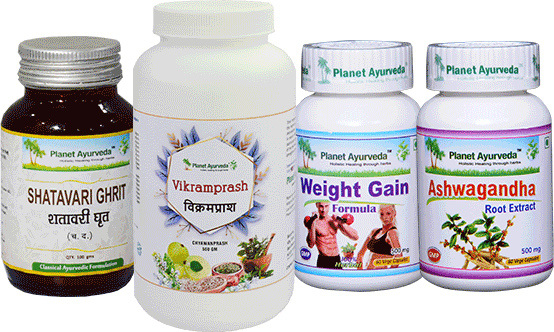
The special herbal formulations from Planet Ayurveda can help you ease the symptoms of sarcopenia and cure it miraculously by balancing the vata dosha and promoting mamsa vridhi. Planet Ayurveda uses four herbal formulations—vikramprash, shatavari ghrita, weight gain pills, and ashwagandha capsules—to treat sarcopenia. These formulas are all made under the appropriate guidance of M.D. Ayurvedic professionals. Formulations are entirely natural, devoid of artificial ingredients such as gums, starches, resins, fibres, etc. or preservatives.

PRODUCT LIST

  1. NOURISH MAXX
  2. MUSLI STRENGTH CAPSULES
  3. ASHWAGANDHA CAPSULES
  4. SHATAVARI GHRIT

Herbal Remedies for SarcopeniaAlternative Treatment for Sarcopenia

PRODUCT DESCRIPTION

1. NOURISH MAXX

With the aid of Ashwagandha (Withania somnifera), Chlorophytum borivilianum (Safed musli), Shatavari (Asparagus racemosus), and Tribulus terrestris (Gokshura), Planet Ayurveda created this multi-herbal combination Nourish Maxx. Packed with antioxidants, ashwagandha helps build muscle strength and is helpful in treating anxiety and stress. Additionally, safed Musli may encourage muscular growth, while gokshura is used to increase physical strength. Shatavari supports immunity and fortifies characteristics. This herbal treatment helps with sarcopenia by strengthening the muscles.

Dosage: Take one teaspoon twice daily.

2. MUSLI STRENGTH CAPSULES

Planet Ayurveda has created Musli Strength, a multi-herbal blend, in collaboration with Gokshura (Tribulus terrestris) and Chlorophytum borivilianum (Safed musli). Safed musli may encourage the growth of muscle by increasing growth hormone levels. Safed musli could significantly affect the body’s overall energy and endurance levels. The powerful components of this combo along with additional herbs may help lessen weakness and exhaustion while boosting the body’s energy levels. Gokshura is also used to enhance male reproductive health, physical strength, and athletic ability. Gokshura is said to have  immune-stimulating, aphrodisiac, and rejuvenating properties.

Dosage: Take one capsule twice daily.

3. ASHWAGANDHA CAPSULES

Planet Ayurveda formulates ashwagandha capsules, which are herbal capsules, using a standardised extract of Withania somnifera, also known as ashwagandha. The immune system is significantly strengthened by ashwagandha. It has been shown to assist immune cells that lessen inflammation and combat infection. Ashwagandha’s potent anti-inflammatory properties make it incredibly beneficial in painful conditions like arthritis. It is high in antioxidants, beneficial in restoring muscle strength, and useful in the treatment of stress and anxiety.

Dosage: Take one capsule twice daily.

4. SHATAVARI GHRIT

With the aid of Asparagus racemosus (Shatavari), Polygonatum cirrhifolium (Meda), Lal chandan (Pterocarpus santalinus), Go Ghrita (Cow’s Ghee), and a few other components, Planet Ayurveda created Shatavari Ghrit, a multi-herbal concoction. When all the ingredients are mixed together, a powerful herbal supplement is created that promotes muscle growth and nerve cell regeneration, which aids in weight gain. It balances the doshas of Pitta and Vata. boosts immunity and fortifies characteristics. It increases the white blood cell count. This herbal remedy should be a part of the sarcopenia treatment plan. If used with other drugs, it will help maintain the patient’s health and avoid sarcopenia.

Dosage: Take one teaspoon twice daily.

Contact Planet Ayurveda Support Team to provide you the costing/ordering and delivery information at – costing.planetayurveda@gmail.com or Call at 0172-521-4040 (India), +91-172-521-4040 (Outside India) or Whatsapp at (+91) 842-749-4030.

CONCLUSION

In medicine, the gradual loss of muscle mass, strength, and function is called sarcopenia. Sarcopenia is the term for the progressive loss of muscle mass and strength associated with aging. The main sign of the illness is muscle weakness. Sarcopenia, or the atrophy of the muscles, is primarily caused by ageing. Scientists have identified two risk factors for the condition: consuming unhealthy foods and not exercising. Sarcopenia and mamsa dhatu kshaya (ageing) are connected, according to Ayurveda. Dhatu kshaya arises when the vata dosha becomes overly vitiated with age. Certain herbal therapies are beneficial and useful for sarcopenia according to Planet Ayurveda.