Category: Knee Pain

Top 5 Herbs for Rheumatoid Arthritis Relief – Chronic Autoimmune Disorder
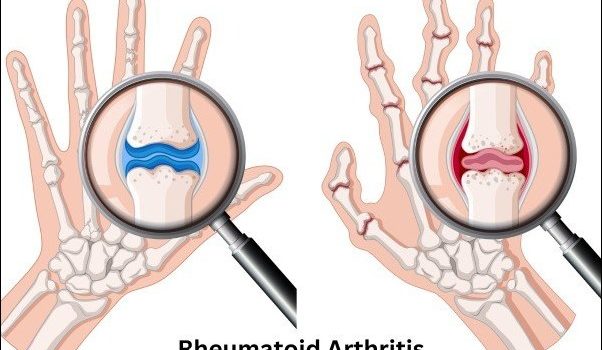
Rheumatoid Arthritis

Abstract

Rheumatoid arthritis is a chronic autoimmune disorder characterized by persistent immune mediated inflammation  which primarily involves the joints. It represents a systemic disease rather than a condition confined to a single tissue, reflecting complex interactions between genetic susceptibility, environmental factors and immune dysregulation. And it  constitutes a significant global health concern due to its chronic course and potential to influence overall physical function and long term health outcomes.

Introduction

Rheumatoid arthritis  is a chronic, systemic autoimmune disorder in which the body’s immune system mistakenly attacks the synovial lining of joints, leading to persistent inflammation, pain, swelling, stiffness and gradual joint destruction. It most commonly affects small joints of the hands and feet in a symmetrical pattern and is often associated with prolonged morning stiffness lasting more than one hour. Over time uncontrolled inflammation can cause joint deformities, reduced mobility and functional disability. It is not limited to joints alone and may involve extra articular organs such as the skin, eyes, lungs, heart and blood vessels. In Ayurveda, it is correlated with Amavata, a disorder caused by the accumulation of Ama (toxic metabolic by products) along with the vitiation of Vata Dosha. Due to weak Agni (digestive fire), Ama (toxic metabolites) forms and circulates in the body, eventually lodging in the sandhi (joints), where aggravated Vata carries it, resulting in its symptoms. Management of Amavata focuses on Ama Pachana (digestion of toxins), Agni Deepana (enhancing digestion), Vata Shamana (pacifying Vata) and Shodhana therapies (purification) along with appropriate dietary regulation and lifestyle modifications. Some of the herbs used in the treatment of rheumatoid arthritis are:

Rheumatoid Arthritis

Herbs  for Rheumatoid arthritis

1. Haridra

Curcuma longa  has tikta and katu Rasa (bitter and pungent taste), laghu and ruksha Guna (light and dry qualities), ushna virya (hot potency) and katu vipaka (pungent post digestive effects), making it highly effective in Ama Pachana (digestion of metabolic toxins) and Agni Deepana (improving digestive fire). Its bioactive compound curcumin powerfully helps in inflammation by suppressing cytokines like TNF-α, IL-6 pathways thus easing joint pain, swelling, stiffness and progression. Its natural anti-inflammatory and antioxidant properties help regulate abnormal immune responses and reduce inflammatory activity.

2. Shunthi

Zingiber officinale acts mainly as a Deepana and Pachana (digestive and carminative) agent. Its Ushna Virya (Hot potency) and katu rasa (pungent taste) helps to digest accumulated toxins (Ama), reduce Vata induced stiffness, improve circulation and provide mild anti-inflammatory and analgesic effects. Intake of its powder daily with warm water is very beneficial in relieving pain.

3. Shallaki

Boswellia serrata primarily works as an anti-inflammatory and analgesic herb. The active compounds like boswellic acids inhibit inflammatory enzymes and reduce joint swelling, pain and cartilage degradation. It directly supports joint integrity and mobility. It has strong Shothahara (anti-inflammatory), Vedanasthapana (analgesic) and Vata and Kapha Shamana (pacifying Vata and Kapha dosha) properties.

4. Maricha

Maricha or Piper nigrum acts as a Deepana and Pachana (digestive and carminative) and Yogavahi (bio enhancer) herb. It helps in proper digestion of Ama, enhances the effectiveness of other herbs and improves circulation, supporting reduction of stiffness and inflammation. It helps in enhancing Agni,  breaking down Ama (metabolic toxins) and improving micro circulation within the joints thereby reducing stiffness and heaviness.

5. Pippali

Piper longa functions as a Vata Shamana (Pacifying Vata dosha) and Deepana and Pachana (digestive and carminative) herb. It aids in digestion, promotes metabolism of Ama (metabolic waste), improves bioavailability of co-administered herbs and helps in relieving joint pain, stiffness and swelling by reducing systemic inflammation. Its key active compound piperine exhibits anti-inflammatory, immunomodulatory and antioxidant effects.

Home remedies and lifestyle changes for Rheumatoid arthritis

  1. Follow a warm, freshly cooked and easily digestible diet to support digestive fire and reduce toxin accumulation.
  2. Perform gentle joint movements daily to keep flexibility without overstraining the joints.
  3. Include mild spices like ginger, turmeric, cumin and black pepper in daily meals to maintain metabolic balance.
  4. Drink warm water or herbal decoctions throughout the day instead of cold beverages.
  5. Maintain regular meal timings to help stabilize digestion and metabolism.
  6. Apply warm oil massage using sesame or medicated oils to nourish joints and pacify dryness.
  7. Maintain a healthy body weight to reduce excess load on joints.
  8. Ensure adequate rest while avoiding prolonged inactivity which can worsen stiffness.
  9. Establish a regular sleep routine to support immune balance and tissue repair.
  10. Stay consistent with lifestyle discipline as regularity plays a key role in long term joint well being.

Planet Ayurveda’s Remedies

Planet Ayurveda is a renowned Ayurvedic healthcare company dedicated to providing authentic, plant-based herbal formulations prepared according to classical Ayurvedic principles. The organization emphasizes the use of standardized herbal extracts, free from chemicals, preservatives, artificial colors, and heavy metals, ensuring safety and purity.Planet Ayurveda integrates traditional Ayurvedic wisdom with modern quality control practices to support holistic health management. Its formulation like the Rumogin 5 capsule is very helpful in rheumatoid arthritis.

Herbal Remedy for Rheumatoid arthritis

Herbal Supplement for Rheumatoid arthritis

Rumogin 5 Capsules

It is a capsule formulation of Planet Ayurveda which consists of Haridra (Curcuma longa), Shunthi (Zingiber officinale), Shallaki (Boswellia serrata), Maricha (Piper nigrum) and Pippali (Piper longum). It is specially useful in rheumatoid arthritis by pacifying Vata and Kapha dosha , eliminating Ama (metabolic by products) toxins, lubricating joints and restoring mobility. It has Yogavahi (bioenhancer) and Deepana and Pachana (digestive and carminative) agents and facilitates deeper tissue penetration.

Dosage: 1 – 2 capsules two times in a day with plain water after meals.

Conclusion

causing systemic inflammation primarily affecting joints and leading to functional impairment. In Ayurveda, it is correlated with Amavata which results from the accumulation of Ama due to weak Agni and aggravated Vata Dosha and manifesting as joint pain, stiffness and systemic discomfort. Its management is primarily based on eliminating Ama (metabolic waste) from the body, Agni Deepana (enhancing digestion) and Vata Shamana through herbal formulations, Panchakarma therapies like Basti (enema therapy) and lifestyle modifications. Herbs such as Haridra (Curcuma longa), Shunthi (Zingiber officinale), Shallaki (Boswellia serrata) provide anti-inflammatory, analgesic and immune modulating effects and provide long term relief in patients.

Pigmented Villonodular Synovitis – Symptoms, Causes and Ayurvedic Treatment

Abstract

This curious condition of uncertain nature can be best characterized as a proliferative lesion of joints and tendon sheaths, marked by hemosiderin deposition within villous overgrowths of synovium. The synovial overgrowth may be sufficient to induce tumor-like masses which project into the joint or tendon sheath spaces. Indeed, as will be seen, one view holds that this lesion is basically neoplastic. It occurs as a localized process in tendon sheaths, but in joints the entire synovial lining is usually involved, particularly in the knee and less often the hip. Occasionally, lesions are found in periarticular tissues, presumably arising within sub-synovial connective tissue. Females tend to be affected slightly more often than males. Frequently, it leads to effusions into the joint spaces or tendon sheaths, accompanied by pain, swelling, and sometimes locking of the joint. Only the knee is involved in 80% of patients. It occurs usually in adults between 20-50 years of age.  Today we will read about pigmented villonodular synovitis in brief in this article.

Introduction

Pigmented villonodular synovitis is a progressive condition in which proliferative lesions of joints and tendon sheaths are caused due to overgrowth of synovium. The mass is non cancerous and does not metastasize to other body parts. Grossly, the lesion in tendon sheaths takes the form of a small, ovoid swelling, rarely greater than 3 cm in diameter which on transection is usually golden-yellow to red-brown, depending on the amount of contained lipid and hemosiderin. In joint spaces, more or less of the entire synovial lining is transformed into a tangled mat by numerous sessile or villous projections. Sometimes discrete, yellow-brown nodules having the appearance of neoplasms develop either within the thickened synovial membrane or as pedunculated lesions

Cause

  • The exact cause is unknown. It can be caused by CSF1 gene over-expression.
  • Genetic mutations of chromosome 1p13 and rearrangement of 5q33 chromosomal.
  • Associated conditions like giant cell tumors of tendon sheath.

Pathogenesis

The pathogenesis of this lesion is completely obscure. It has been viewed variously as:-

  1. A neoplastic process
  2. As inflammatory in origin, although no specific agents been isolated
  3. As a localized disturbance of lipid metabolism leading to accumulation of lipids within phagocytic cells with secondary traumatic changes
  4. As an obscure overgrowth of synovial and peri synovial cells.

The fact that the lesion frequently recurs following incomplete excision has been taken as evidence for a neoplastic origin, but such behavior does not rule out other possible origins. We must leave it that this disabling but not life threatening condition is still a complete enigma.

Symptoms of Pigmented Villonodular Synovitis

Symptoms

  • Swelling and pain in joints which are affected
  • Locking of the joint
  • Stiffness in joints

Diagnosis

  • Physical examination:- Inspection of joints to check  joint effusion, erythema, tenderness and motion of affected joint.
  • X-ray:- It may show periarticular mass, soft tissue swelling and cystic erosion of joints.
  • Magnetic resonance imaging:-  It shows excellent pictures of delineation of both extra-articular and intra-articular disease.

Treatment

  • Medical:- Use of CSF-1 receptor antagonist
  • Surgery:- Partial synovectomy/complete synovectomy is done.

Ayurvedic overview

In ayurveda, pigmented villonodular synovitis’s symptoms nearly resemble Kroshtukasheersha which is described in sushruta samhita nidansthana vatavyadhi chapter shloka 76. In this disease mainly vata and rakta are involved.

वातशोणितज: शोफो जानुमध्ये महारुज:। 

शिर:क्रोष्टुकपूर्वं तु स्थूल: क्रोष्टुकमूर्धवत ।।  (सु. सं .नि .1/76)  

According to the above shloka:- In knee joint vikriti (imbalance) of vaat and rakta develop severe pain and swelling which is known as Kroshtukasheersha.

Vata dosha gets aggravated with above mentioned factors which lead to occupied vacant channels. On filling the vacant spaces, the aggravated vata develops many diseases like it may be limited to a particular area or affecting the whole body that is vatavyadhi.

Treatment

  1. Raktamokshana (blood letting therapy):- In this therapy impure blood is expelled out from the body by using horns, leech, multiple pricking, gourds etc.
  2. Purgation:- This therapy is done by herbs in which toxins are expelled out from the body.
  3. Fasting therapy:- It brings lightness in the body.
  4. Raktashoshan (blood purification)

There are various herbs which purifies the blood including

  • Neem:- This is bitter and astringent in taste. It is always kapha and pitta but aggravates vata. It is light and cold in effect. Due to these properties it purifies the blood and prevents skin from acne, pimples, allergies, etc. It reduces the toxin level in the body.
  • Turmeric:- It contains bitter and pungent properties. It is light, dry and hot in effect. It is helpful in blood formation along with blood purification.
  • Manjishtha:- It is bitter and astringent and sweet in taste. It is heavy, dry and hot in effect but it is a pacifier of kapha and pitta. It helps to gain lusture and glow to the skin and aids to remove pimples, freckles and discoloration. It also promotes the healing of skin tissues damaged by injury or infection.
  • Daruharidra:- It is bitter and astringent, light, dry and hot in effect. It reduces inflammation and pain. It is a wound healer.

Herbal remedies for pigmented villonodular synovitis by planet ayurveda

Planet ayurveda provides various ayurvedic medicines for different kinds of diseases. They made various types of formulation by following all the principles of ayurveda in ancient textbooks. These ayurvedic medicines are GMP certified and are safe for the human body. All the formulations are made from pure herbs which are highly effective in the human body and free from harmful chemicals, preservatives, yeast or additives. Planet ayurveda provide herbal remedies for pigmented villonodular synovitis:-

  1. BOSWELLIA+CURCUMIN
  2. JOINT AID PLUS
  3. LAKSHADI GUGGUL
  4. KANCHNAAR GUGGUL
  5. KAMDUDHA RAS (MOTI YUKT)

Herbal Remedies for Pigmented Villonodular Synovitis

Ayurvedic Management of Pigmented Villonodular Synovitis

Product Description

1. Boswellia+curcumin

It is a poly herbal capsule made from shallaki (Boswellia serrata) and haridra (curcuma longa). Boswellia have anti-inflammatory features which stop the cytokines secretion and reduce inflammation or swelling. Curcuma longa has an antioxidant property which protects brain neurons and reduces the wrinkles on skin. It purifies the blood and helps in blood formation in the body. It also applies on cuts and bruises because it is a natural antibiotic. It prevents colon and skin tumors. It is known as antibacterial, anti-allergic, carminative and diuretic medicine. It is an effective remedy for sprains, wounds and inflamed joints.

DOSE:-2 capsule twice daily, after meals with plain water.

2. Joint aid plus

It is a polyherbal capsule formed from nirgundi (vitex negundo), shallaki (boswellia serrata), guggul (commiphora mukul), etc. It is bitter in taste but hot in effect. It has qualities to pacify all three doshas in the body (vata, pitta and kapha). It is light, dry, sharp and unctuous. It contains calcium, magnesium, iron and silicon dioxide. It is a very potent medicine for various types of joint problems such as rheumatoid arthritis, osteo arthritis and gout. It helps in reducing pain, swelling and tenderness of the inflamed joints. It has anti-hypercholesterolemic properties. It lowers serum triglycerides and cholesterol levels. It is an antioxidant and immune-modulator. It prevents all types of weakness and increases one’s strength and stamina. It induces sound sleep.

DOSE:- 1 Capsule twice daily

3. Lakshadi guggul

It is a herbal tablet made from laksha (laccifer lacca), arjuna (terminalia arjuna), ashwagandha (withania somnifera), etc. It is bitter and astringent in taste. It is dry, cold and light in effect. It is also a pacifier of kapha and pitta. It contains calcium, magnesium, aluminium etc. it is healer of wounds, antibacterial, antifungal and antipyretic. It is beneficial for heart diseases. It helps in excessive palpitation due to anxiety. It helps bones to regain strength after fractures. It contains anti-anginal properties. It is anti inflammatory as well anti-lipemic.

DOSE:– 2 tablets twice with lukewarm water

4. Kanchanaar guggul

It is a herbal tablet which is formed from kanchanar bark (bauhinia variegata), amalaki (emblica offinalis), haritaki (terminalia chebula), etc. It is bitter and astringent in taste but hot in effect. It has a strong antioxidant which reduces toxins from the body. It contains magnesium, calcium, vitamin B, iron, vitamin C, proteins and dietary fibre. It is effective in relieving pain. It reduces swelling and stiffness of joints. It helps in purification of blood and regulates the level of cholesterol. It improves the menstrual cycle in females.

DOSE:- 2 tablets twice daily with lukewarm water

5. Kamdudha ras (Moti yukt)

It is a classical ayurvedic pills made from giloy satva (tinospora cordifolia), mukta shukti bhasma (pearl oyster), shuddha gairik (red oxide of iron), etc. It pacifies all the three doshas. It is cold in effect. It acts as an anti inflammatory, antipyretic, anti arthritic, a blood purifier, antacid, antiemetic, etc. It decreases the heat level in the body and balances the production of acid in the stomach and decreases the inflammation of the organs. It is helpful in nausea, vomiting, and improving appetite. It inhibits gastric ulcers. It helps in treating white discharge from vagina in females. It is a rejuvenator and a restorative tonic.

DOSE:- 2 Pills twice daily

Contact Planet Ayurveda Support Team to provide you the costing / ordering and delivery information at – costing.planetayurveda@gmail.com or Call at 0172-521-4030 (India), +91-172-521-4030 (Outside India) or Whatsapp at (+91) 9915-593-604

Conclusion

Pigmented villonodular synovitis is a progressive condition in which proliferative lesions of joints and tendon sheaths are caused due to overgrowth of synovium. In ayurveda it is caused by vitiation of  vata and rakta. In ayurveda we can manage this condition by various methods like blood purification by leech, horns etc. and by herbs like curcuma longa, neem, manjistha, daruharidra, etc.