Category: Anti-Aging

Health Benefits Of Ashwagandha-indian Ginseng

Abstract

Ashwagandha is one of most potent herb in Ayurvedic healing system. It is composed of two sanskrit words (Ashwa – horse and Gandha – smell, because its roots when crushed give smell like horse’s urine).

This describes that herb provides the strength of a stallion and traditionally prescribed to strengthen immune system of people after illness. Ashwagandha is also known as Indian Ginseng because of rejuvenating properties though ginseng and Ashwagandha are not related to each other.

Ashwagandha

Geographic distribution

Ashwagandha has the great medicinal importance in Ayurveda from ancient times. This herb is found in all over parts of India. Ashwagandha is grown in various botanical gardens in India.

Classification

  • Sanskrit names – Ashwagandha, Balada, Kamrupini, Gandhpatri ,Vajini
  • Common names – Winter cherry, Indian ginseng
  • Scientific name – Withania somnifera
  • Family – Solanaceae
  • Plant parts used – Whole plant parts

Morphology

  • Size – This is an erect, perennial and branched herb and usually 30-60 cm in height but can grow up to 170 cm.
  • Leaves – Leaves are alternate and ovate, up to 10 cm long.
  • Flowers – Flowers are 4-6mm in diameter and bright yellow or greenish.
  • Fruits – Red berries enclosed in a papery protective covering (Calyx).
  • Roots – Roots are long, unbranched and fleshy tubers.

Health benefits of Ashwagandha -INDIAN GINSENG

Ashwagandha is packed with miraculous properties which are quite beneficial in body healing for various health complications. Thus it has become new ray of hope in the management of various health complications.

According to Ayurveda, Ashwagandha helps to balance the vata dosha which is related to brain health. Ashwgandha  has calming effect on nerves.Moreover regular consumption of Ashwagandha may result in numerous health benefits.

Ashwagandha benefits are discussed in details below

  • Anti – cancerous properties – It has been found in various research studies that Ashwagandha has anti cancerous properties which are quite beneficial to provide relief in the cancer. It also helps to reduce the adverse effects of chemotherapy and radiation without interference with tumor cell killing activities.
  • Antimicrobial activities – Ashwagandha is a valuable medicinal herb in Ayurveda. It possesses the antimicrobial activities which are effective to manage the various infection like gastrointestinal, urinogenital and respiratory tract infections.
  • Cardio – protective properties – It also offers health benefits in the cardiovascular problems. It provides strength to heart muscles and also helps to maintain the good cholesterol levels.
  • Anti stress properties – Aswagandha acts like a nervine tonic. It helps to maintain the both physical health and mental health. According to Ayurveda, Ashwagandha helps to balance the vata dosha which is related to brain health. It helps to pacify the nervous system thus provide the relief in stress, anxiety and depression.
  • Anti-diabetic properties – Ashwagandha also possesses anti diabetic properties because its helps to maintain the good blood sugar levels. It has been found that regular consumption of Ashwagandha helps to manage the problem of diabetes.
  • Stimulation of thyroid gland – Ashwagandha helps to improve the thyroid health. It is an adptogenic herb which helps to manage the both hypo and hyper thyroid complications. It helps in the proper functioning of thyroid hormones.
  • Antioxidant properties – Ashwagandha is also packed with the antioxidant properties. It helps to neutralize free radicals which are produced during metabolism. It is beneficial to manage the oxidative stress in body.
  • Immunomodulatory properties – Ashwagandha helps to strength the immune system which is beneficial to provide the relief in various infections.
  • Skin health – Ashwagandh helps in stimulation of DHEA which is an adrenal steroid hormone in the body. It helps in the production of proteins which are helpful in maintaining the skin hydration, skin elasticity and collagen which are good for healthy skin.
  • Healthy hair – Ashwagandha also supports the good hair texture. It helps to improve the scalp circulation and provide the strength to hair. It also supports the production of melanin pigment that is responsible for hair color. Use of this herb is also good to get rid from dandruff.
  • Blood production – Ashwagandha also possesses the haemo poetic properties which means it is useful in the production of blood cells. It is also helpful to manage to problem of anemia.
  • Aphrodisiac properties – Aphrodisiac properties of Ashwagandha helps to improve the fertility and vitality. It is helpful to enhance sexual desire. In case of males it helps to improve the quality and production of semen. Where as in case of females it helps to manage the hormonal imbalances.
  • Anti-inflammatory properties – Ashwagandha’s anti-inflammatory properties helps to provide the relief in joint pains and various other body pains. Ashwagandha is packed with phytochemical compounds like saponins, alkaloids and steroidal lactones which have anti-inflammatory properties.
  • Mood booster – Ashwagandha herb is also known as the mood booster. It helps women to cope up with the mood swings.
  • Increases the body’s stamina and strength – Ashwagandha helps to maintain the body’s stamina because it helps to balance the adrenal hormones which are involved in the physical activities. These hormones help to decrease the pain of muscles and joints while doing physical activities though they also help to maintain the same energy levels. This is the reason, athletes consume Ashwagandha .
  • Helpful in insomnia – Ashwagandha’s rejuvenating properties are beneficial in insomnia. It helps to pacify the nervous system thus beneficial to manage the stress. It also helps people to maintain a good sleep.

Contact Planet Ayurveda Support Team to provide you the costing/ordering and delivery information at costing.planetayurveda@gmail.com or Call at 0172-521-4040 (India), +91-172-521-4040 (Outside India) or Whatsapp at (+91) 842-749-4030.

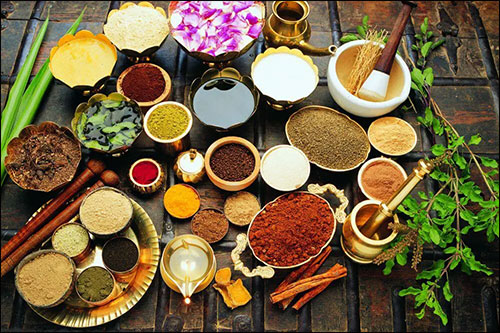
What is Ayurveda – Dr Vikram Chauhan

Abstract

Ayurveda is ancient system of medicine in the world. It is originated in India about 5000 years ago. The word Ayurveda means “science of life” and it is derived from two Sanskrit words ayur(life) and veda(science or knowledge).

ayrveda tios

This shloka is from Charak Samhita and its meaning is Ayurveda is a science that describes the advantages, disadvantages, happy and unhappy state of life and what is good or bad for life and its span. It is an ancient science which deals with not only longevity but also maintaining healthy body and mind. It is a science of body and mind.

Ayurveda

MULBHOOT SIDDHANTA (Basic Principles of Ayurveda)

Ayurveda lies on two basic principles which are explained below

  • Dosha-Dhatu-Mala Siddhanta
  • Panchamahabhoot Siddhant

Dosha-Dhatu-Mala Siddhanta

“Doshadhatumalamulam hi shariram”

This siddhanta explains the basic constitution ofhuman beings- three doshas, seven dhatus and three malas.

  • Tridoshas– These are also called tri-energies. There are three main doshas in the body which are Vata, Pitta and Kapha. Balance of all three doshas make body healthy and normal and imbalanced state is considered as diseased state. Ayurvedic treatment mainly lies on the balance of all three doshas.
  • Sapta Dhatu – It explains the body consists of seven dhatus which are given below:
  • Rasa (Plasma) – Its main function is Prinan (to provide nourishment to body).
  • Rakta (Blood) – It is considered very important for sustaining life.
  •  Mamsa (Muscle) – It covers all the internal body components and performs function of Lepan.
  • Meda (Fat tissue) – Its main role is Snehan means oleation in different body parts like lubrication to joints and it also provide extra safety to tissues.
  • Asthi (Bones) – It provides support to body (Dharan).
  • Majja (Bone Marrow) – It is located in the hollow cavity of bones and it helps to provide extra support.
  • Shukra (Semen) – Its main function is in reproduction.
  • Mala – There are three malas in body- Purish (faeces), Mutra (Urine) and Sweda (sweat).five-elements-ayurveda

Panchamahabhoot Siddhant

It explains that human body is composed of five basic elements (Panchamahabhoot) namely- Prithvi (earth), Jal (water), Tej(fire), Vayu (air) and Akaash (ether). It is said that

“Yatha loke tatha dehe”

It means that if these elements are in equilibrium then body is healthy and functions smoothly. And its imbalance causes illness.

            समदोष:समाग्निच्श्र  समधातुमलक्रिय:
         प्रसन्नात्मेन्द्रियमना: स्वस्थ इत्यभिधीयते॥ (सुश्रुत)

  • It is a Sanskrit version in ayurvedic text which explains health:
  • Samdosha meaning balanced doshas- vata, pitta and kapha
  • Samaagnishcha means balanced agni or digestive or metabolic fire.
  • Samadhatu meaning dhatus or tissues are well nourished.
  • Malakriya meaning balance in excretion or waste disposal through urine, stool and sweat.
  • Prasanna atma means peaceful soul.
  • Prasanna indriya means balanced senses.
  • Prasanna manah means happy state of mind.
  • If all these are balanced then a person is called healthy. Any deviation or disruption or any Imbalance of these is called a disease.

How Ayurveda works?

According to Ayurveda, all creations are made up of five elements: ether, air, water, earth and fire. These are basic aspects of human life. On the basis of these elements Ayurveda works. When these elements are balanced and strong then person works in a healthy way. Imbalance of any three doshas results in disease. Panchkarma Therapy (Sanshodhan): It is useful to remove extra toxins from body by bio-purificatory methods.

Pacification (Shaman): It works through diet, lifestyle changes, herbs etc.

ANCIENT TEXTS OF AYURVEDA

There are two main classifications of Ayurvedic Texts

  • Brihat trayi
  • Laghu trayi
  • BRIHAT TRAYI : Major Ayurveda Texts

It is comprised of three treatises – Charak Samhita, Sushrut Samhita and Ashtang Haridya.

  • Charak Samhita : It is the oldest Ayurveda text which is written by Acharya Charak. He is regarded as father of medicine. He explain eight branches of Ayurveda and Panchkarama.
  • Sushrut Samita : It is written by Acharya Sushrut. He is the father of surgery. He explained the human anatomy and various surgeries. He followed Dhanwantri  School of thought.
  • Ashtang Haridaya : It is combination of Charak and Sushrut Samhita. It is written by Acharya Vagbhata.
  • LAGHU TRAYI : Minor Ayurveda texts

It is comprised of three treatises- Madhav Nidan, Sharangdhar Samhita and Bhava Prakash Samhita.

  • Madhav Nidan : It is an ayurvedic text written by Acharya Madhav. It mainly works on pathogenesis of disease (Roga Vinishchaya) like causes, symptoms, complications and treatment.
  • Sharangdhar Samhita : It is written by Acharya Sharandhara. It includes information of different formulations. It describes general description of health, and pulse diagnosis.
  • Bhava Prakash Samhita : It is written by Acharya Bhavmisra. It includes all information related to herbs, diseases and different formulation used in Ayurveda.

BRANCHES OF AYURVEDA

The Ayurveda is an ancient medicine system which is divided into eight branches

  • Kaaya Chikitsa (Internal medicine)
  • Kaumar Bhritya (Pediatrics treatment)
  • Bhoot Vidya (Psychiatry)
  • Shalakya Tantra (treatment of eyes, nose, throat, head related disease)
  • Shalya Tantra (Surgery)
  •  Agad Tantra (toxicology)
  •  Rasayana (Geriatrics)
  • Vajjikarana (Aphrodisiac therapy)
  • Kaaya Chikitsa: Kaaya means agni – the digestive fire in the body. It is holistic approach of medicine which is mainly helpful in treatment of whole body. It is related to metabolism in the body. If imbalance of kaaya occurs it results in many diseases. It deals with treatment of diseases by balancing agni.
  • Baala Chikitsa : It is also called Kaumara Bhritya. It is the branch of Ayurveda which is concerned with treatment of children.
  • Bhoot Vidya : It is the branch of ayurvedic science which deals with treatment of diseases of mind.
  • Shalakya Tantra : It mainly deals with treatment of eyes, nose, throat and ears.
  • Shalya Tantra : It deals with surgery.
  • Agad Tantra : It includes the study of poisonous substances.
  • Rasayan Chikitsa : It deals with various aspects of healthcare. Its main aim is to achieve long and healthy life,  memory, complexion glow and strength
  •  Bajikaran Chikitsa: It deals with problems of shukra dhatu in the body.

Contact Planet Ayurveda Support Team to provide you the costing/ordering and delivery information at costing.planetayurveda@gmail.com or Call at 0172-521-4040 (India), +91-172-521-4040 (Outside India) or Whatsapp at (+91) 842-749-4030.