Ascites Symptoms, Causes and Herbal Treatment

ABSTRACT
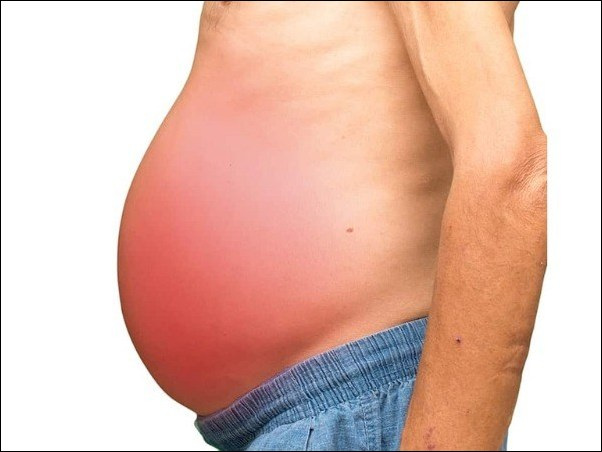
Ascites also known as Jalodara in Ayurveda is one among Udara Roga. According to Ayurveda Jalodara is the accumulation of water in the abdominal cavity exceeding 25 ml. It often occurs due to cirrhosis or other liver disease. Decreased digestive fire accompanied by unbalanced doshas causes Ascites. Symptoms such as abdominal heaviness and stiffness, shortness of breath, bloating, wheezing, edema of feet, and dilated veins are seen in Ascites. Let’s discuss it in detail.
INTRODUCTION
Ascites are described briefly in Ayurvedic literature. According to Ayurveda, Ascites are caused by various other pathologies like heart disease, liver diseases, splenomegaly, kidney diseases, wasting diseases, etc. Ayurvedic management with drugs that increase digestive fire, hepatoprotective drugs, daily therapeutic purgation and only a milk diet that acts by breaking down the pathogenesis gives good results in ascites. Diet restrictions are majorly advised in Ascites.
MAJOR CAUSES OF ASCITES
- Liver diseases like Liver Cirrhosis, Liver Cancer (Cirrhosis being the major cause).
- Portal Hypertension
- Heart Diseases
- Pancreatitis
- Hypoalbuminemia
- Peritoneal Tuberculosis
- Malnutrition
SYMPTOMS OF ASCITES
- Large distended Abdomen
- Protruded belly button
- Lack of appetite
- Vomiting
- Indigestion
- Increased Thirst
- Abdominal discomfort
- Shortness of Breath
- Coughing
- Visible veins on the abdomen
- Swelling in lower legs
- Bloating
- Painless swelling in the abdomen
DIAGNOSIS
- FLUID SAMPLE: A needle is used to aspirate fluid from your abdomen.
- BLOOD TEST : Initial investigations include cell count,differential,total protein.
- IMAGING: Images of the inside of your abdomen are taken using ultrasound, MRI, or a CT scan.
- LAPAROSCOPY: It is done to rule out the cause of ascites.
AYURVEDIC OVERVIEW
As per the Ayurvedic Point of view, Ascites also known as Jalodara is mainly due to blockages of channels (Strotas) causing heart problems, Kidney diseases, Portal Hypertension, and Liver diseases ultimately leading to Ascites. .It falls under the type of Udara roga. In Ayurveda, aggravated Vata gets accumulated in Udara between skin and muscle tissue leading to swelling, this is being termed as Udararoga. Procedures like Swedana ie. Sedation, Diuresis, Nitya Mridu Virechana ie . regular use of mild purgatives are used. Herbal drugs like Punarnava, Pippali, Haritaki, etc are used along with it drugs that are carminative and hepatoprotective in nature are used. Dietary measures like decreasing salt intake, only a milk diet is recommended.
TREATMENT AS PER AYURVEDA
Ayurveda gives effective results in Ascites by treating Agni (Digestive fire) and unbalanced Dosha. Through Nidana Parivarjana (avoiding causative factors), Agni Deepan (Provocation of digestion), and Nitya Virechana (daily therapeutic purgation followed with sodium restriction is used to treat ascites. Further treatment of ascites is given below:
Herbal Formulations Include
- Powders: Patola Muladha Churana, Narayan Churan.
- Vati: Arogyavardhini vati, Punarnava Mandoor Vati.
- Ghrita: Panchakola Ghrita, Chitrak Ghrita, Nagaradi Ghrita.
- Herbal Drugs like Punarnava, Brihata Panchamoola, Shunthi, etc.
- Snehana (Oleation): It is used before the Panchakarma treatment. Dashamoola oil and Narayan oil is used in oleation therapy
- Swedana (Sedation): Swedan is done to remove toxins accumulated in circulatory channels.
- Virechana (Purgation): In Virechan there is induction of purgation to remove toxins from the body. Nitya Virechan is given in ascites. Castor oil with rock salt, castor oil with Triphala kwath, Kutki, Mustaka, Trivrita are used for Nitya Mridu Virechan.
- Shastra Karam: It is a surgical procedure done using an instrument. An incision is given on the left side of the abdomen below the umbilicus. A metallic tube is inserted through a puncture and accumulated fluid is drawn out. All the accumulated fluid is not drained out once and this procedure is repeated again. Administration of water is strictly prohibited after Shastra Karama.
- Kshara: The patient is given Tikshana Kshara with Gaumutra.
HERBAL REMEDIES FOR ASCITES BY PLANET AYURVEDA
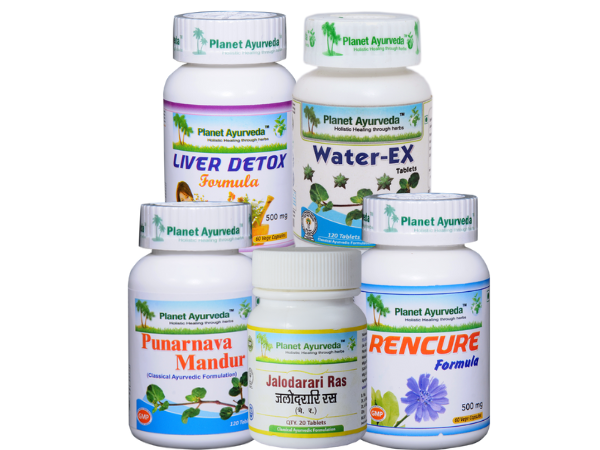
Planet Ayurveda offers the best combination of effective herbal remedies such as the Ascites Care Pack for the Ayurvedic treatment of Ascites. Ascites care pack contains medicines in the form of Tablets and Capsules. It is a polyherbal pack that contains Punarnava, liver detox capsules, jalodarari rasa, etc. For natural and herbal treatment always look for natural products which contain pure extracts and are formulated under GMP guidelines. Planet Ayurveda products are scientific and certified. They are free from any chemicals, additives, and preservatives. Products of Planet Ayurveda are formulated by MD Doctors and are 100% natural, pure, and free from side effects.
Product List
-
-
- Punarnava Capsules
- Water-EX tablets
- Rencure Formula
- Liver detox Capsules
- Jalodari Rasa
-

PRODUCT DESCRIPTION
1. Punarnava Capsules
Punarnava capsules are an effective formulation that contains a single herb ie. Punarnava (Boerhavia diffusa). Punarnava is helpful in liver abnormalities and in decreasing the accumulation of water in the abdomen by removing excess water through urine.
Dosage: 2 capsules twice daily with warm water after meals.
2. Water-EX tablets
Water-EX tablets are herbal formulations that contain Punarnava (Boerhavia diffusa), Varuna (Crataeva nurvala), and Gokshura (Tribulus terrestris). These herbs in Water Ex Tablets balance Kapha and Vata dosha and are diuretic, demulcent, and anti-inflammatory in nature. Therefore it is helpful in eliminating excess fluid.
Dosage: 2 tablets thrice daily with warm water after meals.
3. Rencure Formula
It is an effective formulation which contains Punarnava (Boerhavia diffusa), Varuna (Crataeva nurvala), Gokshura (Tribulus terrestris), Palash (Butea monosperma), Kasni (Cichorium intybus). It treats kidneys by reducing their destruction, maintaining normal creatinine levels, increasing urine output, treating proteinuria and maintaining normal functioning of kidneys.
Dosage: 1 capsule twice daily with warm water after meals.
4. Liver Detox Capsules
Liver detox capsules contains hepatoprotective herbs like Katuki (Picrorhiza kurroa), Punarnava (Boerhavia diffusa), Kalmegh (Andrographis paniculata), Makoy (Solanum nigrum ), Biranjasipha (Achillea millefolium-yarrow), Jhavuka (Tamarix gallica), Himsra (Capparis spinosa) Haritaki (Terminalia chebula), Kasni (Cichorium intybus) which are helpful in removing toxins from liver and maintains fat metabolism. These herbs maintain normal liver activity by normalising liver functioning.
Dosage: 2 capsules twice daily with warm water after meals
5. Jalodari Rasa
It is a wonderful formulation that contains Pippali (Piperlongum), Maricha ( Piper nigrum), Tamra Bhasma (Calx prepared from copper), Turmeric (Curcuma longum), Jaipal (Croton tiglium), Snuhi ksheera (Euphorbia neriifolia). Tamra Bhasma in Jalodari Rasa helps in reducing abdominal distension/pain caused by ascites. It reduces inflammation caused by accumulated fluid by removing excess water from the abdomen./
Dosage: 1 tablet twice daily with warm water after meals.
Contact Planet Ayurveda Support Team to provide you the costing / ordering and delivery information at – costing.planetayurveda@gmail.com or Call at 0172-521-4030 (India), +91-172-521-4030 (Outside India) or Whatsapp at (+91) 9915-593-604
CONCLUSION
Alternative treatment for ascites can help in treating ascites and reducing the symptoms of ascites. Water retention and edema in ascites can be easily tackled by Ayurvedic treatment, a good diet followed by precautions. Further complications of ascites can be avoided by following Ayurvedic treatment. Therefore Ayurveda is an authentic and well-proven solution for treating Ascites.

