Herbal Remedies of Hepatopulmonary syndrome – Causes, Symptoms, Diagnosis & Treatment
Abstract
Hepatopulmonary syndrome is a significant pulmonary complication that develops in individuals with chronic liver disease and portal hypertension. The vascular changes interfere with efficient gas exchange and may lead to symptoms such as shortness of breath, fatigue, cyanosis, and worsening breathlessness in an upright position. The severity of hepatopulmonary syndrome can vary from mild oxygen deficiency to severe respiratory impairment, adversely affecting quality of life and overall prognosis. Its diagnosis generally involves the assessment of arterial oxygen levels and the detection of intrapulmonary vascular dilatation through appropriate imaging techniques. Early recognition is important because respiratory symptoms may be overlooked in patients with advanced liver disorders.
Statistics for Hepatopulmonary syndrome
- Hepatopulmonary syndrome (HPS) is estimated to affect approximately 4% to 19% of patients with liver cirrhosis.
- The occurrence of HPS increases in individuals undergoing evaluation for liver transplantation, with a reported prevalence of around 17.2%.
- Studies have reported HPS in approximately 26.1% of patients with portal hypertension who are being assessed for liver transplantation.
- A pooled prevalence of nearly 21.6% has been observed among patients undergoing or associated with liver transplantation.
- Hospitalized patients with HPS may experience significant complications, with reported inpatient mortality rates ranging from 12.4% to 12.6%.
Interesting Facts about Hepatopulmonary syndrome
- A liver disease can cause a lung oxygenation problem: Although the lungs may appear structurally normal, liver dysfunction can trigger abnormal widening of blood vessels inside the lungs, reducing efficient oxygen transfer.
- Symptoms may worsen when standing: A distinctive feature of HPS is platypnea, in which shortness of breath becomes worse in an upright position and improves when lying down.
- Oxygen levels can drop on sitting or standing: This phenomenon is called orthodeoxia and is considered an important clinical clue for HPS.
- The liver and lungs are connected through circulating substances: In advanced liver disease, substances that are normally cleared or regulated by the liver may contribute to increased production of vasodilators, particularly nitric oxide, in the lungs.
- A patient may have severe oxygen deficiency with relatively mild respiratory symptoms: Some individuals gradually adapt to low oxygen levels and may not recognize the seriousness of their condition.
- A special “bubble test” can help detect it: Contrast echocardiography using agitated saline can demonstrate abnormal passage of microbubbles through dilated blood vessels in the lungs.
- Clubbing and bluish discoloration may occur: Long-standing low oxygen levels can cause finger clubbing and cyanosis in some patients.
Introduction
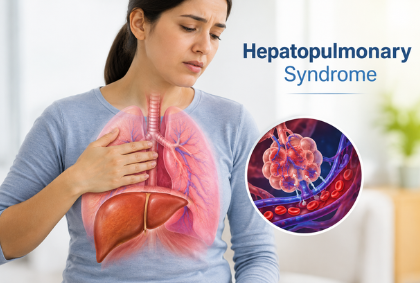
Hepatopulmonary syndrome (HPS) is an important extrahepatic complication of chronic liver disease that affects the relationship between the liver, pulmonary circulation, and oxygen exchange. It is primarily associated with cirrhosis and portal hypertension, although it may also occur in other forms of chronic hepatic dysfunction. The condition develops when abnormal changes in the pulmonary blood vessels interfere with the normal transfer of oxygen from the lungs into the bloodstream. Dilatation of small pulmonary vessels increases the distance between inhaled oxygen and circulating red blood cells, resulting in impaired oxygenation. The underlying mechanisms of hepatopulmonary syndrome are complex and involve disturbances in vascular regulation. Increased production of vasodilatory substances, inflammatory mediators, and alterations in pulmonary vascular tone are considered important contributors. Nitric oxide is believed to play a major role in the excessive widening of blood vessels within the lungs. These changes may gradually lead to reduced oxygen levels and progressive respiratory discomfort. Hepatopulmonary syndrome can significantly affect daily functioning and overall health status, making it an important complication requiring greater clinical awareness in individuals with chronic liver disorders.
Causes of Hepatopulmonary syndrome
Hepatopulmonary syndrome develops mainly as a consequence of chronic liver dysfunction and portal hypertension, which produce abnormal changes in the blood vessels of the lungs. The central abnormality involves excessive widening of small pulmonary blood vessels. This dilatation interferes with the normal movement of oxygen from the air spaces of the lungs into the bloodstream, resulting in reduced arterial oxygen levels. Several liver-related conditions can contribute to the development of HPS.
- Cirrhosis – It is the most common condition associated with hepatopulmonary syndrome.These changes can increase the levels of vasodilatory and inflammatory substances in the bloodstream. When these substances reach the lungs, they may promote abnormal widening of pulmonary blood vessels and contribute to impaired oxygen exchange.
- Portal hypertension – Increased pressure within the portal venous system is another important factor linked with HPS. The syndrome may develop in individuals with portal hypertension even when cirrhosis is not fully established. Altered blood flow and the development of portosystemic shunting can allow various circulating substances to bypass normal hepatic processing, potentially affecting the pulmonary circulation and causing excessive vascular dilatation.
- Other chronic liver disorders – Chronic hepatic disorders that produce portal hypertension or substantial impairment of liver function may create conditions favorable for the development of abnormal pulmonary vascular changes.
- Acute liver failure – Although less common, severe acute liver dysfunction has also been associated with hepatopulmonary syndrome. Sudden and marked impairment of liver function can disrupt normal vascular regulation and alter the balance of circulating mediators involved in blood vessel tone.
- Portal vein thrombosis – Obstruction of the portal vein by a blood clot can increase pressure within the portal circulation and produce significant alterations in hepatic blood flow. In some cases, these circulatory disturbances may contribute to the development of pulmonary vascular abnormalities characteristic of HPS.
- Congenital hepatic fibrosis – It can lead to portal hypertension despite relatively preserved liver cell function. The resulting changes in portal circulation may occasionally be associated with the pulmonary vascular dilatation seen in hepatopulmonary syndrome.
Signs and Symptoms of Hepatopulmonary syndrome
Hepatopulmonary syndrome may not produce noticeable symptoms in many individuals, particularly during its early stages. When clinical manifestations appear, they may include:
- Shortness of breath – Difficulty in breathing may become more prominent while sitting or standing and may improve after lying down. This characteristic positional breathlessness is known as platypnea.
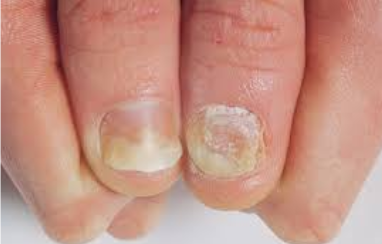
- Clubbing of fingers – Prolonged reduction in oxygen levels can cause the fingertips to become enlarged, rounded, and bulbous. The nails may also appear more curved than normal.
- Spider angiomas – Small dilated blood vessels may become visible beneath the surface of the skin, often forming a pattern similar to the legs of a spider.
- Cyanosis – Insufficient oxygen in the blood can cause changes in the natural color of the lips, tongue, skin, or nail beds. A bluish discoloration may be more apparent in lighter skin tones, whereas grayish or pale changes may be easier to notice on the lips or tongue in darker skin tones.
- Orthodeoxia – Some individuals experience a reduction in blood oxygen levels when moving from a lying position to an upright position. This unusual feature may occur along with platypnea and is considered a characteristic manifestation of hepatopulmonary syndrome.
- Fatigue and reduced exercise tolerance – Persistent low oxygen levels can contribute to tiredness, weakness, and difficulty performing physical activities that were previously well tolerated.
Diagnosis of Hepatopulmonary syndrome
The diagnosis of hepatopulmonary syndrome (HPS) is based on the presence of liver disease, impaired oxygenation, and abnormal dilatation of blood vessels within the lungs. The diagnosis include:
- Medical history – HPS should be considered in individuals with chronic liver disease or portal hypertension who develop unexplained shortness of breath. Particular attention should be given to platypnea, in which breathing difficulty becomes more pronounced in the sitting or standing position and improves when the person lies down.
- The diagnostic triad of HPS – Hepatopulmonary syndrome is generally characterized by three major components: Presence of chronic liver disease and/or portal hypertension, impaired oxygenation of arterial blood without another sufficient explanation, intrapulmonary vascular dilatation (IPVD), meaning abnormal widening of blood vessels within the lungs.
- Pulse oximetry – Pulse oximetry is a simple and non-invasive method used to assess oxygen saturation. It can help identify reduced oxygen levels and may be useful as an initial screening tool in patients with liver disease who experience respiratory symptoms.
- Arterial blood gas analysis (ABG) – It measures parameters such as the partial pressure of oxygen in arterial blood and can help determine the severity of hypoxemia. ABG testing is particularly important in patients with significant respiratory symptoms or suspected advanced HPS.
- Contrast-enhanced echocardiography – The timing of bubbles reaching the left chambers of the heart can help identify the location of abnormal blood flow. In intrapulmonary vascular dilatation, microbubbles generally appear in the left atrium after passing through several cardiac cycles. This delayed appearance helps distinguish an intrapulmonary shunt from an abnormal communication located directly within the heart.
- Pulmonary angiography – It can demonstrate abnormal patterns in the pulmonary blood vessels, including diffuse, fine, or patchy vascular abnormalities associated with intrapulmonary vascular dilatation.
- Technetium-99m macroaggregated albumin scan – A nuclear medicine scan using technetium-99m-labelled macroaggregated albumin may also be used to demonstrate abnormal passage of blood through dilated pulmonary vessels. In the presence of significant intrapulmonary shunting, some particles can bypass the lungs and reach organs such as the brain or kidneys.
Management of Hepatopulmonary syndrome
Management of hepatopulmonary syndrome (HPS) focuses on correcting hypoxemia, controlling the underlying liver disease, monitoring disease progression, and evaluating the patient for liver transplantation. The management strategies include:
Treatment of the underlying liver disease
Cirrhosis, portal hypertension, viral hepatitis, alcohol-related liver disease, metabolic liver disease, and other causes of chronic hepatic injury should be managed according to their specific clinical setting. Maintaining overall liver health is important because HPS is closely associated with hepatic dysfunction and abnormal portal circulation.
Supplemental oxygen
Oxygen supplementation is the principal supportive treatment for patients with clinically important hypoxemia. It increases the amount of oxygen available to the tissues and can reduce symptoms such as breathlessness, fatigue, and reduced exercise tolerance. Oxygen may be administered continuously or during periods of activity or sleep according to the degree of oxygen deficiency and individual requirements.
Liver transplantation and recovery
Following successful transplantation, the abnormal pulmonary vasodilatation and impaired oxygen exchange usually improve progressively rather than immediately. Oxygen levels can increase over time as the abnormal pulmonary circulation gradually returns toward normal.
Management of severe hypoxemia
Severe hypoxemia requires close monitoring and management in a specialized setting. Supplemental oxygen is used to maintain adequate oxygenation while definitive treatment is considered. Patients undergoing liver transplantation with severe HPS can occasionally develop profound hypoxemia immediately after transplantation and may require intensive respiratory support.
Embolization in selected patients
Pulmonary angiographic intervention may have a role in the uncommon patient who has a discrete, significant arteriovenous communication rather than predominantly diffuse pulmonary vascular dilatation. Coil or other embolization techniques can sometimes reduce abnormal shunting and improve oxygenation.
Pharmacological therapy
Several medications have been investigated for HPS, including methylene blue, pentoxifylline, garlic preparations, mycophenolate mofetil, somatostatin analogues, nitric-oxide pathway inhibitors, and anti-angiogenic drugs.
Nutritional and general support
Patients with advanced liver disease and HPS may be vulnerable to malnutrition, muscle wasting, fatigue, and reduced physical capacity. Adequate nutritional support, appropriate physical activity according to tolerance, avoidance of alcohol, vaccination where appropriate, and prevention or prompt treatment of infections are important components of overall care.
Ayurveda Insights
In classical Ayurvedic texts, its clinical features may be understood through the concepts of Yakrit (liver), Rakta (blood), Pranavaha Srotas (respiratory channels), Agni, and Dosha imbalance. Chronic liver dysfunction may be associated with impaired Agni and disturbed Pitta, while breathlessness and reduced functional capacity may indicate involvement of Vata and Pranavaha Srotas. Ayurvedic management may focus on supporting liver function, maintaining healthy digestion, reducing metabolic disturbances, and strengthening the body’s tissues through suitable Deepana-Pachana and Rasayana approaches. Treatment should be individualized according to Prakriti and disease status.
Pathogenesis of Hepatopulmonary syndrome
Chronic hepatic dysfunction may lead to Agni Dushti, causing impaired metabolism and disturbance of Pitta Dosha, which is closely associated with Yakrit (liver) and Rakta Dhatu. Persistent Dosha imbalance may contribute to Rakta and Rasavaha Srotas Dushti, while progressive involvement of Vata Dosha can affect Pranavaha Srotas. This may manifest as Shwasa (breathlessness), fatigue, and reduced functional capacity. Prolonged disease progression may also result in Bala and Ojas Kshaya, further compromising systemic strength. Thus, an Ayurvedic interpretation may be understood as a sequence of Agni Dushti, Dosha Prakopa, Dhatu and Srotas Dushti, followed by Pranavaha Srotas involvement.
Home Remedies of Hepatopulmonary syndrome by Planet Ayurveda
Planet Ayurveda is a well-established Ayurvedic healthcare organization that works to promote the ancient knowledge of Ayurveda through natural remedies and holistic health solutions. The company develops a wide range of herbal formulations using pure, high-quality ingredients and standardized herbal extracts, with a focus on maintaining safety, authenticity, and effectiveness. Following the principles of classical Ayurveda, Planet Ayurveda aims to support overall health by addressing the underlying causes of health concerns and encouraging balance in the body, mind, and emotions. With an emphasis on quality, natural ingredients, and traditional approaches supported by modern research, the organization works toward making Ayurvedic wellness solutions available globally. We will explore various herbal approaches used for the management of Hepatopulmonary syndrome according to Ayurvedic principles. The herbal formulations are:
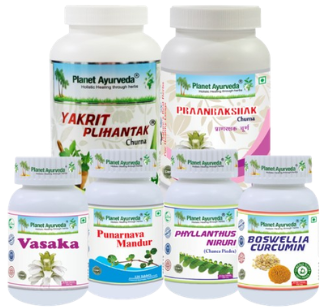
- Yakrit Plihantak Churna
- Phyllanthus Niruri
- Punarnava Mandur
- Praanrakshak Churna
- Boswellia Curcumin
- Vasaka Capsules
Herbal Remedies of Hepatopulmonary syndrome

Product description:
1. Yakrit Plihantak Churna
It contains a combination of Ayurvedic herbs traditionally used to support Yakrit (liver) function and Rakta metabolism. Its ingredients include Bhumi Amla, Bhringraj, Kalmegh, Kaasni, Katuki, Sharpunkha, Punarnava, and Makoy. In the context of hepatopulmonary syndrome, this formulation may be considered as supportive Ayurvedic care aimed at maintaining hepatic function and addressing factors associated with chronic liver dysfunction. Bhumi Amla, Bhringraj, Kalmegh, Kaasni, and Katuki are traditionally valued for their hepatoprotective and Pitta-balancing properties, while Sharpunkha is used in classical practice for liver and splenic support. Punarnava is traditionally associated with fluid balance and supports healthy renal function, whereas Makoy is recognized for its traditional use in hepatic and inflammatory conditions. Collectively, these herbs may support digestion, metabolism, and liver health
Dosage: 1 teaspoonful twice a day with plain water after meals.
2. Phyllanthus Niruri
It is traditionally regarded as a liver-supportive herb in Ayurveda and is used in formulations intended to maintain hepatic function. Bhumi Amla extract contains bioactive constituents such as lignans, flavonoids, tannins, and polyphenolic compounds, which have demonstrated antioxidant and hepatoprotective activities. In the context of hepatopulmonary syndrome, maintaining liver health may be relevant because HPS develops in association with chronic hepatic dysfunction and portal hypertension. Bhumi Amla extract may therefore be considered as a supportive measure for hepatic wellness, particularly when underlying liver dysfunction is being managed.
Dosage: 2 capsules twice a day with plain water after meals.
3. Punarnava Mandur
It is an Ayurvedic formulation traditionally used to support liver function, Rakta Dhatu, digestion, and fluid balance. In the context of hepatopulmonary syndrome, its traditional actions may provide supportive care by promoting healthy digestion and metabolism, supporting hepatic function, and maintaining Rakta and fluid balance. Punarnava is particularly valued for its traditional use in liver and fluid-related disorders, while Amalaki and Haridra provide antioxidant support.
Dosage: 2 tablets twice a day with lukewarm water.
4. Praanrakshak Churna
It is an Ayurvedic herbal formulation containing Shirish (Albizia lebbeck), Vaasa (Adhatoda vasica), Anantmool (Tylophora asthmatica), Dalchini (Cinnamomum zeylanicum), Bharangi (Clerodendrum serratum), Kantkari (Solanum xanthocarpum), and Mulethi (Glycyrrhiza glabra). These herbs are traditionally used to support Pranavaha Srotas (respiratory system) and promote comfortable breathing. Vaasa, Kantkari, Bharangi, and Mulethi have traditionally been valued for their supportive role in respiratory conditions, while Shirish is recognized in Ayurveda for its use in respiratory and allergic disorders.
Dosage: 1 teaspoonful twice a day with lukewarm water.
5. Boswellia Curcumin
It is a herbal combination containing Shallaki (Boswellia serrata) and Curcumin (Curcuma longa), two botanicals traditionally valued for their anti-inflammatory and antioxidant properties. In hepatopulmonary syndrome, chronic liver dysfunction is associated with inflammatory and vascular changes that contribute to abnormal dilatation of pulmonary blood vessels and impaired oxygenation. Shallaki contains boswellic acids, while curcumin provides curcuminoids that have been studied for their ability to modulate inflammatory and oxidative pathways. Therefore, this combination may offer supportive antioxidant and anti-inflammatory benefits in individuals with chronic liver disease.
Dosage: 1 capsule twice a day with plain water after meals.
6. Vasaka Capsules
These capsules containing Vasaka (Adhatoda vasica), are traditionally used in Ayurveda to support the Pranavaha Srotas (respiratory system). Vasaka is known for its bioactive alkaloid vasicine and has traditionally been used for supporting healthy respiratory function, particularly in conditions associated with cough, mucus accumulation, and breathing discomfort. In hepatopulmonary syndrome, respiratory symptoms may occur because abnormal pulmonary vascular changes interfere with efficient oxygenation. Vasaka may therefore be considered as a supportive respiratory herb for maintaining comfortable breathing and overall pulmonary function.
Dosage: 2 capsules twice a day with plain water after meals.
Conclusion
Hepatopulmonary syndrome can substantially affect individuals with chronic liver disorders by compromising oxygenation and gradually limiting physical capacity. Early recognition of respiratory changes is important, particularly in patients with advanced hepatic disease or portal hypertension. Management should address the underlying liver condition, maintain adequate oxygenation, and provide regular clinical monitoring. Ayurvedic approaches may be explored as complementary support for liver and respiratory health under professional supervision. A coordinated, individualized approach can help reduce complications, improve functional status, and support better long-term outcomes.