Need to Choose Herbal and Natural Multivitamins – Benefits, Uses & How to Choose
Abstract
Herbal and natural multivitamins are gaining attention as people become more conscious of their nutritional needs and overall wellness. These supplements may provide essential vitamins, minerals, antioxidants, and plant-based nutrients derived from natural sources. Choosing a suitable multivitamin can help support energy levels, immunity, healthy metabolism, and general nutritional balance, especially when dietary intake is insufficient. Herbal ingredients may also offer additional wellness benefits due to their naturally occurring bioactive compounds. However, the quality, composition, dosage, and suitability of a supplement should be carefully considered before use. Selecting reliable herbal and natural multivitamins can be a practical approach to complement a balanced diet and support everyday health and wellbeing.
Statistics on Use of Multivitamins
- Approximately 31%–35% of adults regularly take multivitamin-mineral supplements.
- Multivitamin use tends to increase with age, reaching nearly 44% among adults aged 70 years and above.
- Adults Aged 20–39: Around 24.0% report using multivitamin supplements.
- Adults Aged 40–59: Approximately 29.8% use multivitamin-mineral products.
- Adults Aged 60 and Above: Use rises to about 39.4% in this age group.
- Women are more likely to take multivitamins, with approximately 34.0% reporting use compared with 28.3% of men.
- Multivitamin use is more common among people with higher educational attainment and higher incomes.
- Recent large-scale studies have not found a clear link between regular multivitamin use and longer lifespan.
Interesting Facts about Multivitamins
- More vitamins do not always mean better health.
- Some vitamins are stored for a long time. Fat-soluble vitamins such as A, D, E, and K can be stored in body tissues, unlike most water-soluble vitamins.
- Taking some multivitamins with a meal containing healthy fats may improve absorption of fat-soluble vitamins.
- Natural does not automatically mean safer. Herbal and natural ingredients can have biological effects and may interact with medicines.
- Iron is not suitable for everyone. Some multivitamins contain iron, while others are formulated without it because individual iron requirements differ.
- Vitamin C has an unusual property. Humans cannot naturally produce vitamin C, so it must come from food or supplements.
- The “daily value” is not a personalized prescription. Recommended amounts differ according to age, sex, life stage, diet, and individual nutritional needs.
- Multivitamin use changes with age. Older adults are generally more likely to use multivitamin-mineral supplements than younger adults.
- A colorful tablet does not indicate quality. Product appearance says little about the nutritional value, formulation, or quality of a supplement.
- Individual needs are more important than trends. A well-chosen multivitamin is most useful when it addresses an actual dietary gap rather than simply adding more nutrients.
Introduction
Multivitamins have become a common part of modern wellness routines as people look for convenient ways to support their nutritional needs. A balanced diet remains the primary source of essential vitamins and minerals, but busy lifestyles, limited food choices, dietary restrictions, and changing nutritional requirements may sometimes make it difficult to obtain adequate nutrients from food alone. This has increased interest in multivitamin supplements. Herbal and natural multivitamins are gaining popularity because they combine essential nutrients with ingredients obtained from plants and other natural sources. Depending on the formulation, they may contain vitamins, minerals, herbs, fruits, vegetables, antioxidants, and other naturally occurring compounds. These ingredients can complement everyday nutrition and support functions such as normal energy metabolism, immune function, skin health, and general wellbeing. Choosing a multivitamin requires more attention than simply selecting a product with the highest number of nutrients. The nutritional needs of every person can differ according to age, dietary pattern, lifestyle, and health status. The form and amount of each nutrient, ingredient quality, product purity, and manufacturing standards are also important considerations. Some herbal ingredients may have active biological effects and can interact with certain medicines, making informed selection especially important.
Why Is There a Need for Multivitamin Supplementation?
Multivitamins can provide selected vitamins and minerals when the regular diet does not adequately meet nutritional requirements. They are not a replacement for wholesome food, but they may be useful in specific situations.
Filling nutritional gaps
Even a generally healthy diet may sometimes fall short of certain vitamins or minerals. A suitable multivitamin can help cover these nutritional gaps.
Busy and irregular lifestyles
Skipping meals, eating outside frequently, or relying heavily on processed foods may reduce the intake of nutrient-rich foods. Supplementation can provide additional nutritional support when dietary quality is inconsistent.
Restricted diets
Vegetarian, vegan, dairy-free, gluten-free, or other restricted diets may require careful planning to obtain sufficient amounts of particular nutrients. A multivitamin may help support nutritional adequacy when needed.
Increased nutritional requirements
Nutrient needs can change during different stages of life. Children, adolescents, older adults, pregnancy, breastfeeding, and periods of increased physical demand may require particular attention to nutritional intake.
Older age
Nutrient absorption and dietary intake can change with ageing. Some older adults may consume smaller quantities of food or have difficulty obtaining adequate nutrients through diet alone.
Limited food variety
People who regularly consume a narrow range of foods may have a greater chance of missing certain micronutrients. A carefully selected supplement can complement the diet.
Support during certain dietary or lifestyle challenges
Periods of poor appetite, temporary dietary limitations, or demanding routines can make it difficult to maintain adequate micronutrient intake.
Supporting normal body functions
Vitamins and minerals participate in numerous physiological processes, including energy metabolism, immune function, formation of blood cells, bone maintenance, and normal nervous-system function.
Herbal and natural options
Some formulations combine vitamins and minerals with plant-derived ingredients that contain naturally occurring compounds. Such products may appeal to people seeking supplements based on both nutritional and botanical ingredients.
Role of Vitamins and Minerals in Daily Health
Vitamins and minerals are micronutrients required in small amounts, but they contribute to many essential processes in the body. Their roles include:
Energy Metabolism
B vitamins such as B1, B2, B3, B5, B6, biotin, and B12 help the body convert carbohydrates, proteins, and fats into usable energy.
Immune Function
Vitamins A, C, D, and E, along with minerals such as zinc and selenium, support normal immune system activity and help maintain the body’s natural defenses.
Bone and Teeth Health
Calcium, phosphorus, vitamin D, and vitamin K contribute to normal bone development, strength, and maintenance.
Blood Formation
Iron, vitamin B12, folate, and vitamin B6 play important roles in the formation of healthy red blood cells and normal oxygen transport.
Brain and Nervous System
B vitamins, magnesium, iodine, and other micronutrients support normal nervous-system function and contribute to healthy cognitive and neurological processes.
Skin Health
Vitamins A, C, and E, along with zinc, contribute to normal skin maintenance. Vitamin C is also involved in collagen formation.
Vision
Vitamin A is essential for normal vision. Other nutrients, including zinc and certain antioxidant vitamins, also contribute to maintaining eye health.
Antioxidant Protection
Vitamins C and E and minerals such as selenium help protect cells from oxidative stress as part of the body’s normal antioxidant defense system.
Muscle Function
Calcium, magnesium, potassium, and vitamin D are involved in normal muscle contraction, relaxation, and function.
Thyroid Function
Iodine is required for the production of thyroid hormones, while selenium contributes to normal thyroid function.
Hormonal and Metabolic Processes
Vitamins and minerals act as cofactors in numerous biochemical reactions involved in metabolism and normal physiological regulation.
Herbal vs. Natural Multivitamins
Multivitamins are available in many forms, and the nutrients used in these products can come from different sources. Some formulations focus mainly on vitamins and minerals, while others combine these nutrients with herbs, fruits, vegetables, or plant extracts. Herbal and synthetic multivitamins should not be considered completely opposite categories because a product may contain both naturally derived and manufactured nutrients.
Source of ingredients
Herbal multivitamins generally contain botanical ingredients or plant extracts along with vitamins and minerals. Depending on the product, ingredients may include herbs, fruits, vegetables, algae, or concentrated plant materials. Synthetic multivitamins usually contain vitamins and minerals produced through controlled manufacturing processes. These nutrients are made to provide a specific amount of a particular micronutrient.
Herbal multivitamins may provide plant compounds
A major feature of herbal formulations is the presence of phytochemicals. Plants naturally contain compounds such as flavonoids, polyphenols, carotenoids, and other bioactive substances. These compounds may contribute additional nutritional or physiological effects. However, their presence and concentration vary according to the plant species, growing conditions, extraction process, and formulation.
Precision of nutrient dosage
Synthetic formulations can provide precisely measured quantities of individual vitamins and minerals. This makes it easier to formulate a product around specific nutritional requirements. Herbal formulations may contain naturally occurring nutrients, but their levels can vary depending on the raw material. High-quality herbal products therefore benefit from appropriate testing and standardization.
Bioavailability can differ
Bioavailability refers to how much of a nutrient becomes available for the body to absorb and use. It can be affected by the chemical form of a nutrient, food intake, digestive conditions, and interactions between nutrients.
Role of herbal ingredients
Herbs included in multivitamin formulations may have traditional uses related to general vitality, digestion, immunity, or other aspects of wellbeing. Some also provide naturally occurring antioxidant compounds. However, herbs are biologically active substances. They can sometimes interact with medicines or may not be appropriate for certain individuals. Therefore, herbal ingredients should be evaluated just as carefully as vitamins and minerals.
Natural does not always mean better
The term “natural” can create the impression that a product is automatically superior, but this is not always the case. Natural ingredients can also produce unwanted effects when taken in inappropriate amounts.
Ayurveda Insights
Ayurveda does not describe modern multivitamins as a single classical category. Instead, its approach to nutrition focuses on Ahara (diet), Agni (digestion and metabolism), Dhatu nourishment, and Rasayana (rejuvenation and wellbeing). Herbal multivitamin formulations can be viewed from this broader Ayurvedic perspective as supportive preparations containing herbs and natural nutrients.
Ahara
Ayurveda considers a wholesome, balanced diet the primary source of nourishment.
Agni
Proper digestion and metabolism are considered essential for the effective utilization of nutrients.
Rasayana
Certain herbs traditionally used as Rasayana may support vitality, strength, and overall wellbeing.
Ojas
Adequate nourishment is traditionally associated with maintaining Ojas, which represents strength and vitality.
Prakriti
Nutritional requirements and suitable herbs may differ according to an individual’s Prakriti and current condition.
Season and age
Ayurveda emphasizes adapting diet and supportive measures according to age, season, lifestyle, and changing needs.
Home Remedies for Use of Multivitamins by Planet Ayurveda
Planet Ayurveda is a well-established Ayurvedic healthcare organization that works to promote the ancient knowledge of Ayurveda through natural remedies and holistic health solutions. The company develops a wide range of herbal formulations using pure, high-quality ingredients and standardized herbal extracts, with a focus on maintaining safety, authenticity, and effectiveness. Following the principles of classical Ayurveda, Planet Ayurveda aims to support overall health by addressing the underlying causes of health concerns and encouraging balance in the body, mind, and emotions. With an emphasis on quality, natural ingredients, and traditional approaches supported by modern research, the organization works toward making Ayurvedic wellness solutions available globally. We will explore various herbal approaches according to Ayurvedic principles. The herbal formulations are:
- Vikramprash
- Daily Essentials
- Green Essentials
- Immune Booster
- Energo Plan Syrup
Herbal and Natural Multivitamins
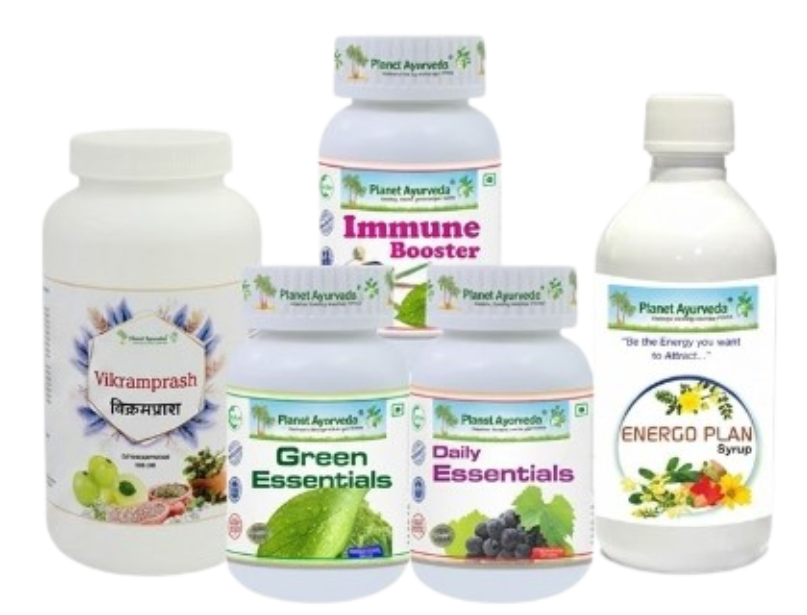

1. Vikramprash
It is a polyherbal Ayurvedic Avaleha formulated with nourishing and rejuvenating herbs that can be considered a natural nutritional support preparation. Its ingredients include Bilva, Agnimantha, Syonak, Patla, Shalparni, Prishnaparni, Bala, Pippali, Gokshura, Bhumiamalaki, Draksha, Jivanti, Haritaki, Guduchi, Shatavari, Ashwagandha, Brahmi, Amalaki, Punarnava, Manjistha, Sariva and other botanicals. These herbs are traditionally used to support Agni, tissue nourishment, strength and vitality. The formulation works through a combination of nourishing, rejuvenative and digestive-supporting actions, helping support normal metabolism and utilization of nutrients. Its broad herbal composition makes Vikramprash a supportive option for maintaining overall nutritional wellbeing as part of a balanced diet.
Dosage: 1 teaspoonful twice daily after meals.
2. Daily Essentials
Daily Essentials can be considered a herbal nutritional support formulation containing grape seed (Vitis vinifera), cow colostrum (Bovine colostrum), Bhumi Amla (Phyllanthus niruri), and green tea (Camellia sinensis). These ingredients provide a combination of plant-derived bioactive compounds and naturally occurring nutritional constituents that may complement daily dietary intake. Grape seed is a source of polyphenols, while green tea provides catechins with antioxidant properties. Bhumi Amla is traditionally valued for supporting liver and digestive health, whereas bovine colostrum contains proteins and other nutritional components. Together, these ingredients may help support antioxidant defenses, normal metabolism, digestive function, and general vitality. Daily Essentials can therefore serve as supportive nutrition alongside a balanced diet and healthy lifestyle.
Dosage: 1 capsule twice daily after meals.
3. Green Essentials
Green Essentials is a herbal nutritional formulation that combines plant-based ingredients such as wheatgrass (Triticum aestivum), grape seed (Vitis vinifera), spirulina (Spirulina platensis), and other herbs. It provides naturally occurring nutrients and bioactive plant compounds that can complement everyday dietary intake. Wheatgrass and spirulina contain various vitamins, minerals, pigments, amino acids, and other nutritional constituents, while grape seed is a source of polyphenols and antioxidant compounds. Together, these ingredients may support normal antioxidant defenses, energy metabolism, digestion, and general nutritional wellbeing. The formulation can be used as supportive nutrition for individuals seeking plant-based supplementation. Green Essentials is best considered a complement to a balanced diet rather than a substitute for nutritious, varied foods.
Dosage: 1 capsule twice daily after meals.
4. Immune Booster
Immune Booster is a herbal nutritional formulation containing Amalaki (Emblica officinalis), Bhumi Amla (Phyllanthus niruri), grape seed (Vitis vinifera), and Piyush (Bovine colostrum). These ingredients provide a combination of plant-derived antioxidants and naturally occurring nutritional compounds that may support overall immune function. Amalaki is traditionally valued for its nourishing and rejuvenating properties, while Bhumi Amla is traditionally used to support liver and metabolic health. Grape seed provides polyphenolic compounds with antioxidant activity, and bovine colostrum contains proteins, immunoglobulins, and other nutritional components. Together, these ingredients may help support normal immune defenses, antioxidant protection, and general vitality. The formulation can complement a balanced diet and healthy lifestyle as part of daily nutritional support.
Dosage: 1 capsule twice daily after meals.
5. Energo Plan Syrup
Energo Plan Syrup is a herbal nutritional formulation containing Jeevanti (Leptadenia reticulata), Amalaki (Emblica officinalis), Shatavari (Asparagus racemosus), Ashwagandha (Withania somnifera), and other supportive herbs. These botanicals are traditionally valued for their nourishing, rejuvenating, and strength-supporting properties. Amalaki provides naturally occurring antioxidants and is traditionally used to support general wellness, while Shatavari and Jeevanti are regarded as nourishing herbs in Ayurveda. Ashwagandha is traditionally used to support physical strength, vitality, and adaptation to daily stress. Together, these ingredients may complement nutritional intake, support normal energy metabolism, and promote general vitality and wellbeing. Energo Plan Syrup can be used as supportive herbal nutrition alongside a balanced diet and healthy lifestyle.
Dosage: 2 teaspoons twice daily after meals.
Conclusion
Herbal and natural multivitamins can provide nutritional support when dietary intake does not fully meet the body’s requirements. They combine vitamins, minerals, and, in some formulations, beneficial plant-derived compounds that may support general health and wellbeing. However, choosing a multivitamin should be based on individual nutritional needs rather than simply selecting a specific product labelled as natural or herbal.