Author: Dr. Vikram Chauhan

Best Ayurvedic Treatment for Varicose Veins

Abstract

Veins are the blood vessels that carry blood from all tissues and organs toward the heart. Varicose veins are mostly a cosmetic problem for some but these bluish veins can also be painful and discomforting. The milder form of this condition is termed as Spider veins with thinner veins. All the ailments can be treated naturally with holistic and conventional modes i.e. Ayurveda. Ayurvedic medicine system is the traditional system used since ages which balances all the three elements, mind, body, soul and energies effectively.

What are Varicose Veins?

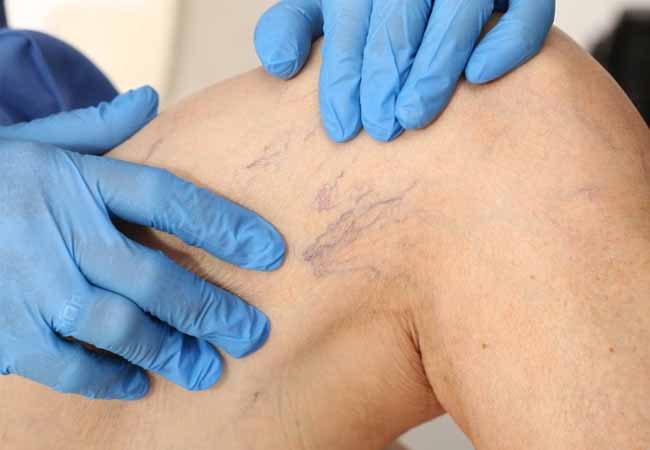
Varicose veins are tortuous subcutaneous superficial veins of the leg that appear green, purple and dark blue. These are small, twisted blood vessels that can occur anywhere in the body but mostly sprout on ankles and legs. This affects up to 40% of total adults globally. The prevalence of this situation varies from 25% to 30% in females and 10-20% in males. (3)
Varicose Veins Symptoms

What Can Be The Possible Causes?

Generally, healthy veins carry blood from the body to the heart and to maintain proper functioning of the heart the veins in legs must work against gravity. Valves present in your veins controls the flow of blood to heart, weak or damaged valves start building pressure which results in weakening of vessel wall. Hence, it results in the backflow of blood causing veins to bend and twist. An unhealthy lifestyle, low fiber diet, constipation, smoking and wearing tight garments can result in the onset of the symptoms. (3)

Who Is At Greater Risk of Varicose Veins?

Varicose veins can affect anyone irrespective of any factor globally and get triggered by lifestyle. The onset may vary with age like some may develop in their teens while incidence increases with age. Old age is believed to welcome the enlarging of veins which results in the development of varicose veins. Other factors that may result in the onset of the disease include family history, multiple pregnancies, obesity, standing for long periods, prior trauma, surgery, genetic predisposition and history of DVT. Studies have shown that women are more likely to develop varicose veins than men. (1) (2)

How to Identify Symptoms?

Patients with varicose veins may don’t have any noticeable symptoms while it may be more than discomfort or pain. Varicose veins can cause throbbing sensations like aching, itching, cramps and tightness in legs which get worse at the end of the day. Symptoms get worse when the person keeps standing or sitting in one place for longer periods. In severe conditions, the affected area may feel burning sensation and heaviness. This may also result in chronic skin discoloration, thinning and ulceration in the skin which ultimately results in slow healing sores. These swollen veins may burst and bleed which will dramatically stop when pressure is applied on vein and elevation of the leg until all the veins get collapsed. (1)

What are The Complications That May Occur?

Varicose veins can result in painful ulcers near the affected area particularly near the ankles which is characterized by a discolored spot on the skin. Occasionally, varicose veins may contribute to the formation of blood clots with persistent pain and swelling in legs. This may also cause minor bleeding because of the bursting of veins that are very close to the skin.

Diagnosis of Varicose Veins

Varicose veins mostly examined by physical aspects like palpation and the presence of patterns on le+gs. The examiner will also check for ulceration, tender spots, swelling and discoloration of the skin. Pain and soreness in veins and muscle cramps can also notify varicose veins.

Best Ayurvedic Treatment for Varicose Veins
Treatment for Varicose Veins

BUY NOW BUTTON

According to the Ayurvedic point of view, varicose veins are a condition primarily aroused due to vitiated Vata dosha and is considered a Vata disorder which creates pressure which affects the elasticity and valves of veins. Vyana Vata which is a sub-dosha of Vata plays a key role in transporting oxygenated and deoxygenated blood from tissues to heart and vice versa. Excessive dryness and poor blood circulation result from an imbalance in Vyana Vata, which ultimately causes loss of elasticity and hardening of valves and veins. To balance the vitiated dosha naturally can be done by adapting the conventional and natural mode of healing i.e. Ayurveda. For this “Planet Ayurveda” is offering holistic treatment in the form of its amazing “Varicose veins care pack” which contains Gotukola capsules, Triphala Guggul and Curcumin capsules.

Product Description

1. Gotukola Capsules

This herbal supplement has been formulated from pure and standardized extracts of Centella asiatica. These capsules maintain a healthy metabolism, neural health, and balance Tridosha i.e. Vata, Pitta and Kapha naturally. It is beneficial in improving blood circulation which reduces symptoms of varicose veins.

Dosage– 2 capsules two times a day with plain water after meals.

2. Triphala Guggul

Triphala Guggul is an herbal combination of Amalaki (Phyllanthus emblica), Haritaki (Terminalia chebula), Bibhitaki (Terminalia bellerica) and Guggul (Commiphora mukul). This product effectively detoxifies the blood, maintains healthy cholesterol levels, metabolism and balances Tridosha effectively.

Dosage– 2 tablets two times a day with plain water after meals.

3. Curcumin Capsules

Curcumin capsules contain pure and high-quality extracts of Curcuma longa which significantly manages inflammatory conditions, diabetes, digestive disorders (indigestion, diarrhea, IBS, etc.) and asthma.

Dosage– 2 capsules two times a day with plain water after meals.

How To Prevent This Situation?

To prevent the onset of the disorder, one must change the lifestyle by including some habits. Improving the blood circulation you need to exercise that will help you keep your weight in control and toning leg muscles. There are some preventive measures like exercising, eating high fiber diet, low salt diet, elevating your legs and changing standing and sitting position at regular periods. It is recommended for pregnant ladies to sleep on the left side rather than on the back.

Why Only Planet Ayurveda?

  • All the products are 100% pure, vegetarian and natural.
  • The products are potent, clinically approved and of the finest quality.
  • Manufacturing and formulations are done under the strict supervision of Ayurveda experts in totally sterile conditions.
  • All the formulations are HACCP, HALAL, GMP, etc. certified.
  • The herbal combinations are contained standardized herbal extracts.

Where to Get Help?

(Contact Details)

References

  1. https://www.ncbi.nlm.nih.gov/books/NBK470194/
  2. https://www.ncbi.nlm.nih.gov/pmc/articles/PMC1526945/
  3. https://www.ncbi.nlm.nih.gov/pmc/articles/PMC3217733/

How to Beat Winter Blues or Seasonal Affective Disorder Naturally?

Abstract

Seasonal affective disorder (SAD) can occur if one is having a family history of depression, bipolar disorder or any psychological disorder. Common treatments to this may include anti-depressants, counseling and allopathy medications but improving lifestyle, diet, and mode of living can manage this syndrome effectively and naturally.

Introduction

Welcome to the season when days have started getting shorter, less sunlight, 5 p.m. sunsets and plenty of snow all around. Some days can be worse if one is experiencing random mood swings, feeling more lethargic and low almost every day. What might be the reason?

Is it the SAD (Seasonal Affective Disorder) or Winter Blues?

Some people start feeling dump after the winter vacations, ending the festive season and Slump after the fun. Finding it difficult to get up out of the bed, irritated, sad and low energy levels are not uncommon. These are the manageable ebb and flow that come along with the every changing season and can be considered as winter blues. There is no clinical diagnosis for this condition but is fairly common globally. While a small percentage of people experience a severe medical disorder which is known as Seasonal affective disorder (SAD).

Seasonal Affective Disorder

What is SAD?

Seasonal Affective disorder (SAD) is a depressive disorder with recurrent seasonal patterns which usually begins in fall and continues till winter ends. According to the Diagnostic and Statistical Manual of Mental Disorders (DSM-5), this starts in a specific season each year and ends in another. This disorder occurs more often in women than in men at an estimated age between 18-30 years. People living away from the equator are more susceptible to this disease.

Recognize the Signs and Don’t Ignore Your Symptoms

The Most Common Signs and Symptoms Include the Following

  • Excess sleeping
  • Overeating
  • The person feels down or depressed the whole day or nearly every day
  • Loss in interest in some activities which you enjoyed once
  • Preferring isolation and withdrawing from social gatherings
  • Constant feeling of fatigued and lethargic
  • Suicidal thoughts
  • Feeling of hopelessness and demotivated
  • Finds difficult to take initiative
  • Difficulty in focusing on work
  • Frequently crying
  • Lowered energy levels
  • Crave carbohydrates and sugars
  • Sudden weight gain

Symptoms Which Can Occur During Summer Are Given as Follows

  • Insomnia
  • Restlessness
  • anxiety
  • violent behavior
  • sudden weight loss
  • poor appetite

Causes

Some of the Major Factors that Trigger The Onset of The Disorder Are Discussed as Follows

The major and foremost reason which can be considered as the primary culprit for a seasonal affective disorder is the decreased exposure to sunlight which leads to an imbalance in serotonin and melatonin levels.

What is Serotonin?

Serotonin is a neurotransmitter that modulates all human behavior and is produced by CNS neurons. This hormone regulates the brain functions, helps to regulate mood, biological clock and body’s sleep-wake cycles. Lowered serotonin levels can be due to improper diet, sedentary lifestyle, lack of exercise, etc. and ultimately leads to the onset of depression. (3)

What is Melatonin?

Melatonin hormone which is secreted by the pineal gland is a derivative of tryptophan (Amino acid) found in mammals, reptiles, amphibians, and birds. In humans, it regulates circadian rhythm (24-hour cycles) and its secretion is enhanced by darkness while inhibited by light. (2)

Less sunlight causes a deficiency of Vitamin D which hinders the secretion of Serotonin and melatonin which ultimately causes depressive symptoms. But don’t let these winter blues hinder your daily enjoyment here are some of the home remedies which can put this winter illness off.

Home Remedies – Embrace a Healthy Lifestyle

1. Sunlight

To get a sufficient amount of Vitamin-D, you need to step outside whenever the sun is out. Exposing yourself to natural light and sun will trigger the serotonin production which will naturally lighten up your mood. So this winter takes a break with your kids, family or friends and tries indulging yourself in skiing, ice-skating or picnic, etc.

2. Exercise

Exercise tends to have a link with mental health so making exercise an essential part of our routine contributes to a healthy lifestyle. Daily exercise is beneficial in managing depression and anxiety effectively which acts as a natural antidepressant. It also increases endorphins which are secreted by the hypothalamus and lower levels may trigger anxiety and stress. Levels of serotonin and endorphins can affect mood which can be boosted by daily exercise.

3. Change your Diet

Some of the dietary supplements and altering diet can improve the condition and some of the supplements are discussed as follows-

1.Omega-3 Fatty Acids

Food items like walnut, salmon, tuna, shrimp, catfish, spinach, flaxseed oil, etc. should be added in the diet.

2.Berries

Berries like blueberries, strawberries, raspberries, etc. can help to prevent the secretion of cortisol which is a stress hormone.

3.Folic Acid

Food items that have high amounts of folic acid are Oatmeal, green leafy vegetables, cereals, soybeans, and black-eyed peas can be included in daily diet.

4.Vitamin B-12 and D

Food sources like oysters, crab, eggs, cheese, yogurt, milk, cereals, etc. are rich in Vitamin B-12 while mushrooms, fish, etc. are rich in Vitamin D should be included in the daily diet for reducing symptoms of Seasonal Affective Disorder.

5.Banana

It possesses tryptophan, natural sugars, magnesium and potassium which improves sleep and reduces anxiety which naturally symptoms of depression and enhances a good mood.

Ayurvedic Remedies for Seasonal Affective Disorder (SAD)

Ayurvedic Medicine forSeasonal Affective Disorder

Ayurvedic Remedies for Seasonal Affective Disorder (SAD)

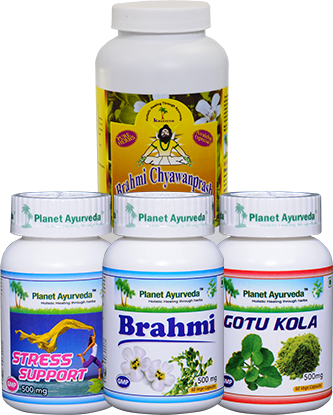
1.Stress Support Capsule

Stress support from Planet Ayurveda has been formulated from enormous traditional herbs like Ashwagandha (Withania Somnifera), Brahmi (Bacopa monnieri) and Tagar (Valeriana wallichii). This product effectively manages various conditions like nausea, dizziness, tremors, sleeping disorders, and anxiety.

Dosage – 1-2 capsules daily with plain water after meals

2. Brahmi Chyawanprash

This is an herbal dietary supplement that contains many herbs like Jivanti, Punarnava, Jeerak, Brahmi, Dashmola, Bhumi Amla, Choti elaichi, Ashwagandha, Bala, Shatavari, Chandan, etc. This product pacifies Tridosha i.e. Kapha, Pitta and Vata which eliminates anxiety, indiscrimination, fear, grief, etc.

Dosage – 2-3 teaspoonful twice or thrice with milk after meals.

3. Brahmi Capsules

Brahmi capsules are an amazing herbal product that has been formulated from the standardized extract of Bacopa monnieri which is very beneficial in treating Neurological Disorders.

Dosage – 1-2 capsules two times a day with plain water after meals.

4. Gotu kola Capsules

Gotu kola capsules have been prepared from pure extracts of Gotukola (Centella asiatica) which Manages Symptoms of Depression and Anxiety effectively.

Dosage – 1-2 capsules two times a day with plain water.

References

  1. https://www.ncbi.nlm.nih.gov/pmc/articles/PMC4673349/
  2. https://www.ncbi.nlm.nih.gov/pmc/articles/PMC5405617/
  3. https://www.ncbi.nlm.nih.gov/pmc/articles/PMC4728667/