Ayurvedic View and Remedies for Good Eyesight
ABSTRACT
What is worse than being blind? It is having sight but no proper vision. We connect with this world with our eyes. Sight and vision keep us safe and keep our minds sharp and active. Vision and sight are considered to be as different as sight is a physical entity helping us to see different things by sensing the light reflected from objects, vision is more of an interpretation of these images by our mind. The compatibility of these two working together helps us to connect with our surroundings in our daily lives. To perceive a moment, you will need sight but to interpret that moment you need vision. In this article, we will go through some critical aspects related to eyesight: Introduction, the importance of good eyesight, aetiology of decreased vision, a glimpse on vision loss, tips for keeping the eyesight healthy, touching the diagnostic methods for vision issues, treatment for bad eyesight including modern and ayurvedic solutions, some ayurvedic therapies and a conclusion.

INTRODUCTION TO GOOD EYESIGHT
The beginning of eyesight is where light meets with the eyes. The eyes are considered part of our brain and are messengers to carry the information they receive from light collected by the cornea and focussed over the retina. This information is sent to our brains where it is converted into images. Eyes process a tremendous amount of data every day without any error. From front to side, our eyes can see about 200 degrees in every direction.
Eyes are almost spherically shaped and are pointed in front. They vary in size and color depending on genes, race, and location. Eyes are a combination of multiple parts that come together and work in harmony so that we can see this world. These parts include
- IRIS is the area with colour and it can be hazel, blue, green, black, or brown.
- CORNEA is a transparent layer that covers the iris and is protected by the tears
- PUPIL is an opening in the centre of the iris which is seen as a black circle and expands or contracts on exposure to light and dark respectively
- SCLERA surrounds the iris and is whitish in appearance.
- CONJUNCTIVA is a transparent and thin covering of the sclera and also lines the inner side of the eyelids.
- LENS is found behind the pupil and it passes the light to the backside of the eyes after focusing it
- RETINA is a part of the nervous system sensing all the light and sends it to the brain in the form of electrical impulses via the optic nerve
- MACULA is a part of the retina and helps to distinguish the finest details and colours
- OPTIC NERVE carries all the signals from the retina to the brain and makes you see the world
- EYE MUSCLES control the positioning and movement of the eye along with the amount of light that can enter the eye
- VITREOUS maintains the eye structure as it fills the eyeball.
SYMPTOMS OF EYE PROBLEMS
Medical shall be sought in case of any sign or symptom if experienced from the following
- Severe headaches
- Aching or irritated (redness) eyes
- Sudden vision loss
- Double vision or diplopia
- Flashes of light to the side of the eyes or eye floaters
- One-sided weakness or numbness
- Dizziness
- Mental confusion
- Difficulty in talking
- Stinging, burning, or itching eyes
- Dry eyes
- Watery eyes
- Swollen eyes
- Dark spots or spots in the vision
- Sensitivity to light
- Eyes pointing in different directions
- Night blindness
Regular eye checkups are important to protect the eyes from any severe damage. Any signs or symptoms shall be reported to the ophthalmologist immediately.
ETIOLOGY OF BAD EYESIGHT
Vision can be affected by multiple issues directly or indirectly. These conditions can either cause pain or low or loss of vision. These include
Age-related conditions
As our body ages, our eyes also start to age and show some changes. People start to experience eye floaters or some sort of discomfort as they age. Age-related conditions include
- Cataracts
- Presbyopia
- Macular degeneration
- Dry eyes
- Glaucoma
- Temporal arteritis.
Cancers
Intraocular melanoma or Retinoblastoma
Eyes Diseases
Multiple eye diseases affect vision some of them are age-related some congenital. These include
- Glaucoma
- Corneal diseases
- Optic atrophy
- Optic neuritis
Infections and irritation
This can occur due to allergies, exposures to some new cosmetics or eye products, etc. the conditions include
- Blepharitis
- Watery eyes
- Chalazion
- Dry eyes
- Conjunctivitis or pink eyes
- Style
Genetic disorders
Retinitis pigmentosa can lead to blindness and runs in families
Injuries include corneal abrasions, and detachment of the retina due to accidents or burns, or exposure to foreign objects.
Eye muscle problems affect the appearance of the eyes. The conditions include
- Strabismus (crossed eyes)
- Amblyopia (lazy eye)
Vision defects
These affect the eye’s ability to see and distinguish between colors. The conditions include
- Color blindness
- Night blindness
- Astigmatism
- Hyperopia (far-sightedness)
Systemic diseases
A few body diseases can affect the eyes directly. These include
- Diabetes that leads to diabetic retinopathy
- Genetic disorders like Marfan syndrome
- Cardiovascular disorders like hypertension, high cholesterol, arterial disorders
- Autoimmune conditions include Systemic lupus erythematosus, multiple sclerosis, and Sjogren’s syndrome.
HOW TO DIAGNOSE EYESIGHT DISORDERS
It is very important to diagnose eye disorders as early as possible to avoid permanent damage to the vision. Not even a simple symptom shall be ignored and shall be discussed thoroughly with an ophthalmologist. The ophthalmologist will advise tests based on the visual acuity of the patient, and the capability to differentiate between the colors and visual field. The ophthalmologist will advise imaging studies, eyes examination, or ocular pressure measurement.
Following are some investigations that can be done to diagnose eye disorders
- Wide-field retinal imaging can capture a wide-angle view inside the eyes, helping in detecting bleeding, retinal detachments, or any tumor.
- Intraocular pressure measurement or contact tonometry can help to measure the pressure of the eye fluid and can help to detect diseases like glaucoma earlier.
- Visual field testing can detect optic nerve disorders, brain tumors, glaucoma, and retinal diseases.
- Visual acuity test to see how properly the eyes can adjust to viewing things from a certain distance.
- Intraretinal imaging or Optical coherence tomography helps to visualize retinal nerve layers as it can penetrate the tissues and can help in the diagnosis of macular degeneration and glaucoma.
Those who wear contact lenses or have a family history of diabetes, hypertension, or eye disorders shall be having a conversation with their eye doctor regarding how frequently they shall be getting their eyes examined. Seniors or people who are of age more than 65 years shall get their eyes checked every year at least.
TREATMENT FOR EYE DISORDERS
The very first step in the treatment of any eye disorder is eye examination. The ophthalmologist will be taking an eye examination for approx 45-90 minutes that will include the following
Medical History: – This part will include questioning regarding vision, general health, medication history, family history, and whether the patent is using any kind of lenses for refractive errors.
Visual acuity test is a test in which an eye chart is placed in front of the patient and the eye power will be checked.
The doctor will also go for checking all the parts of the eyes for monitoring their proper functioning. This will include
- The front part of the eye will include the lens, iris, cornea, and eyelids.
- The side vision of the eye in which the undetected problems can be discovered as one can lose side vision without noticing it.
- Eye movements can help to detect any kind of ocular motility defects.
- Eye pressure can help to detect glaucoma.
- Retina and optic nerve examination for excluding any damage being present in the eyes.
The ophthalmologist will also advise for surgeries based on your eye conditions. The surgeries can include
- Eye muscle surgery for conditions like strabismus or general weakening of the eye muscles
- Blepharoplasty
- Cataract surgery
- Corneal transplant
- Glaucoma surgeries (trabeculectomy)
- Retina surgeries for detachment of the retina or damaged retina
- LASIK (laser in-situ keratomileusis) for correcting vision defects or changing the shape of the cornea.
- Photorefractive keratectomy can be used as an alternative to LASIK.
AYURVEDIC HERBS FOR GOOD EYESIGHT
Among all of our senses, eyes are the most special ones as they are very delicate and get easily influenced by vitiated doshas resulting in lowered drishti kriya. Ayurveda is an ancient system of medicine and provides wonderful eye remedies based on ingredients mentioned in old texts. In Ayurveda, eyes are considered to be related to the universe as the muscles of our eyes are governed by the earth, air governs the eye shade, blood vessels by fire and eyeball space, and tear ducts by space. Eyes are considered to be part of pitta dosha and when this dosha vitiates with aging or our faulty habits then our vision becomes frail. Bad eyesight is considered a result of drishti dosha in Ayurveda and our faulty habits.
In Ayurveda, we have a plethora of wonderful herbs that are known as Chakshu rasayana or chakshushya that can help in improving eyesight when incorporated along with other preventive methods. These include
Amalaki
It is considered a rich source of antioxidants and is full of rejuvenating properties. Amalaki helps in the regeneration of damaged cells and also restores the faulty blood flow to the eyes providing proper nourishment to our eyes. Vitamin C helps in improving the functioning of the retinal cells.
Vibhitaki
It helps in increasing the haemoglobin levels in our bodies and increasing blood supply to the eyes and brain.
Haritaki
This herb is useful in conjunctivitis and lost vision. It is rich with eye tonic properties. It can help with red, teary, or burning eyes as it has soothing properties.
Bilberry
This herb is rich in anthocyanosides which provide strength to blood vessels and also improve blood circulation.
Ginkgo biloba
This herb is known to protect the eyes from severe diseases like glaucoma, cataract, retinopathies, and macular degeneration along with improving eyesight.
Medicated oils are also suggested to be inhaled if the chronic cold is the cause of weak eyesight. Rose water external application can also help as it is having a cooling effect.
YOGAS FOR IMPROVING EYESIGHT
Yoga can also help to strengthen the muscles and restore proper blood flow in the body, therefore, improving eyesight. These include
- Halasana
- Chakrasana
- Sarvangasana/Sirshasana
HERBAL SUPPLEMENTS FOR GOOD EYESIGHT BY PLANET AYURVEDA
Planet Ayurveda is providing 100% pure, chemical-free, and GMP-certified herbal formulations in the form of tablets, juices, capsules, syrups, teas, and powders that are prepared based on the methods mentioned in age-old texts that are very helpful in fighting with diseases and restoring the health. Products are manufactured with the latest technologies and go through strict quality control and are exported worldwide.
Planet Ayurveda provides herbal medicines for eye issues that are safe to use and are having great results. These include
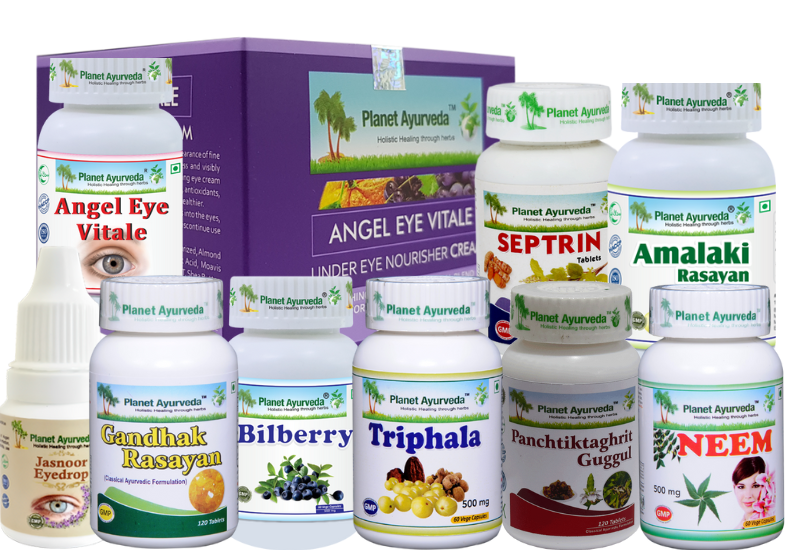
Products List
- Angel Eye Vitale Capsules
- Angel Eye Vitale – Under Eye Nourishing Cream
- Jasnoor Eye Drops
- Bilberry Capsules
- Triphala Capsules
- Panchtiktaghrita Guggul
- Septrin Tablet
- Gandhak Rasayan
- Neem Capsules
- Amalaki Rasayan

Product Description
1. Angel Eye Vitale Capsules
These capsules are used widely for dark under-eye circles, nourishing the eyes, and protecting the eyes from eye strain. They are prepared with the purest extracts of Gotu kola, Bhringraj, and Amla which are very helpful in keeping the eyes healthy and away from all age-related diseases.
Dosage: – 2 capsules with plain water, twice daily.
2. Angel Eye Vitale
Under Eye Nourishing Cream: – This is an under-eye cream that nourishes the eye skin and makes them look bright and beautiful by providing long-lasting moisture. It is rich in extracts of grape seed oil, Vitamin E, and almond oil.
Dosage: – Gently massage under the eye after cleansing the area.
3. Jasnoor Eye Drops
Being rich with extracts of neem, punarnava, tulsi, nirgundi, bhringraj, and moringa, Jasnoor eye drops are considered to be the best eye drops for eyes as they support the health of various eye parts including muscles, iris, sclera, lens, retina, etc. They also pacify the vitiated doshas.
Dosage: – Instil 3 drops in each eye, twice daily.
4. Bilberry Capsules
Bilberry, traditionally used for diarrhoea, UTIs, and piles is rich in anthocyanosides that are helpful in vision issues. It is widely used to treat retinopathy as it controls blood sugar levels and keeps the retina protected from age-related defects. Bilberry also contains carotenoids that help to protect the eyes from the harmful effects of blue light.
Dosage: – Two capsules after meals, twice daily.
5. Triphala Capsules
Triphala is known to strengthen the eye muscles by balancing the vitiated doshas. The combination of Haritaki, Amalaki, and Vibhitaki is helpful in healing eye muscle damage and improves blood circulation. Vibhitaki is known as hemostatic and causes increased pure blood flow to the eyes. Amalaki is helpful in removing the toxins that accumulate in the eyes due to ageing and cause degeneration. Haritaki helps to keep eyes away from ageing defects like senile cataracts and age-related macular degeneration. Triphala water is helpful in improving eyesight.
Dosage: – Two capsules after meals, twice daily.
6. Panchtiktaghrita Guggul
This ayurvedic formulation is rich in extracts of Neem, Vasa, Giloy, Kantakari, Patol, Guggul, and Ghee lowers the inflammation of the eye muscles and vessels and reduces the irritation and redness of the eyes by throwing all the toxins out of the body.
Dosage: – 2 tablets with plain water after meals, twice daily.
7. Septrin Tablet
Septrin tablets are also one of the best immunomodulatory and antioxidant tablets as they contain the extracts of Tulsi, Haldi, and Sonth, all of which are known to increase the body’s immunity and keep infections away.
Dosage: – Two tablets after meals, twice daily.
8. Gandhak Rasayan
Gandhak or Sulphur is known to help with eye infections like uveitis, blepharitis, and scleritis as it is rich in antimicrobial, antibacterial, and antiviral properties which eliminates the infections from the body.
Dosage: – Two tablets after meals, twice daily.
9. Neem Capsules
These capsules are rich in the purest extracts of Azadirachta indica which is rich in tikta i.e. bitter, rasa i.e. taste, sheeta i.e. cold, and kshaya i.e. astringent properties. They help in detoxifying the blood and provide proper blood flow to the eyes.
Dosage: – 1 capsule with plain water, twice daily.
10. Amalaki Rasayan
Amalaki removes the increased ama in the muscles of the eyes and detoxifies then prevents ageing-related complications like senile cataracts, glaucoma, macular degeneration, and retinopathies.
Dosage: – Two capsules after meals, twice daily.
PREVENTIVE MEASURES TO AVOID OF VISION FRAILTY
Eyes are the best gift of god to humankind that enables us to see this world and therefore, eye health shall not be taken leniently. Follow these easy steps to keep your eyes healthy
Take proper rest
Rest is a very important part of eye health as looking for long hours on the screens and not taking proper rest leads to multiple issues with health as well as eyes. There should be rest periods in between working hours so that the eyes can relax a bit.
Quit smoking
Smoking is known to trigger ageing and affect the retina and eye muscles leading to cataracts, macular degeneration, and optic nerve damage therefore it is better to avoid smoking and get help in case of addictions.
Wear sunglasses
Sunglasses are known to protect the eyes from UV radiation emitted by sun exposure which can lead to macular degeneration and cataracts.
Use safety eyewear
If you are working at a hazardous location or practising some sport then it is advised to wear safety eyewear to prevent trauma and occupational eye disorders.
Check your diet
Faulty diet habits, and starving yourself can lead to multiple nutrient deficiencies having a direct effect on the eyes. Consuming a diet rich in omega-3 fatty acids, vitamins, and minerals is known to improve eye health and protect against vision loss.
Avoid strain
Staring at computer or phone screens can lead to multiple health issues and also eye issues. Headaches, blurry vision, and watery eyes are some of the major symptoms of eye strain. Wearing glasses protecting from blur light and also proper corrective vision glasses can be helpful. Keep the screen away from your eyes so that harm is less. Blink more to avoid strain and rest every 0 minutes and get up every 2 hours to avoid health disorders.
Eye exercises
Surya Namaskar, near and distant viewing, and palming are some excellent exercises that can keep your eye muscles healthy and active for the long term and protect them from ageing effects. They also help to improve blood flow and increase the power of concentration.
Medicinal Kohl
Kohl or Kajal prepared from the extracts of cow ghee or neem are best for eyes as they help in removing the toxins from the eyes and keep them bright and healthy.
Trataka practising
In this process, we have to sit down on the floor folding legs, and stare at a lit ghee lamp placed at a viewing angle of 30 degrees. This method shall be done for 10 minutes daily. It improves eye lustre and strength.
A regular checkup
A proper checkup with the ophthalmologist and optometrist is very crucial as it can lead to early diagnosis of eye issues that can save an eye from getting damaged badly.
FOOD FOR GOOD EYESIGHT
As important as eye checkups and medications are for eyes so is a good diet and food that provides nourishment to the eyes. A few of them are discussed below
- Water is very important for the eyes as it keeps eyes moist and protects them from dry eye syndrome and other diseases.
- Green Leafy Vegetables like Spinach, Collard, and kale are known to improve vision by being rich in lutein and zeaxanthin.
- Citrus fruits like lemons, grapefruits, and oranges are rich in vitamin C protecting the eyes from damage.
- Nuts, seeds, and Legumes are rich sources of omega-3 fatty acids and vitamin E.
- Carrots are rich in vitamin A and protect the eyes from night blindness.
- Sweet potatoes are rich in beta-carotene and antioxidants.
Contact Planet Ayurveda Support Team to provide you the costing / ordering and delivery information at – costing.planetayurveda@gmail.com or Call at 0172-521-4030 (India), +91-172-521-4030 (Outside India) or Whatsapp at (+91) 9915-593-604
CONCLUSION
Eyes are having a vital role in our daily lives therefore it is very necessary to keep good care of them. Aging is inevitable and eyes are going to get affected in some or the other way but taking proper care at a young age can help a lot in old age. It is very well said that “prevention is better than cure” Therefore having an appropriate routine of checkups, wearing proper eyewear, and following a proper diet are of much use. Surgical interventions are always available to correct eye defects but Ayurveda provides a lot of herbs that can keep the eyes safe from the bad effects of pollution and free radicals if taken under the guidance of a qualified Ayurvedic practitioner.


