Author: Dr. Vikram Chauhan

Why Fatty Liver Is Increasing Nowadays? Yakrit Plihantak Churna As Your Rescuer

ABSTRACT

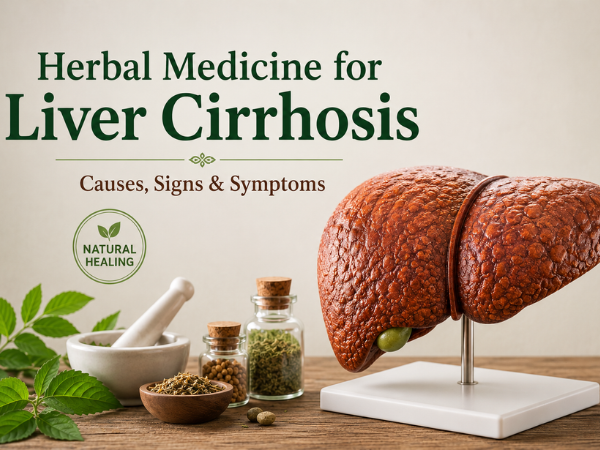
The Liver is situated in the right hypochondrium, mid-epigastrium. The adjacent organs of the Liver are theDiaphragm, Stomach, Right Kidney and Intestine. The Hepatic artery provides an oxygenated blood supply to the Liverand the Hepatic Portal vein carries nutrient-rich blood. Mainly the liver regulates chemical levels in the blood, filters all blood in the body, produces bile, converts excess glucose into glycogen storage and many more functions. Besides its normal anatomical structure, when an unwanted and large amount of fat deposition occurs on liver cells, then the condition that occurs is called Fatty Liver disease. As a result of this normal functions of the Liver are affected. In the below text, we are going to take a look at detailed information about Fatty Liver disease, its causes, symptoms, its diagnosis and also about its Ayurvedic overview, management by Ayurvedic herbs and Panchkarma. Also, we are going to study a detail about Yakrit Plihantak churna as your rescuer of Liver made by Planet Ayurveda.

Fatty Liver

INTRODUCTION

Fatty liver disease, also called Hepatic Steatosis in which a large amount of fat builds on liver cells. The term Steatosis is used to describe fat deposition on an organ, hence Hepatic Steatosis is used for fat deposition on Liver cells. It may be due to metabolic dysfunction associated with steatotic liver disease or may be alcohol-related. Patients with obesity, viral hepatitis and diabetes are at great risk of fatty Liver. The condition of Fatty Liver disease can be reversed by following a healthy lifestyle, controlling weight hence BMI, and strict control of diet. Now let’s have a look at the causes, symptoms, investigation of fatty liver disease and its Ayurvedic Overview. Also we will earn about its management by our traditional system of Ayurvedic medicine and panchkarma for Fatty Liver disease.

CAUSES OF FATTY LIVER

Fatty Liver disease is due to a combination of various factors over a long time period. The following are the main causes responsible for Fatty Liver disease

  • Obesity (Metabolic-associated fatty liver disease)
  • Type 2 diabetes mellitus or insulin resistance.
  • Alcohol
  • High triglycerides
  • Complications in late pregnancy
  • Polycystic ovary syndrome([PCOS)
  • Hepatitis

SYMPTOMS OF FATTY LIVER

Patients with Fatty Liver disease usually don’t show symptoms but sometimes they experience the following symptoms

  • Tiredness
  • Pain in the upper right part of the abdomen.
  • Yellow eyes and skin (Jaundice)
  • Dark urine
  • Swollen belly
  • Blood vomiting (Hematemesis)
  • Black stools
  • Itchy skin
  • Weight loss

DIAGNOSIS OF FATTY LIVER

As Fatty Liver disease usually does not show symptoms, there may be an issue to notice it in the beginning. To make a clear diagnosis following tests may be performed

  • Blood tests including CBC, LFT
  • Ultrasonography Whole Abdomen
  • MRI scan for a clearer view

AYURVEDIC OVERVIEW OF FATTY LIVER

Ayurveda is a very ancient way to treat disease with herbs collected from natural resources of the environment. In ayurveda, the basic principle to treat disease is based on Doshas and Dushya. Doshas are the energetic forces of nature that are present in the human body. These are three in number i.e. Vata, Pitta, Kapha. Dushyas are the one which get vitiated by Doshas which include Bodily Tissues (Dhatus) and Body Wastes (Malas). In various textbooks of Ayurveda, a description of Udara Rogas is given which is one among the Ashtamahagada (Eight Major Disorders). Udara Roga are 8 in number and their main characteristic feature is Kuskhi aadhmana (Distension of the abdomen). Yakrutodara is one such manifestation of Udara Roga. According to the signs and symptoms, the correlation of Fatty Liver disease is done with Yakrutodara. The cardinal feature of Yakrutodara is Yakrut vridhi (hepatomegaly) which involves many Srotas (multi-system). Progressive Yakrut vridhi is usually seen, the size of Yakrut may vary from time to time. On palpation, a Fatty Liver is hard in nature just like the shell of a tortoise. The Doshas involved in Yakrutodar are Kapha Pradhan tridosha and the Dushyas involved are Rasa, Rakta and Meda.

WHY IS FATTY LIVER DISEASE ID INCREASING NOWADAYS?

As we know, the lifestyle of people is continuously changing day by day. This is due to improved technology, and machinery. Physical work by a person is decreased. Also, there is a major change in their eating habits like spicy food, fast food, or not eating a proper diet. Oily and fast food and sedimentary life are major reasons behind obesity and Diabetes. Alcohol abuse and smoking are key factors that lead to Fatty Liver disease. The Liver helps break down alcohol and remove it from the body, on the breakdown, there is a release of harmful toxins that result in damage to liver cells. Eating excess amounts of calories causes build-up of excess fat on the Liver. Hypercholesterolemia in which there is a high level of fat in the bloodstream, is also a reason behind Fatty Liver disease. As a result, there is an increase in cases of Fatty Liver disease. Now, let’s have a look at the diet and home remedies to control Fatty Liver disease, also role of Panchkarma and an outstanding Herbal medicine by Planet Ayurveda in the management of Fatty Liver disease.

DIET FOR FATTY LIVER

  • Beetroot Juice
  • Aloe vera juice
  • Fruits such as Apples, Pears, Pomegranate, Papaya, melons, etc
  • Green Leafy Vegetables
  • Split Lentils
  • Avoid Alcohol intake and Red Meat
  • Avoid Dairy products

HOME REMEDIES FOR FATTY LIVER

  • Regular consumption of 2gm of long pepper (Piper longum) powder along with a teaspoon of honey once or twice a day for a month.
  • Decoction of Triphala (Terminalia chebula, Terminalia billerica and Emblica officinalis) twice a day.
  • Giloy Decoction once in a day.
  • 2gm of each Guduchi churna and Musta churna with lukewarm water taken once in a day.
  • Bhumiamla Juice (Phyllanthus niruri) twice a day.

PANCHKARMA FOR FATTY LIVER

  • Vamana : Therapeutic emesis.
  • Teekshna ushna samshodhana : Intense, vigorous cleansing of the body by administering Vamana (Therapeutic Emesis) and virechana (Therapeutic Purgation).
  • Utsadana : Application of Kapha reducing pastes on the body and rubbing them.
  • Dhoomapana : Smoking (with Kapha alleviating drugs).
  • Upavasa : Fasting.
  • Pipasa : Withholding the urge of thirst (not drinking too much water).
  • Atapa : Exposure to sun.
  • Pachana : Medicines which have Katu (Pungent) and Tikta (bitter) rasa (taste), hot and intense
    in action to improve digestion and to digest the Ama (endotoxins) and get rid of excessive fluid/ moisture/ toxins from the cells.
  • Udwartana : Massaging with medicated powders and pastes in the reverse direction of the hairs.

HERBAL REMEDIES BY PLANET AYURVEDA FOR FATTY LIVER

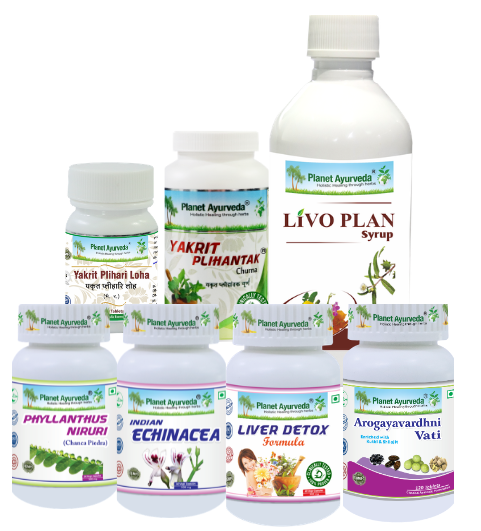
Planet Ayurveda is a global brand that offers a wide range of herbal medicines. Planet Ayurveda is dedicated to promoting natural herbs by selection of the right type of raw materials and by manufacturing high-quality medicines. Yakrit plihantak churna is one of the best products of Planet Ayurveda which is very useful in all liver diseases. Let’s read what are the ingredients of Yakrit Plihantak Churna and what properties of this herbal powder makes it effective in managing various Liver Conditions!

  • Yakrit Plihantak Churna


Yakrit Plihantak Churna

Product Description

YAKRIT PLIHANTAK CHURNA

Yakrita plihantak churna is the best ayurvedic remedy for fatty liver by Planet Ayurveda. It contains Bhumi amla (Phyllnathus Niruri), Bhringraj (Eclipta Alba), Sharpunkha (Tephrosia Perpurea) Punarnava (Boerrhavia diffusa) and various others. This Polyherbal powder contains Katu (pungent) and Tikta (bitter) rasa (taste) which helps in balancing Kapha and Pitta Doshas in our body. All these herbs help in sustaining good health of the Hepatic system. This is very useful in all liver diseases like fatty liver and hepatitis. According to Ayurveda texts, these herbs are Pitta Sarak (expels excessive Pitta) and Yakrituttejak (Stimulates Liver functions).

Properties of ingredients

  • Bhumi Amla (Phyllanthus Niruri) is Rochaka (Appetizer), Pittashamak (Pitta Pacifier), and balances kapha dosha. It works as an antioxidant, antimicrobial, and antiviral and protects the Liver from diseases like jaundice, and swelling.
  • Bhringraj (Eclipta Alba) is Amahar (Alleviates Toxins from the body) and yakrituttejaka (liver stimulant). It is the best Liver tonic that enhances its functions. It balances Pitta and also helps in promoting the bile flow.
  • Kalmegh (Andrographis Paniculata) is also Yakrituttejaka (Liver stimulant), pittasarak (expels excessive pitta), and Krimighan (wormicidal). It induces Liver detoxification which further helps in cleansing Liver cells by eliminating toxins and fat accumulation.
  • Kaasni (Cichorium Intybus) is diuretic in nature and balances kapha and pitta. It helps in the regulation of bilirubin. It has lipolytic properties which help in Fatty Liver disease by eliminating fat accumulation.
  • Kutki (Picrorhiza Kurrooa) pacifies kapha and Pitta and detoxifies the Liver, reduces Liver toxicity caused by alcohol, and helps in the regulation of bile.
  • Punarnava (Boerhavia Diffusa) supports liver function and is best for the detoxification process. It has a property of rejuvenation, it helps in the rejuvenation of hepatic cells which get damaged by Fat accumulation or alcohol intake.
  • Makoy (Solanum Nigrum) is also a great Liver Stimulant and its detoxifying properties help in the elimination of accumulated fat and improve Liver functions. Makoy herb is also well known for its Diuretic Properties, thus also useful in advanced stages of liver disease such as liver cirrhosis.
  • Sharpunkha (Tephrosia Purpurea) has antioxidant properties that help in reducing Hepatotoxicity. It helps in Liver detoxification, useful in the treatment of Fatty liver disease. It is a well-known herb used for the treatment of liver cirrhosis as well (a complication of the Fatty Liver).

Dosage : ½ to 1 tablespoon twice daily with plain water after meals.

CONCLUSION

The liver is a major metabolic organ of the body which plays an important role in the detoxification process and synthesis of proteins and helps in the digestion process and decomposition of red blood cells. In the above texts, we discussed fatty liver disease which is a common condition that can lead to severe liver damage if left untreated. It can cause liver inflammation, which can lead to scarring (fibrosis) of the liver and may also lead to more serious chronic liver disease such as cirrhosis or liver cancer. However, fatty liver disease is often reversible with proper lifestyle modifications, such as a balanced diet, regular exercise, abstaining from alcohol and tobacco and losing weight. There are many ways to cure fatty liver disease in Ayurveda either by diet, herbal medication or by panchkarma.

Contact Planet Ayurveda Support Team to provide you the costing/ordering and delivery information at costing.planetayurveda@gmail.com or Call at 0172-521-4040 (India), +91-172-521-4040 (Outside India) or Whatsapp at (+91) 842-749-4030.

What Are The Best Ayurvedic Herbs & Herbal Remedies For Sleep?

ABSTRACT

The fast-paced nature of contemporary living might make it difficult to take breaks and relax. It may make consistently getting a restful night’s sleep seem like a fantasy. But just as vital to overall health as nutrition and exercise is sleep. Your emotions, health, and cognitive function all improve with adequate sleep. Those with irregular schedules or night shift workers may find it particularly difficult to obtain a good night’s sleep. Furthermore, stressful events like the present pandemic can interfere with our regular sleep schedules. However, you can do many things to improve your sleep. Let’s further read more about Sleep, why good sleep is beneficial, and how to induce good sleep with various Ayurvedic Herbs.

Sleep

INTRODUCTION

Numerous brain processes, particularly the communication between nerve cells (neurons), depend on sleep. In actuality, when you sleep, your body and brain continue to function amazingly. According to recent research, sleep has a cleaning function that clears your brain of toxins that accumulate while you’re awake. Sleep is necessary for everyone, although its biological function is yet unknown. Nearly every type of organ and system throughout the body is impacted by sleep, including the brain, heart, and lungs as well as the immune system, metabolism, mood, and disease resistance. Chronic sleep deprivation or poor sleep quality raises the risk of several conditions, such as diabetes, obesity, high blood pressure, depression, and heart disease.

SLEEP MECHANISMS

It includes two Biological Mechanisms

  1. Circadian Rythm : Numerous bodily processes, including hormone release, body temperature regulation, metabolism, and daily variations in wakefulness, are regulated by circadian rhythms. They regulate when you go to sleep, make you feel drowsy at night, and make you more likely to wake up early in the morning despite setting off an alarm. Most circadian rhythms are governed by your body’s biological clock, which depends on an approximately 24-hour day. Although circadian rhythms are triggered by environmental factors like light and temperature that indicate the true time of day, they persist even in the absence of these factors.
  2. Homeostasis Of Sleep-Wake : Your body’s sleep-wake balance monitors the need for sleep. The homeostatic sleep urge controls sleep intensity and serves as the body’s reminder to go to bed after a set amount of time. After a time of sleep deprivation, you experience a greater sleep urge that makes you sleep longer and deeper every hour that you are awake. Your needs for sleep and wakefulness are influenced by a number of factors, such as stree, diet, sleeping environment, medications and medical issues. Exposure to light may have the biggest impact. Your eyes’ retinas contain specialized cells that analyze light, notify the brain when it’s day or night, and can regulate when we go to sleep and wake up. It may be difficult to fall sleepy and go back to sleep after being exposed to light. Their normal circadian rhythm and cycle of sleep-wake are disturbed, which makes it difficult for night shift workers to stay up at work and to fall asleep at night.

HOW MUCH SLEEP DO YOU NEED?

As you get older, your sleep needs and habits vary, but not everyone of similar age experiences these changes. No universally effective “number of sleep hours” exists for people of the same age. At first, babies can sleep up to 16 or 18 hours a day, which may promote healthy growth and development, particularly in the brain. Children and teenagers in school require nine and a half hours of sleep every night on average. The average adult needs seven to nine hours of sleep every night, but around the age of 60, sleep at night tends to be lighter, shorter, and more erratic in terms of awakenings. Additionally, older adults are more inclined to take drugs that cause sleep disturbances.

SLEEP FOR REPAIR

What makes us require sleep? A common misconception is that sleep is simply downtime for the weary brain. But that’s untrue—your brain continues to function even as you sleep. Sleep, for instance, helps your brain get ready for learning, memory, and creativity. During sleep, the brain’s drainage mechanism clears out pollutants. The brain completely alters its functioning while we sleep, functioning more or less like a kidney and eliminating waste from the body. Several proteins associated with Alzheimer’s disease are eliminated by the drainage system. During sleep, these poisons were eliminated from the brain twice as quickly. Sleep is a period of repair for many bodily systems, including the immune system and blood vessels. The body goes through several healing processes mostly—or at its most efficient—while we sleep. Your body will go through altered processes if you don’t get enough sleep.

SLEEP DISORDERS

Various categories of Sleep Disorders as per the latest data

  1. Insomnia : Having trouble falling and remaining asleep
  2. Breathing issues associated with sleep : Breathing patterns alter during sleep
  3. Disorders related to central hypersomnolence : You experience difficulty staying awake during the day
  4. Sleep-wake disorders affecting the circadian rhythm : It is challenging to go asleep and wake up according to schedule due to your internal clock
  5. Parasomnias : While you sleep, you engage in verbal or physical activities like eating, talking, or walking
  6. Movement disorders associated with sleep : The urge to move or the sensation of movement interferes with falling and/or staying asleep

SLEEP INDUCING FACTORS AS PER AYURVEDA SLEEP MECHANISM AS PER AYURVEDA

Below are sleep-inducing factors as per Ayurveda

  • Due to increased Tamas (Inferiority, depression, loneliness, etc.)
  • Due to increased Kapha Dosha (Heavy drinks and foods, unctuous food or oily food)
  • Due to exhaustion of mind and body (Work, travel, job dissatisfaction, uninterested job, heavy work, etc)
  • Due to Poor Prognostic condition (disorders where vital points or vital organs are affected, in critical illness, electrolyte imbalance, etc)
  • Due to complications of diseases (Diseases that cause lethargy, electrolyte imbalance, vital organ affliction, wasting, etc)
  • Natural sleep as per circadian rhythm (At night – as it is the time of kapha dosha)

EFFECTS OF DOSHA ON SLEEP

Even though kapha is the predominant dosha at night, if you can divide the night into three segments, one dosha dominates each segment

  • The first part, when Kapha Dosha dominated : Between nine and twelve at night
  • The Pitta Dosha rules the Mid part : Between midnight and four in the morning
  • Vata Dosha is dominant in the last part : From three to six in the morning

Because Kapha is strong and associated with sleep, it only makes sense to have a good night’s sleep between 11 Pm. You can thus have better sleep. Beyond twelve midnight, when Pitta Dosha is prominent, sleeping becomes difficult and you increase your risk of headaches, gray hairs, and skin conditions. For this reason, you should avoid using electronics and computers right before bed. Being around them causes you to think more frequently, which is bad because you need to increase Kapha in order to go to sleep.

  • The First 1/3rd of Night Sleep : It is the time of Kapha Dosha, when the earth and water elements are dominant. The food and digestive juices combine thoroughly in the stomach, where the first phases of digestion begin. This causes a heaviness in the eyes, head, and body as a whole, which facilitates sleep. The majority of relaxation takes place during this first phase. Compared to the other two, the mind is more composed at this moment.
  • Second 1/3rd of Night Sleep : It is the time of Pitta dosha, indicating that the elements of fire and water are dominant. At this stage, the majority of digestion and metabolism takes place.
  • Last 1/3rd of Night Sleep : Energy is distributed throughout the body by the digested nutrients. The mind starts to work harder and harder. In a few hours, the heart, lungs, and intestines start to slowly activate. At this point, more Urine and stool are formed.

PHYSIOLOGY OF SLEEP AS PER AYURVEDA

Through the following points you will come to know how sleep is induced as per Ayurveda

  • The Heart is like a lotus bud turned inside out. It opens when an individual is awake and closes when they are aslee.
  • According to Acharya Sushruta, the Heart is the seat of consciousness
  • When the heart is affected by the Tama Dosha, which is often present, sleep results
  • The Tamas’s dullness is what induces sleep, whereas the Satva’s briskness is what induces wakefulness
  • The well-known factor contributing to the rise of the Tamas’s defectiveness activity is their inherent quality
  • The physical body is seen as having gone asleep even when the person is not completely sleeping
  • As we discovered when researching the current perspective on sleep, the Mind continues to function even after all of the sensory organs begin to shut down
  • Different degrees of sleep are experienced by the sense organs or sensory faculties
  • When the Rajas exert their influence over the Mind, then Mind becomes alert and the individual begins to perceive both fortunate and unfortunate acts.
  • Therefore, all three of the mind’s doshas affect the body during night.

TIPS FOR A GOOD NIGHT SLEEP

Do follow following tips to get a better sleep

  • Establishing a relaxing sleeping environment : Ensure your bedroom is dark, cold and calm. Use earplugs or background noise, such as “white noise,” if sound keeps you awake. Consider using a blackout curtain or sleep mask if light disturbs your sleep.
  • Reducing anxiety : Prior to retiring to bed, make an effort to lessen your level of tension. You might decide to put tasks in writing, such as creating a to-do list early in the evening. This is beneficial if you have trouble sleeping at night. Remaining optimistic is also beneficial, as opposed to thinking negatively before bed, such as “How would I get myself through the day tomorrow if I fail to get enough sleep tonight?”
  • Various Yoga Poses : Sukhasana (Eye Pose), Balasana (Child Pose), Uttanasana (Standing Forward Bend), Utthan Pristhasana (Lizard Pose), Paschimottanasana (Seated Forward Bend), etc.
  • Refrain from doing anything but sleeping and having personal relationships in your bed : Avoid using your bedroom for working, eating, or watching TV or movies on your phone.
  • Creating a consistent nighttime schedule : Establish routines every night before going to bed, such as reading, taking a relaxing bath, or listening to calming music. Try some herbs or relaxation techniques. Get up at the exact same time every morning, even on holidays and days off.
  • Ignoring the time : Flip the clock or place your phone’s screen down, then just use the alarm to wake you up. If, after 20 minutes, you are still not asleep, get out of your bedroom. Read or do something soothing in a different room that doesn’t require using a screen.

BEST HERBS FOR SLEEP

  • Brahmi : The perennial herb known as Brahmi (Bacopa monnieri) which is a combination of the names of Lord Brahma and the Goddess Saraswati, is well known for improving memory and promoting sleep. Because of its antioxidant properties, consuming brahmi powder with milk helps to improve brain function by avoiding damage to brain cells caused by free radicals. Because of its ability to promote cognition, it is utilized as a brain tonic and memory enhancer for children. Brahmi oil applied to the scalp aids in promoting restful sleep.
  • Ashwagandha: Ashwagandha (Withania somnifera) is well known for its rejuvenating properties. It contains various chemical constituents among which mainly steroidal lactones possess sedative properties. So Ashwagandha is considered as a best herb for inducing good sleep. Another chemical constituent Withaniloides helps in reducing cortisol levels which is another factor for inducing good sleep.
  • Chamomile : Chamomile (Matricaria chamomilla) contains apigenin named flavinoid which consists of sedative properties. These sedative properties and calming effects of Chamomile help to induce good sleep.
  • Tagar : An exacerbated Vata dosha, according to Ayurveda, makes the neurological system responsive, which causes Anidra (Insomnia). Due to its ability to balance the Tridoshas, particularly the Vata, Tagar (Valeriana wallichii) soothes the nervous system and aids in the treatment of insomnia.
  • Jatamansi : Jatamansi (Nardostachys jatamansi) is a famous herb for Neurological conditions. It consists of calming and Vata pacifying properties which help provide relaxation. This relaxation helps in increasing Tama dosha, thus helping to induce sleep, and is considered as best for the treatment of Insomnia and especially depression-inducing Insomnia.
  • Shankhpushpi : Shankhpushpi (Convolvulus prostratus) is well known for its Medhya Action which means for improving intelligence. It enhances mood and reduces depression and anxiety which are the main factors responsible for bad sleep or insomnia.
  • Vacha : The Sanskrit word “Vacha” means “speaking clearly” since this herb promotes expression and intelligence. Vacha (Acorus calamus) is regarded as a revitalizing herb in Ayurveda due to its nerve-boosting properties. Mainly it balances Vata dosha and its pharmacological action is sedative, thus helping in inducing a good night’s sleep.
  • Sarpagandha : Mainly Sarpagandha (Rauwolfia serpentina) is known for its anti-hypertensive properties but it also has another main action that is Nidra Janaka, which means inducing sleep. Also, this herb is effective in managing various conditions related to the nervous system such as Anxiety, depression, insanity, epilepsy, etc.

BEST HERBAL REMEDIES FOR SLEEP BY PLANET AYURVEDA

One of the medicinal companies that creates its own products to support Ayurvedic principles is Planet Ayurveda. Aiding the needy sick people in their recovery and enhancing the well-being of the healthy is the aim of the science of Ayurveda. For almost two decades, Planet Ayurveda has been striving towards the same objective. They generate an extensive variety of unadulterated herbs and minerals. Herbal teas, oils, pills, capsules, and juices are all part of their wide product range. Their whole range of products has been verified by ISO and GMP certification to be free of adverse effects. They offer all the resources required to treat any ailment. The following herbal remedies are offered by Planet Ayurveda to help you fall asleep and wishing others a good night sleep with these remedies

  1. Gud Nite Sleep
  2. Calm Easy Capsules
  3. Sleep Naturals


Herbal Remedies For Sleep

PRODUCT DESCRIPTION

1. Gud Nite Sleep

Gud Nite Sleep is a poly-herbal capsule formulation prepared by Planet Ayurveda and formulated by Dr. Vikram Chauhan. These capsules consist of various amazing herbs for inducing good sleep such as Ashwagandha (Withania somnifera), Chamomile (Matricaria chamomilla), Tagar (Valeriana wallichii), etc. As we have read above about these herbs that they are excellent for inducing good sleep. So one can have this wonderful product which includes these herbs as well as various other sleep instigating herbs.

Dosage : 1 – 2 capsules twice daily with plain water after meals.

2. Calm Easy Capsules

Calm Easy Capsules by Planet Ayurveda is a combination of three amazing vata pacifying herbs including Ashwagandha (Withania somnifera), Brahmi (Bacopa monnieri) and Tagar (Valeriana wallichii). These herbs by pacifying Vata Dosha calms the mind increase the Tama Dosha and makes a person asleep well.

Dosage : 1 – 2 capsules twice daily with plain water after meals.

3. Sleep Naturals

Sleep Naturals is a poly-herbal capsule formulation that is prepared by Planet Ayurveda under strict guidance of M.D. Ayurveda practitioners. These Capsules are specially formulated for the purpose of making Sleep better or providing good quality sleep. This remedy helps in inducing good sleep as consists of herbs such as Jatamansi (Nardostachys jatamansi), Shankhpushpi (Convolvulus prostratus), Brahmi (Bacopa monnieri), etc.

Dosage : 1 – 2 capsules twice daily with plain water after meals.

CONCLUSION

In this article, we learned about normal Sleep mechanisms, how much sleep we need, and how sleep initiates repair. Also, we learned about various sleep disorders as of present day. Next, we learned the Ayurveda view of sleep mechanisms and the effect of dosha on sleep. In this article, various tips and several herbs are mentioned for inducing good sleep. So if someone is struggling with bad sleep and wants to improve sleep quality must follow the above-mentioned tips and have these herbs as a supplement. If somebody is taking any sedatives or sleeping pills, stop using them because their long-term use will become an addiction and cause harmful effects on the Brain, Liver, kidneys, and other organs of the body.

Contact Planet Ayurveda Support Team to provide you the costing/ordering and delivery information at costing.planetayurveda@gmail.com or Call at 0172-521-4040 (India), +91-172-521-4040 (Outside India) or Whatsapp at (+91) 842-749-4030.