Best Natural Treatment Acidity or acid Reflux

Abstract
Acidity or acid reflux is majorly an esophageal problem. Excessive production of gastric juice leads to Acidity. In most people, Acidity may cause serious complications. To lower the chances of serious complications, it’s important to be aware and take preventive steps. So let us look at what is acidity and some of the parameters to prevent acidity.
What is Acidity?
It is a common condition also termed as acid reflux or Gastro esophageal reflux disease (GERD). It causes a burning sensation and Chest Pain. It happens when stomach acid (Hydrochloric Acid and pepsin) is released in excess in our stomach. This increased level of Stomach acid irritates the lining of esophagus and cause acidity, which in turn makes it dysfunctional. This roots an acidic stomach.

Hydrochloric Acid
Stomach naturally produces this acid in the gastric glands of stomach. The hydrochloric acid, is a strong acid that helps in breaking down the food and protects against different microbes.
Types of Acidity
The most Common types of Acidity are:-
Heartburn reflux-It is a condition where stomach acid is forced back into the food pipe. This creates burning in the lower chest.
Throat burn reflux- The Strong Gastric Acid produces a burning sensation in the back of your throat and can also give you a bitter taste in your throat.
It affects the health by causing a lump sensation in the throat or chronic cough.
Sign and Symptoms
Acidity is one of the most common problems that most individuals face. Acidity symptoms differ from person to person. The lining of stomach is designed well to withstand a acidic environment. But the food pipe can’t tolerate too much acidic conditions for long time which leads to the occurrence of burning sensation in the chest. Some of the symptoms which can be felt as a result of acidity can be:-
- As mentioned above, Acidity can cause an uncomfortable burning feeling in your chest, which can radiate
up toward your throat. This feeling is often known as heartburn. - Difficulty swallowing or the sensation of food being stuck in your throat.
- Gas and abdominal discomfort which leads to abdominal swelling which is called as Bloating.
- Indigestion that leads to pain and burning in upper part of stomach called as Dyspepsia.
- If you have acidity, you might develop a sour or bitter taste at the back of your mouth. It might also
cause you to vomit food or liquid. - Acidity may leads to Constipation.
- Wheezing, dry cough, hoarseness, or chronic sore throat- These conditions occur when Hydrochloric acid from
the stomach backs up into the food pipe- the pipe that carries food from the mouth to the stomach. - Acid reflux causes pain in lower chest, Bad breath.
- Indigestion and frequent hiccups or restlessness are also signs of Acid Reflux.
Causes of Acidity-
Acidity is mainly related to only two main concern first is food and other is our lifestyle. Sometimes it also depends on the family background. Acidity is caused due to excess production of acid in the stomach by the gastric glands. Factors that cause acidity include:
• Bad eating habits- Overeating, consumption of too much spicy food, eating too much before sleeping, eating food at odd times or skipping meals, high intake of salt or frequent consumption of alcohol are some of the eating habits that should not be neglected. Consumption of too much non-vegetarian food or packed food, smoking, consuming chocolate and caffeine also leads to Acidity Reflux.
• Stress and lack of physical exercise- Daily Life routine affect the health of people. Excessive Stress, Lack of sleep may cause Acidity.
• Side-effects of medications: Medication includes anti-inflammatory drugs, Antibiotics, Blood Pressure Medicines, calcium-channel blockers, pain-killer, sedatives, and antidepressants, Depression and Anxiety medicines can also cause Acidity.
An unhealthy lifestyle can drastically affect and increase the risk of getting an acidity attack. Acidity is common Medical Problem for people who suffers from diabetes, Asthma, Connective tissue disorder.
Who are more prone to Acid Reflux?
As we have discussed above Acidity can be People who are obese, pregnant women, or women who are nearing menopause are more prone to acidity.
Complications:
Complications in Acidity can be serious and may include the following:
• Scarring- Acidity or Acid reflux cause scarring over time as the tissue in the Food pipe tries to heal itself.
• Ulcers- Ulcers typically cause pain or a burning sensation in the center of the chest. Ulcers can also be caused by certain types of gastric surgery or foreign bodies.
• Precancerous changes known as Barrett’s esophagus- It is a serious complication where repeated exposure to stomach acid causes changes in the cells and tissues lining the esophagus with potential to develop into cancer cells. Frequent heartburn and chest pain are symptoms of Barrett’s Esophagus.
• Tooth Decay- Frequent acidity can cause a gradual wearing away of the enamel on your teeth.
Barrett’s esophagus and Esophagitis both are accessory with a higher risk of cancer.
Diagnosis
Surpassing an acidity condition untreated for a long time can lead to innumerable Complication which can damage internal organs. Thus it is necessary to get treatment on time for not making the situation severe. Lookout for medical help if you are experiencing a heartburn or chest pain accompanied by chronic sore throat. Various Diagnosis techniques may include:
- X-Ray imaging
- Esophageal manometry
- Biopsy
- Endoscopy
Herbal Treatment for Acidity:-
Planet Ayurveda serves best effective herbal remedies articulating pack by the name of Acidity Care Pack for Ayurvedic Treatment of Acidity. These herbal Remedies contain best quality herbs and strictly follows the principles of Ayurveda. All these herbal Remedies of planet Ayurveda are 100% pure, natural and vegetarian. All medicines are free from chemicals, additives, starch, color and yeast. These are safe to use at any age. These herbal remedies are free from any
Acidity care Pack includes:
- Amalaki Rasayan
- Digestion Support
- Heart Burn Capsules
- Mahashankh Vati


Product Description:-
1. Amalaki Rasayan–It consists of pure extract of Amla (Emblica officinalis), after a process to yield best results. It is one of the richest source of Vitamin C. Amalaki Rasayana acts as an anti-oxidant which helps to maintain the balance of pitta dosha in the body. It is best herbal remedy for heart burn and even chronic acidity.
Dosage: 1 capsule, twice daily with warm water after meal.
2. Digestion Support-It is a purely an herbal formulation without any chemicals added in it. It is a perfect blend of unique and effective herbs, which work best in improving entire digestive system.
Dosage: 1 capsule, twice daily with warm water after meal
3. Heart Burn Capsules-It is a combination for stubborn acidity and GERD. Presence of compound like pearl and corals provide cooling effects which directly helps in reducing Heartburn. It helps in building strong immune-system. These capsules act as an anti-pyretic, anti-inflammatory and excellent blood purifier.
Dosage: 1 capsule, twice daily, with warm water after meal.
4. Mahashankh Vati-Mahashankh Vati is a mixture of herbs and minerals which are best known for their properties like antipyretic, digestive, analgesic, appetizer, anti-rheumatic, etc. The ingredients are nimbu (citrus limon), saikharika (achyranthes aspera), chitraka (Plumbago zeylanica), amla (Phyllanthus emblica), Rasa (herbal purified mercury), Shankh bhasma (ash of conch shell), Maricha (piper nigrum), chincha (tamarindus indica), shunti (Zingiber officinale), hingu (ferula asafetida), Pippali (piper longum), etc. Mahashankh vati is a remarkable remedy in maintaining the balance of Vata and Pitta doshas that provides healing effects in various ailments. This marvelous remedy has various digestive properties as it improves digestive properties, reduces intestinal pain, gas formation and acidity. It aids in absorption of nutrients and promotes the strength of the body. It is also beneficial in piles, bleeding problems and improves liver functions.
Dosage: 1 tablet twice a day 10 minutes before meals with warm water.
Conclusion
Acid reflux or Acidity is a problem that most of the people face, some on a day to day basis. So, it’s always recommended to follow these herbal remedies and maintain a healthy lifestyle.
June 10, 2020
Best Dietary Supplements in Ayurveda
Abstract
Ayurveda emphasizes not only on what type of food should be eaten but also emphasizes on how and when it should be eaten. Ayurveda texts and scriptures suggest the dietary supplements which balance human health in the right way and help to maintain a healthy life which is very important at such times.
Introduction
Health is the most precious gift which should be guarded and Ayurveda gives a very clear approach for the same i.e. Ayurveda describes clearly how health should be guarded so that person can lead a healthy life. Let’s take a common example of diabetes, a very common problem, and Lifestyle disorder. More than 62 million Indians which makes 7.2 % of the adult population are affected by this disease which can be controlled by adopting the Ayurvedic lifestyle and by taking the best dietary supplements in Ayurveda.
The need for Ayurvedic Dietary Supplements
Diet is a major source of energy and nutrition. Our diet should be balanced so that we can lead a healthy life. Ayurvedic dietary supplements not only enhances health but it also enhances the working ability of our mind. Ayurveda is based on five basic elements that make up the entire Universe Vayu (air), Jal (water), Aakash (space), Teja (fire), and Prithvi (earth). These elements are responsible for making three different doses that are Vata, pitta, and Kapha. These are the building blocks of the human body according to Ayurveda in order to balance these three doshas the proper dietary contents which are described as per Ayurveda must be taken. If these three doshas turn into an imbalance state then an unhealthy state of the human body arises and gives rise to various complications. And if these three doshas remain in the balance state then it is known as a healthy state of body and mind. The Ayurveda emphasizes bringing balance in these three doshas, which can be done by adopting an Ayurvedic Lifestyle, proper diet, and proper dietary supplements Exercises are also a must to maintain and balance of life.
COMPLICATIONS OF DEFICIENCY OF ESSENTIAL NUTRIENTS
Essential nutrients are the compounds that the body can’t produce or if it is produced it is not in sufficient amounts. These nutrients must be acquired from food which is responsible for the prevention of disease prevention and also for good health. But other than herbal supplements, some of the dietary supplements which are very popular and highly available in the market have a lot of side effects such as:
People used to face issues like –
- Hypertension
- Diarrhoea
- Sleeplessness
- Kidney problem
- Rectal bleeding
- Liver damage, etc.
HERBAL SUPPLEMENTS BY PLANET AYURVEDA
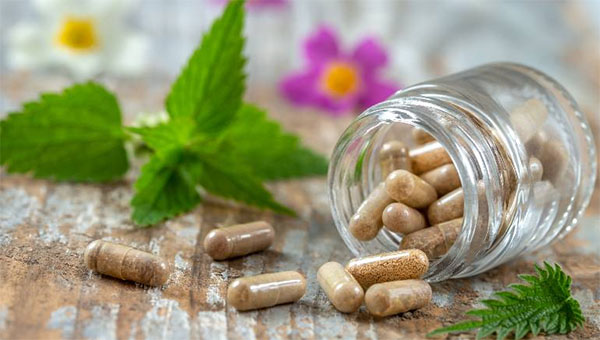
Planet Ayurveda is providing a great range of herbal supplements including the dietary supplements, prepared with the natural herbs. One can consume these supplements daily after consulting with a medical professional in case, he or she may be suffering from some other disease. These herbal supplements have no adverse effects on health, rather they will help in supporting your immune system and make it stronger for fighting the diseases. Some of the best dietary supplements available are:


1. Moringa Capsules
These capsules are made from a tree also known as” Tree of life”. It is a rich source of iron, proteins, Vitamin B6, Vitamin C, vitamin A, magnesium, etc.
Benefits of Moringa Capsule
- Controls diabetes
- Enhances our immune system
- Control heart problems.
- Strengthens bones.
- Increase RBC’s in a natural way
2. Giloy Capsules
Giloy also is known as Amrita aur Guduchi is a herb that helps to boost the immune system and these capsules are formed from giloy herb.
Benefits of Giloy Capsule
- Improves immunity
- Has amazing antipyretic activity
- Good source of Iron and Calcium
- Helps to increase in collagen production
- Helps in skin regeneration
3. Amalaki Rasayan
Also known as Indian gooseberry which is a rich source of vitamin C, which is 100% natural formation of Planet Ayurveda.
Benefits of Amalaki Rasayan
- Used for rejuvenation
- A good source for aphrodisiac
- Has antioxidant properties
- Beneficial for the brain, eyes, heart, liver, skin, and hair
4. Ashwagandha Capsules
Withania somnifera, known as ashwagandha/winter cherry is used for the preparation of these capsules.
Benefits of Ashwagandha capsule
- Relieves muscle spasm, and fatigue
- Treats insomnia
- Enhances mental stamina as well as physical stamina
- Relieves joint pain
- Corrects erectile dysfunction and low sperm count
5. Coral Calcium Complex
It is a pure and natural extract that contains a combination of Praval pishti, Akik pishti, Jawar mohra pishti, Mukta pishti, Kamdudha, and Guduchi.
Benefits of Coral calcium complex
- Helps to maintain the calcium level in the body
- Helps to maintain a healthy immune system
- Enhances bone strength
- Maintains healthy heart
HOME REMEDIES AND OTHER PRECAUTIONS TO BE TAKEN
These below-described foods will enhance immunity and will also improve health:
- Papaya: Papaya is loaded with Vitamin A, it also contains potassium, vitamin B, folate, antioxidants, and Vitamin C.
- Garlic: It gradually boosts immunity. It also helps to treat the common cold, flu, and a variety of mother illnesses. It also contains calcium, potassium, and sulfur compounds.
- Ginger: Ginger decreases inflammation and helps to manage sore throat, joint pains, flu, and cold. It also helps to decrease nausea.
- Spinach: It contains beta carotene, calcium, iron, magnesium, potassium, vitamin A, folate, and many other antioxidants.
- Citrus Fruits: one of the best sources of Vitamin C. Vitamin C increases the production of white blood cells which are key factors in fighting infections. It also reduces the effect of respiratory tract infection.
Due to the presence of the above qualities they must be added in the diet to maintain health.
Don’t take any nutrient supplement or product without talking to the doctor. Health supplements should only be taken by properly reading the directions on the label how much to take and how often to take it. They should never be taken more than the recommended amount. Health supplements should be stored properly as per the directions.
Conclusion
To maintain a healthy life, there is a need to maintain a healthy diet, a healthy lifestyle, and adding the right dietary supplements in a routine that not only protect us from diseases but also boost up our immune system, which is the urgent need of this hour.
Indian Kitchen is a storehouse of dietary supplements that can boost up the immune system and can provide good health and help us to lead a proper and balanced life. With a proper lifestyle and proper dietary supplements, we people can lead a healthy life. Ayurveda serves you the simplest way to lead a healthy and good life.
Click the CROSS button to close
