Author: Dr. Vikram Chauhan

What is Atrophic Pancreas?- Causes. Symptoms and Ayurvedic Treatment

Atrophic pancreas is a non-specific disease and is common in elderly patients. Atrophy is a partial or complete wasting of the part of the body. This is a reduction in the size of a cell, tissue or organ. Atrophy in general, is a physiological process of re-absorption and breakdown of tissues involving apoptosis. But if it occurs due to any pathology or as a result of disease, it is termed as pathological atrophy. In atrophy there may be a reduction in the number or in size of the cells or both. In this article we are going to discuss Atrophic pancreas and it Ayurvedic treatment

Introduction

Atrophic pancreas is the irreversible degeneration of the pancreas. This disease is associated with chronic pancreatitis. This disease involves the inflammation of the pancreas and alcohol is the main cause for this disease. This condition is a long standing inflammation of the pancreas. This long standing inflammation alters the organ’s normal structure and functions. It is characterized by irreversible damage to the pancreas from reversible changes in acute pancreatitis. This disease can lead to permanent scarring and damage to the pancreas. Atrophy of pancreas arises when chronic pancreatitis is not treated in time and causes shrinkage of the pancreas.

adnominal pain

Etiology/Causes

The most common cause of this disease is Alcohol consumption. Some more causes of this disease are:

  • Autoimmune disorders
  • Ischemia
  • Intraductal obstruction
  • Cystic fibrosis
  • Gallstones
  • Some infection
  • Injury to the pancreas
  • Hypercalcemia
  • High lipid profile

Clinical features/Signs and symptoms

You may not have symptoms at first. But when the change can become quite advanced then you might suffer from following symptoms:

  • Diarrhea
  • Pain in your abdomen
  • Nausea and vomiting
  • Shortness of breath
  • Weight loss
  • Steatorrhea (oily, smelly stools)
  • Diabetes

Risk Factors

These risk factors can increase the risk of pancreatitis and those are

  • Excessive alcohol consumption
  • Cigarette smoking
  • Obesity
  • Family history

Diagnosis

This disease is diagnosed by some tests and procedures. A Secretin stimulation test is considered the best test for diagnosing Pancreatitis. Some other tests for diagnosing Atrophic pancreas are

Blood tests include

  • Serum amylase
  • Serum lipase
  • Serum trypsinogen

Imaging test includes:

  • USG (Ultrasonography)
  • CT scan (Computed tomography)
  • MRI (Magnetic resonance imaging)

When pancreatitis is caused by genetic factors then following tests should be done

  • ESR
  • IgG4
  • ANA (antinuclear antibody test)

Treatment of of Chronic Pancreatitis

There are three treatment options for the management of chronic pancreatitis i.e. medicinal measures, therapeutic endoscopy and surgery. These procedures show some negative effects also. As these Allopathic medications have adverse effects on the body mainly on the liver and kidney. So why not to choose ayurveda? Despite knowing the fact that these ayurvedic medications are totally herbal and safely prepared under ancient tested formulas by following classical text. Now Let just discuss some of the formulations manufactured by one of the leading firm in the field of Ayurveda i.e. Planet Ayurveda.

Herbal Remedies for Atrophic Pancreas

Planet Ayurveda offers wonderful herbal products for this disease. This is a leading herbal manufacturing company. Planet Ayurveda company came into existence in 2002 and was founded by Dr. Vikram Chauhan (MD Ayurveda) . Company products are WHO-GMP, ISO 9001: 2015, HALAL, Kosher and HACCP certified. This company is also approved by US-FDA. As a result of this Planet Ayurveda has become India’s one of the most trusted and influencing names in the field of Ayurvedic and Herbal medicines.

So Planet Ayurveda provides following herbal products for this disease:

  1. Agnitundi Vati
  2. Yakrit Plihantak Churna
  3. Chandraprabha Vati
  4. Mahashankh Vati
  5. Curcumin Capsules

Herbal Supplements of Atrophic PancreasHerbal Supplements for Atrophic pancreas

Products Description

1. Agnitundi Vati

This is a classical Ayurvedic formulation. This is used in increasing the appetite and also in the treatment of abdominal pain. This formulation is prepared from the herbs such as Haritaki (Terminalia chebula), Bibhitaki (Terminalia bellerica), Maricha (Piper nigrum), Pippali (Piper longum), Jeerak (Cyminum cumini), kuchla (Strychnosnux vomica) etc. This Ayurvedic formulation improves digestion, intestinal movement and secretions. It is also used to relieve intestinal colic and all types of Abdominal colics.

Dosage: 2 tablets twice a day with plain water after meals

2. Yakrit Plihantak Churna

This is a patent herbal formulation of Planet Ayurveda. It improves liver function naturally. This formulation is made using the standardized extracts of potential herbs such as Bhumi amla (Phyllanthus niruri), Kalmegh (Andrographis paniculata),Bhringraj (Eclipta alba), Sharpunkha (Tephrosia purpurea), katuki (Picrorhizakurroa) etc. It helps in clearing away the toxins. This herbal formulation is useful in improving digestion and also maintains the health of the pancreas.

Dosage: ½ teaspoon twice a day with plain water after meals

3. Chandraprabha Vati

It is an effective herbal formulation to increase vigour and vitality of the person. It is widely used in Ayurvedic practice for the treatment of diabetes, diseases of the urinary system etc. It is prepared from the herbs like Karpoor (Cinnamomum camphora), Vacha (Acorus calamus), musta (Cyperus rotundus), Haridra  (Curcuma longa), Ativisha (Aconitum heterophyllum), Chavya (Piper chaba) etc. These herbs provide a soothing effect in the body. It is also helpful in maintaining the health of the digestive system.

Dosage: 2 tablets twice a day with plain water after meals

4. Mahashankh Vati

It is a natural solution for all digestive problems. It is a classical Ayurvedic medicine used for centuries. It has a richness of digestive herbs such as Pippali (Piper longum), Chitrak (Plumbago zeylanica), Danti (Baliospermum montanum), yavakshar (Natural potassium carbonate) etc. It is a useful herbal remedy for indigestion, hyperacidity, loss of appetite, abdominal pain etc. This herbal supplement is effective as a CNS stimulant.

Dosage: 1 tablet twice a day with plain water after meals

5. Curcumin Capsules

This is a single herbal formulation and is nature’s answer to pain, inflammation and pain. It is prepared from the standardized extract of Haridra (Curcuma longa). It improves the digestive power. It purifies the blood and is antiseptic in nature as Pancreatitis is mainly caused by infections. It has an anti-inflammatory action and is helpful in pancreatitis. These capsules are effective supplements to treat various cancers and tumors.

Dosage: 1 capsule twice a day with plain water after meals

Contact my assistant to provide you the costing / ordering and delivery information at – costing.planetayurveda@gmail.com or call at +91-172-5214030 Or Check Website – www.PlanetAyurveda.com

Conclusion

In the end we can say that the above provided information is right and true. This disease can lead to life-threatening complications if not treated in time. So these herbal products of Planet Ayurveda will help you to fight against this disease. All the remedies are natural and safe to use because they are free from chemicals and additives. These products do not cause any further complications. Ayurveda will help you strengthen the body physically as well as mentally.
What is Peripheral Artery Disease – Symptoms Causes And Ayurvedic Treatment

OVERVIEW

PAD i.e. Peripheral Artery Disease is Blood circulation related issue, Thus it is considered to be concerning. Ayurveda is a science that doesn’t just work on decreasing the symptoms but Depletes the cause (leading to the disease). Thus we will talk about the PAD as well as concerning points as well as the Ayurvedic Treatments that can be followed for treatment with all Ayurvedic aspect i.e. Nature.

INTRODUCTION TO PAD

PAD which is a short form to Peripheral Artery Disease. A Peripheral Artery Disease as the name suggests includes circulatory problems, where the arteries get constructed such that it affects the blood flow. Arteries are the blood vessels which Leading to lesser supply of blood to the limbs. Peripheral defines the limbs that are affected i.e. Upper & Lower Limbs where usually the legs are affected. The question is, how the blood vessels get thin or gets constricted? It is because of the Calcium deposition in the blood vessels termed as Atherosclerosis or Fat deposition.

AYURVEDIC ASPECT OF PAD

Uttana Vata Rakta is the Ayurvedic aspect for PAD. As the name suggests Uttana Vata Rakta, Pitta & Kapha gets Vitiated thus leads to Aavarna(Blocking) of Vata Dosha & thus affects rakta(Blood). Mainly due to Vata Pratibandh (blockage of movement) leading to Vatarakta & its complications. In Ayurvedic aspect Vatarakta is one among the 80 vata vitiated disorders such as Gouty Arthritis, Rheumatoid Arthritis, Cerebral Palsy & other Vata related Disorders. Major sites affected by Vatarakta includes Paada(feet), hastha(hands), sandhi(joints) & further because of sookshma(being precise, ability of piercing to the deep sites as well) of Vata Dosha it moves to all the little joints & affects deeply to the core.

Peripheral Artery Disease

CAUSES

1. Aharaja (Related to Diet & Food Habits) Cause

Ati Lavana (Salt), Katu(Pungent) , Amla(Sour), Kshar(Alkaline) , Snigdha(Unctuous), Ushna(Hot) i.e. Excessive intake of above mentioned Rasa (Taste) food items. Viruddh Aahar (Incompatible food items uptake), Adhyaashan (Excessive uptake of food items on regular basis)

  • Excessive uptake of Oil-preparation cakes or radish , Horsegram, Blackgram, leafy vegetables, Nisha etc.
  • Curd, Kanji, Sauvirya (Sour preparation of dehusked barley), Sukta (Vinegar), Alcoholic beverages etc.

कुलथमाषनिश्वपाकण्डिपललएकशुभी।

दध्यअरनालसौवर्यउक्ततकरसुरसवाई।।

(Reference – चरक संहिता चिकित्सा स्थान २९)

2. Viharaja (Realted to Day to Day Activities)

Cause- Krodha (Anger), Diwaswapna(Sleeping in Daytime regularly), Raatrijaagran(Awaking till midnight or late regularly), Mitha Aahar & Vihaar(Wrong choices of food & lifestyle practices), Sthoola & Sukha(Obese people & the one who lives luxurious life)

TYPES & SYMPTOMS : Types on the basis of location includes

1. UTTANA VATA RAKTA : Affects the superficial tissues  which may include muscles as well as skin. Thus symptoms are related to Kushta (Skin diseases), Skin lesions & muscle pain.

2. GAMBHIR VATA RAKTA : Affects the deep tissues  muscles, since the disease here is complicated because of circulation of Rakta in every part of the body. Thus symptoms can be related to Bone & Joint Pain or Systemic or till internal viscera.

Types on the basis of Vitiated Dosha includes

1. VATA PRADHAN VATA RAKTA

Vata Dosha gets vitiated leading to symptoms like Shoola(Pricking pain), Sheeta Asehnuta( Aggravation of symptoms in cold conditions), Black colour around the swelling ,etc.

2. PITTA PRADHAN VATA RAKTA

Pitta Dosha gets vitiated leading to symptoms like Daah(Burning Sensation), Ushnta(Hot on touch), trishna(Thirst),Rakta Varna (red coloured) swelling ,etc.

3. KAPHA PRADHAN VATA RAKTA

Kapha Dosha gets vitiated leading to symptoms like Shoonta(Numbness), Gurutva(Heaviness), Kledtava (Unctuous), Sheeta (Cold, on touch) ,etc.

4. RAKTA PRADHAN VATA RAKTA

Rakta Dosha gets vitiated leading to symptoms like Kandu(Itching sensation), Kamasya Varna (Copper coloured swelling), Shoola(Pain) ,etc.

SYMPTOMS

  1. Leg pain(While walking)
  2. Cramps in Legs or Hips (Unilateral / Bilateral)
  3. Weak or No pulse in legs
  4. Change in colour of legs
  5. Cold, on touch in the lower extremities in comparison to other parts of the body, etc.

RISK FACTORS

Factors that increase your risk of developing Pad are increased if person have

  1. Diabetes
  2. Smoking or Tobacco consumption
  3. H/O any family member with PAD ,Stroke
  4. Obesity
  5. Age >55 years

DIAGNOSIS : Diagnosing PAD includes

  1. Ultrasound Scan(USG) : It gives a clear image of any blockage or plaque accumulation.
  2. Ankle-Brachial Index : It gives the idea of blockage by comparing the Blood Pressure of the Arm with the Blood Pressure of the Ankle.
  3. Angiography : It gives a clear image of each and every Artery to figure out the blocked one.
  4. Blood Tests : Blood tests are done to check the Lipid Profile, HDL, LDL etc.
  5. Computed Tomographic Angiography(CT Scan) :Non- invasive test which gives a clear image of the whole body done with 100-200 rays at a time.
  6. Magnetic Resonance Angiography(MRA Scan) : Non-invasive test with clear image of the whole body.

TREATMENT OF PAD

  1. Anti-Hypertensive Drugs– To maintain the Blood Pressure
  2. Statins– To lower the Cholesterol Levels to normal, which lowers the chances of more blockage.

In extreme conditions

Angioplasty – Surgical Invasion where Unblocking or Repair of blood vessels is done.

SIDE EFFECTS

With regular intake of Anti-Hypertensive & Statin drugs many side effects accompany such as

  • Diarrhoea
  • Constipation
  • Headache
  • Nausea or Vomiting
  • Skin rashes,
  • Weight Gain or Loss,
  • Unusual Pain or Cramps,
  • Dark Urine,
  • In extreme conditions Mental Confusion.

HERBAL REMEDIES BY PLANET AYURVEDA FOR PAD AKA UTTANA VATA RAKTA

Planet Ayurveda Holistic Healing through herbs provides 100% Classical Natural & Vegetarian products with strict adherence to Ancient Ayurveda. Each product is made with purest herbal extracts, enriched with the wisdom from ages and stringently tested for purity & consistency. Herbal supplements can be used to support various body systems & maintain our health. It is increasingly difficult to have a healthy diet  thus Planet Ayurveda offers Supplements with NO SIDE-EFFECTS.

Ayurveda offers Herbs for Reduction of Pitta & Kapha dosha such as

  1. Vasa (Adhatoda vasica) AKA Malabar Nut. Acc. To Bhavaprakasha Nighantu, Guduchyadi Varga, Shloka 89-90, It is stated that because of Tikta(Bitter), Kashaya (Astringent) Rasa (Taste), Laghu (Light) & Rooksha (Dryness) guna (Quality). Thereby, Kapha & Pitta Dosha gets alleviated.
  2. Guduchi (Tinospora cordifolia) AKA  Giloy.It has Kashaya (Astringent) & Tikta (Bitter) rasa (Taste) thus acts as a Doshatrayahara (Balances Tridosha-Vata, Pitta & Kapha)
  3. Eranda(Ricinus communis) AKA Castor.It has Madhur(Sweet), Katu(Pungent), Kashaya(Astringent) Rasa(Taste) thus acts as a Vata & Pitta Dosha-hara.
  4. Aragwadha(Cassia fistula) AKA Chatur Angula. It has Madhur (Sweet) Rasa (Taste) & Snigdhta (Unctuousness, Oiliness) thus acts as Kapha & Pitta-hara.
  5. Amalaki (Emblica officinalis) AKA Amla. It has PanchaRasa-Lavana Varjit i.e.Amla (Sour), Madhur (Sweet), Katu (Pungent), Tikta (Bitter), Kshaya (Astringent) thus acts as Tridosha-hara (Allevates Vata, Pitta & Kapha).

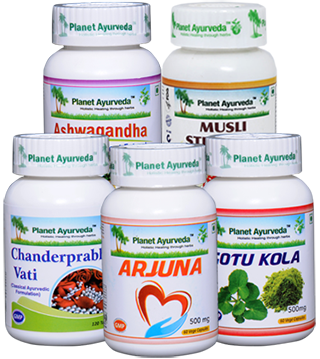
Peripheral Artery Disease (PAD)

Herbal Remedies for PML Virus

PRODUCTS DESCRIPTION

1. Chandraprabha Vati

It composes of the following ingredients-

  1. Shilajit (Asphaltum)
  2. Guggul (Commiphora mukul)
  3. Karpoor (Cinnamomum camphora)
  4. Vacha (Acorus calamus)
  5. Mustak (Cyperus rotundus)
  6. Haridra(Curcuma longa)
  7. Amalaki (Emblica officinalis)
  8. Chavya (Piper chaba)
  9. Vidanga (Embelia ribes)
  10. 10. Guduchi (Tinospora cordifolia)
  11. Shunthi (Zingibera officinalis)
  12. Maricha (Piper nigrum)
  13. Pippali (Piper longum)
  14. Danti (Baliospermum montanum)
  15. Dalchini (Cinnamomum zeylanicum)
  16. Tejpatta (Cinnamomum tamala)
  17. Ela (Elettaria cardamomum)
  18. SarjiKakshara (Sodium Carbonate)
  19. Yavakshara(Potassium carbonate)
  20. Saindhav Lavana (Rock salt)
  21. Sauvarchala Lavana (Sodium sulphate)
  22. Vida (Black salt)

EFFECT

Relaxes the blood vessels by reducing the pressure on the walls of the blood vessels. It helps in reducing the exertion on the walls & effectively manages Blood Pressure as well.

Dosage : 1-2 Tablets Twice/Thrice Daily with Lukewarm water before Food

2. Gotukola Capsules

It is a single herb capsule which consists of Standardized extract of Gotu Kola (Centella asiatica). Gotu Kola (Centella asiatica) contains Folic acid which is beneficial in improving overall circulation of the body. Thus acts as Cardio-protective tonic.

Dosage : 1-2 Capsules Twice Daily with Lukewarm water after Food.

3. Ashwagandha Capsule

It is a single herb capsule which consists of Standardised Extract of Ashwagandha (Withania somnifera). It helps in improving the ability to deal with Stress related problems like High Blood Pressure. It helps in reducing the level of Cortisol (Stress Hormone produced with increased production in Adrenocorticotropic hormone[ACTH] as a result decreases the pressure on the walls of the arteries which in turn reduces the Blood Pressure to normal.

Dosage : 1-2 Capsules with Milk 2 hours After Food

4. Arjuna Capsule

It is a single herb capsule which consists of Standardised extract of Arjuna (Terminalia arjuna). It helps with the proper functioning of the Cardiovascular System by dilating the Arteries & decreasing the constant pressure on the walls. Leading to balance of Blood Pressure & Blood Flow.

Dosage : 1-2 Capsules Twice Daily with Lukewarm water after Food

5. Musli Strength Capsule

Musli Strength Capsule consists of Gokshura (Tribulus terrestris) & Safed (White) Musli (Chlorophytum borivilianum). Gokshura (Tribulus terrestris) AKA Gokhru, Puncture Vine is useful in treating any blood ailments. Safed Musli (Chlorophytum borivilianum) AKA Dholi/Shweta Moosli, Indian Spider Plant is explained as Rasayani (Rejuvenative), Rakta Shodhak (Blood purifier) that helps in maintaining the Blood flow.

Dosage : 1-2 capsules with Lukewarm water after Food

Contact my assistant to provide you the costing / ordering and delivery information at – costing.planetayurveda@gmail.com or call at +91-172-5214030 Or Check Website – www.PlanetAyurveda.com

CONCLUSION

Ayurvedic aspects that have been written many years ago, the manuscripts show the features of PAD as Uttana VataRakta. The treatment thus has no side effects and with treatment also helps in regaining the body’s strength.