An Ayurvedic View On Kidney Disease
Abstract
Kidney disease affects the body to filter out blood and extra water out of blood which helps to maintain blood pressure. Kidneys are two red-brown color kidney-shaped organs which are found on the vertebrae which are located on the right and left retroperitoneal space; they receive the blood from the paired renal arteries and exit into the renal vein. The nephron is the structural and functional unit of the kidney. It is generally located in the upper abdominal cavity, the right kidney is slightly lower and smaller than the left side. The left kidney is approximately at the T12 to L3 and the right side is slightly lower. On the top of the kidney, there is the adrenal gland, the adrenal gland is surrounded by two layers of perirenal fat which is usually present between the renal fascia and renal capsule. It is convex shaped with a concave border, on the concave side there is a hilum from where the renal artery and vein enter the kidney and ureter left. The superior pole of the kidney is adjacent to the liver and the left side is the spleen. In this article, we are going to discuss the causes and symptoms of kidney diseases with their Ayurvedic management in detail.

Introduction
Kidney disease or renal disease is known as nephropathy which causes damage to the kidney. Nephrosis is a non-inflammatory kidney disease that causes kidney function to loss which further leads to kidney failure. It helps to maintain a healthy body which is responsible for filtering out waste products, excess water and other impurities from the body. As the toxins are stored in the bladder which is removed by urination. It helps to activate the vitamin which helps further to absorb the calcium. Kidney disease attacks the nephrons, which leave the kidney and cannot remove the waste material from the body. Kidneys help to regulate the pH, which regulates blood pressure and controls the red blood cells (as it has a chemical which is known as erythropoietin which helps to make the red blood cells). Kidney disease leads to many other health problems such as Weak bones, nerve damage and sometimes malnutrition. Another problem related to kidneys involves- Cancer, cysts and infection of the kidney. It is known as Chronic Kidney disease which damages and loses its ability to keep the filter of the blood.
Facts
- Kidney disease is the fastest-growing non-communicable disease in the United States.
- It can lead to heart attack, stroke and kidney failure.
- Kidney disease is not reversible but it is treatable, if it is caught early the progression of the disease is stopped and hence avoids serious complications.
- Kidney disease is a silent killer until signs and symptoms appear in the late stage.
- Covid 19 is targeting people who suffer from kidney disease.
Types of Kidney Diseases
- Chronic Kidney Disease- It is the most common form of kidney disease which does not get improved and the main cause is blood pressure, as it increases the pressure on the glomeruli. This increased pressure damages the vessels and kidney functions begin to decline.
- Kidney Stone- This is another kidney problem, which occurs when the minerals and other substances get crystallized in the kidney and form solid masses which cause difficulty to come out from urine. It is extremely painful.
- Glomerulonephritis is the inflammation of glomeruli, a small structure present inside the kidney that filters out the blood. It is mainly caused by congenital abnormalities and infections.
- Polycystic Kidney Disease- A genetic disorder that causes numerous cysts to grow inside the kidney.
- Urinary Tract Infection- It is a bacterial infection of the part of the kidney. In this infection of the bladder and urethra is most commonly seen. If these infections are left untreated then cause kidney failure.
Causes
- It is the deposition of Immunoglobulin A antibodies in the glomerulus.
- Long use of Antibodies such as aspirin and acetaminophen forms nephropathy which is chronic analgesic nephritis.
- Diabetes- Diabetic nephropathy is a progressive kidney disease which is caused by angiopathy of the capillaries in the glomeruli.
- High Blood pressure
- Interstitial nephritis ( which causes inflammation of kidney tubules and their surrounding structures
- Vesicoureteral reflux which causes urine to back up in the kidney
- Pyelonephritis (recurrent kidney infection)
- Systemic lupus erythematosus
Symptoms
- Nausea
- Sleep problems
- Dry and itching problems
- Chest pain as the fluid gets filled up around the lining of the heart
- Frequent urination, seen at night
- Poor appetite
- A sudden increase in the level of Potassium
- Changes in urine output
- Anemia
- Twitching and cramps in the muscle
- Weakness
- Shortness of breath
Risk Factors
- Diabetes
- Cardiovascular disease
- Obesity
- Abnormal kidney structure
- Smoking
- Hypertension
- Family History
- Black and Native American
Diagnosis
- Blood tests
- Urine tests
- Ultrasound
- Kidney biopsy
- CT Scan
- GFR (Glomerular Filtration Rate)
- Blood creatinine test
Treatment
- Treat the cause to slow down or control the causes of kidney disease.
- Treat the Complication-
- The angiotensin-converting enzyme preserves the kidney in high-blood-pressure patients
- To relieve swelling in kidney patients- diuretics
- To treat anemia- various multivitamins and supplements of the hormone erythropoietin
- Control the cholesterol level- Statins help to lower cholesterol.
- A low-protein diet which minimizes the waste products in the blood
- Treatment for end-stage kidney disease-
- Dialysis
- Kidney transplant
Complication
- Weak bones and increased risk of bone fractures
- Decreases sex drive, erectile dysfunction
- Decreased immune response
- Complication in pregnancy
- Damage to the central nervous system
- Pericarditis (a sac-like, membrane which envelops the heart)
Dietary and Lifestyle Changes
- Manage diabetes
- Limit the food rich in cholesterol level
- Quit smoking
- Maintain moderate weight
- Reduce salt intake
Ayurvedic Management
In ayurveda, it is correlated with Vrikk Rogas. Kidney diseases are under the heading of Mutra Vaha Srotas. The kidney is one of the three sadyo pranahara marma which is agneya in nature. The food ingested is further divided into Sara Bhaga (nutrients) and Kitta Bhaga (non-essential nutrients). Sara Bhaga forms the rasa dhatus which meets the nutrients and kitta Bhaga is eliminated from the body in the form of urine, stools and sweat. When these tridoshas are imbalance in the body it gives rise to kidney disease when Pitta is involved causes impaired jatharagni, Kapha is responsible for the blockages of srotas and Vata doshas are responsible for the degeneration of the structure of the kidney and impairment of kidney functions. When the Ama doshas are accumulated in the body, they cause disease.
Treatment
- Virechana
- Swedana
- Agni deepana
- Mutra Pravartaka
- Raktaprasadaka
- Sarva dhatu poshaka
Herbs Useful for Kidney Disease
Punarnava
Punarnava (Boerhavia diffusa) is an important inflammatory herb which acts as a diuretic and reduces swelling. It is a useful herb in coughing and balances the Kapha and Vata doshas. Useful herb in anemia and in many cardiac disorders. In heavy periods, to improve digestion it is a useful herb and speeds up wound healing in chronic toxic conditions.
Gokshura
Gokshura (Tribulus Terrestris) is an ancient herb which is used in the urogenital system and acts as an aphrodisiac. It has a diuretic activity that helps cleanse the urinary system so helpful in urinary calculi. Gokshura is helpful in female infertility which helps to reduce the size of cysts and has anti-obesity properties. Balance the tridoshas of the body and have coolant properties.
Guduchi
Tinospora cordifolia) is a famous ayurvedic herb which is useful in the treatment of urinary tract disorders, and acts as an immunomodulator. It helps to relieve constipation, in skin diseases. Balances tridoshas of the body and helps to relieve indigestion. Used in heart diseases, the act has anti-ageing and rejuvenative properties. Also helpful in seronegative arthritis and in multiple sclerosis.
Triphala
Triphala is made up of three herbs consisting of Amalaki, Bibhitaki and Haritaki. This herb acts as a Rasayan which has numerous health benefits. It has laxative properties and blood-purifying effects. It has anti-bacterial activity and anti-arthritic activity. It is also helpful against infectious disorders such as Tuberculosis and AIDS. Triphala has radioprotective property.
In Medical Astrology
Astrology plays a critical role in not just knowing the primary reason behind it but helping to treat serious kidney ailments. Ayurveda and astrology have had an integral relationship since their origin. Astrology originated in the Rig Veda. If the Sun, Mars and Venus and 7th get troubled it gives rise to kidney disease such as in the form of kidney stones. The kidney is ruled by the 7th house, when Saturn is ruling the libra it causes the hardening of the kidney which causes poor filtration of blood, an increase in the level of creatinine and the functions of the kidney become sluggish.
Mantra Therapy
There are 9 mantras which are from Atharva Veda and namely- Parjanya, Mitra, Varuna, Chandra and Sun. This is known as Mootra Mochana Suktam. It is believed that while chanting this mantra one can overcome dialysis and other kidney diseases and provide relaxation of the mind. Patients chant this mantra as many times as they can while having the medicine which is prescribed by the doctor. This mantra has to chant twice daily once with two voices in a lower pitch and once more with three voices in a higher pitch.
- विद्या शरस्य पितरं पर्जन्यं शतवृष्ण्यम्।
तेना ते तन्वे३ शं करं पृथिव्यां ते निषेचनं बहिष्टे अस्तु बालिति ॥१॥
- विद्या शरस्य पितरं मित्रं शतवृष्ण्यम्।
तेना ते तन्वे३ शं करं पृथिव्यां ते निषेचनं बहिष्टे अस्तु बालिति॥२॥
- विद्या शरस्य पितरं वरुणं शतवृष्ण्यम्।
तेना ते तन्वे३ शं करं पृथिव्यां ते निषेचनं बहिष्टे अस्तु बालिति॥३॥
- विद्या शरस्य पितरं चन्द्रं शतवृष्ण्यम्।
तेना ते तन्वे३ शं करं पृथिव्यां ते निषेचनं बहिष्टे अस्तु बालिति॥४॥
- विद्या शरस्य पितरं सूर्यं शतवृष्ण्यम्।
तेना ते तन्वे३ शं करं पृथिव्यां ते निषेचनं बहिष्टे अस्तु बालिति॥५॥
- यदान्त्रेषु गवीन्योर्यद्वस्तावधि संश्रुतम्।
एवा ते मूत्रं मुच्यतां बहिर्बालिति सर्वकम्॥६॥
Whatever the toxins are released, collected in the intestine, urinary bladder so let them release freely at once.
- प्र ते भिनद्मि मेहनं वत्रँ वेशन्त्या इव।
एवा ते मूत्रं मुच्यतां बहिर्बालिति सर्वकम्॥७॥
Remove the obstruction and open the urethra to freely flow the urine at once.
- विषितं ते वस्तिबिलं समुद्रस्योदधेरिव।
एवा ते मूत्रं मुच्यतां बहिर्बालिति सर्वकम्॥८॥
As the bladder mouth is opened like a flood in a sea, let the urine flow freely at once.
- यथेषुका परापतदवसृष्टाधि धन्वनः।
एवा ते मूत्रं मुच्यतां बहिर्बालिति सर्वकम्॥९॥
When the bow releases from the arrow and moves to a far place, let all urine also flow freely at once.
Herbal Remedies for Kidney Diseases by Planet Ayurveda
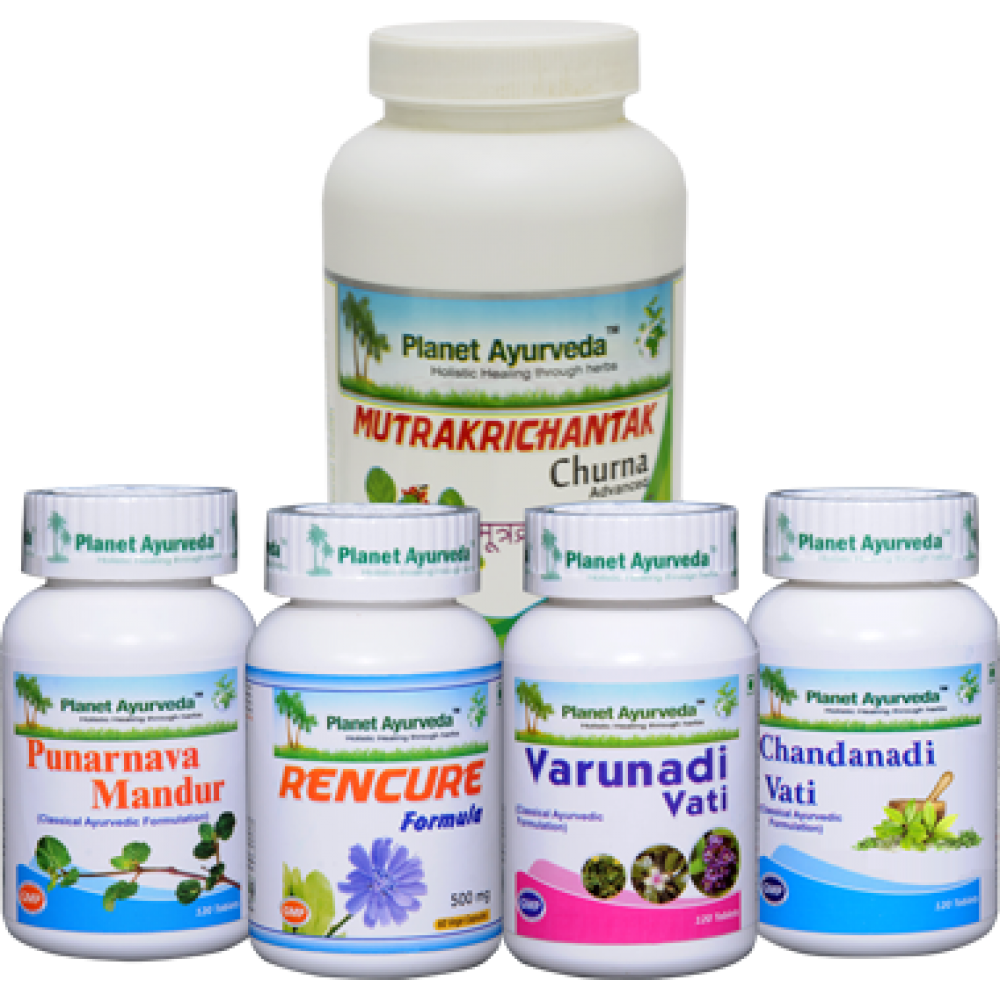
Planet ayurveda is a renowned GMP-certified, ISO 9001-2015 Certified and US-FDA registered ayurvedic company which adhered to the aim of manufacturing quality ayurvedic formulation as described in the ancient textbook of ayurveda. These products are made up of herbs without any additives, preservatives or any kind of chemicals which do not cause any side effects. Planet ayurveda provides medications which help to treat disease and various health problems. For this planet ayurveda provided Revive kidney care pack which is made up of various herbs and provides health benefits to it.
Products List
Revive Kidney Pack
- Mutrakrichantak Churna
- Rencure Formula
- Varunadi Vati
- Punarnava Mandur
- Chandanadi Vati

Products Description
1. Mutrakrichantak Churna
Mutrakrichantak Churna is a herbal powder formulation which is made by planet ayurveda using Varun (Crataeva nurvala), Kalmegh (Andrographis paniculata), Bhumi Amla (Phyllanthus niruri), Gokshur (Tribulus terrestris). This churna is helpful in many kidney diseases and helps to regenerate the cells of the kidney. It helps to bring down the creatinine level hence avoiding dialysis. It has a diuretic property which provides nutrition to the body.
Dosage- 1 teaspoon twice daily with water.
2. Rencure Formula
Rencure formula is polyherbal capsules which are made by planet ayurveda using ingredients such as Punarnava (Boerhavia diffusa), Palaash (Butea monosperma), Kasni (Cichorium intybus) and many more. It is an effective remedy for kidney patients and hence helps to balance the tridoshas of the body. These capsules help to maintain the kidney has a diuretic property which helps to relieve the painful micturition. It helps to reduce swelling.
Dosage- 1-2 capsules twice daily with plain water after meals.
3. Varunadi Vati
Varunadi Vati is a herbal tablet formulation prepared by planet Ayurveda using ingredients such as Guggul (Commiphora mukul), Punarnava (Boerhavia diffusa) and many more. Varunadi Vati is helpful in kidney diseases. It is helpful in crushing and breaking the stones of the kidney and helpful in reducing the urea and creatinine levels of the body.
Dosage- 1-2 tablets twice daily with lukewarm water
4. Punarnava Mandur
Punarnava Mandur is a herbal tablet made by planet ayurveda using various ingredients such as Punarnava (Boerhaavia diffusa), Pippali (Piper longum), Chavya (Piper Chaba), and many more. This tablet is useful in the treatment of Anaemia, spleen disorders and in liver diseases. Act as a diuretic which is useful in renal disorders, hence reducing joint pain. Maintain the water balance in the body.
Dosage- 1-2 tablets twice daily with lukewarm water
5. Chandanadi Vati
Chandanadi Vati is a herbal tablet which is prepared by planet ayurveda using ingredients such as Safed Chandan, Amalaki (Emblica Officinalis), Kapur, Choti Elaichi and many more. Chandanadi Vati is helpful in treating dysuria, nephrotic syndrome and in skin disorders. This tablet is helpful in maintaining the immune system and removes harmful toxins from the body.
Dosage- 1-2 tablets twice daily with lukewarm water.
Conclusion
Kidney disease affects the body to filter out blood and extra water out of blood which helps to maintain blood pressure. Kidneys are two red-brown colour kidney-shaped organs which are found on the vertebrae which are located on the right and left retroperitoneal space. Kidney disease attacks the nephrons, which leave the kidney and cannot remove the waste material from the body. In ayurveda, it is correlated with Vrikk Rogas. Kidney diseases are under the heading of Mutra Vaha Srotas. Later we discussed medical astrology and mantra therapy and various herbal remedies by planet ayurveda which is helpful in it.