AYURVDIC TREATMENT FOR CHRONIC VENOUS INSUFFICIENCY
ABSTRACT
Some diseases although have very less prevalence rate but being presence of a pathology whether it is common or uncommon one is always a topic of concern. One such very important topic of discussion is chronic venous insufficiency. So let put some rays of limelight over this topic and how ayurveda helps you in dealing with such ailments.
INTRODUCTION
Chronic venous insufficiency is a problem associated with circulation of blood, in which veins of legs don’t allow blood to flow back up to your heart that produce accumulation of blood in the legs producing other associated symptoms like straining of blood in the veins. Normally this condition arises due to prolonged standing habits may even be seen as an occupational hazard. As some professions require prolonged standing that makes our body more prone toward this ailment. Normally the valves present inside the lumen of the vein allow blood from lower extremities to flow back toward the heart, but when the functioning of these valves get impaired, blood will not flow properly leading to pooling of blood in legs.
As per ayurveda we can correlate chronic venous insufficiency with ‘shotha roga’

This verse states that
When there is an elevation of vata dosha inside the body, it takes pitta, kapha and rakta dosha along with him (i.e. vata) toward the bahya sira (veins), due to that there comes a problem in circulation of blood inside the veins and it get accumulated in between the skin and muscular tissue producing inflammation over there, known as “shotha” (edema)
ETIOLOGICAL FACTORS
These are the main causes (nidan as per ayurveda) that results in formation of an ailment.
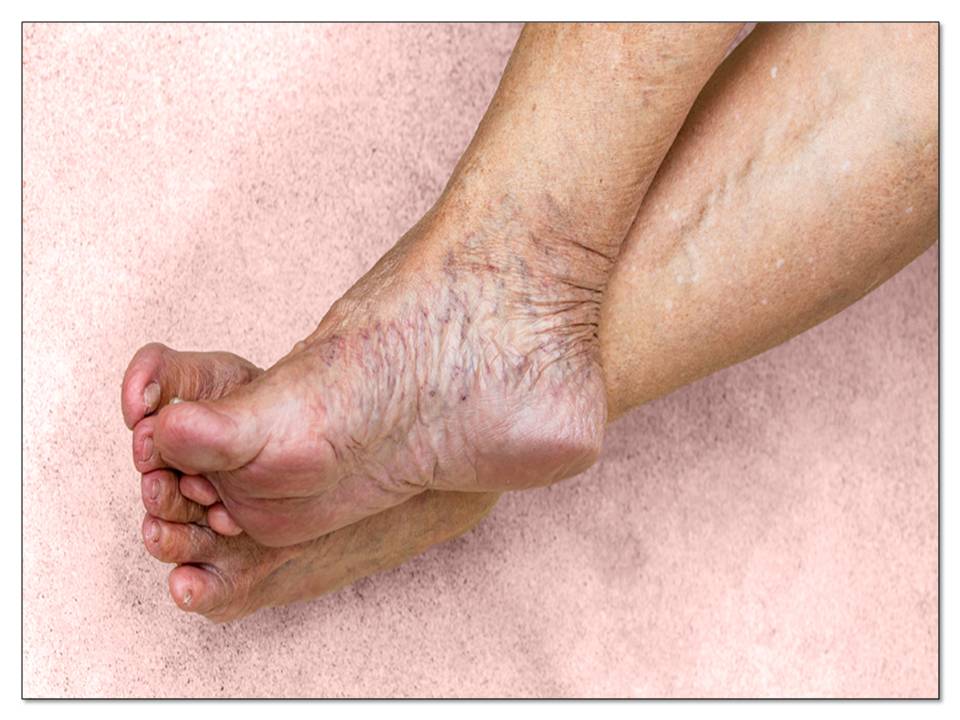
The most common cause of CVI is reflux of the venous valve of superficial veins of the lower extremities. This may occurs due to various associated conditions such as:
- Superficial vein thrombosis
- Deep vein thrombosis
- Formation of arteriovenous fistula
- Phlebitis (inflammation of veins)
- Prolonged standing habits
- Hypertension
- Lack of exercise
- Excessive smoking
- Occupation related hazard, seen in the profession of teaching very often.
As per ayurveda it occurs due to
- Consumption of salt in excess proportion
- Intake of guru (bulky), amla (sour), lavan (salt), nava dhanya (newly formed grains) in higher amount
- Marmaghat (injury to important organs of our body)
Purvarupa (Prodromal symptoms)

As per ayurveda the common prodromal symptoms are explained in above mentioned shloka and it states that:
- Feeling of warmth in affected area
- Burning in localized area
- Vasodilatation
- Heaviness in the affected part
CLINICAL FEATURES
It includes the signs and symptoms. A symptom means the general complaints along with which patients present in front of the physician. Signs: It means what a physician notices himself by observing the patient’s condition.
- Itching
- Pain
- Swelling in the lower limbs
- Difficulty in moving, walking, sitting
- Weakness
- Fatigue and malaise
- Hyper pigmentation of the underlying skin
- Formation of leg ulcer
- Painful leg cramps
- Abnormal muscle spasm of lower extremities
- Feeling of tightness in the lower limbs
Risk factors
It includes the factors responsible for increasing the chance of developing an ailment in the body. In right coronary artery blockage the common risk factors are:
- Hypertension
- Obesity
- High blood cholesterol level
- Inactivity/lack of exercises
- Indulging in prolonged standing habits.
- Varicose vein
- Deep vein thrombosis.
DIAGNOSIS
- Through physical examination of the patient by using:
- Inspection
- Palpation
- Auscultation
- Percussion
- Doppler ultrasound
- Invasive venography
MANAGEMENT
Preventive measures
- Avoid consumption of processed and junk food.
- Do not smoke.
- Indulge yourself in regular exercises- perform exercise to certain extent not beyond your strength.
- Avoid severe unaccustomed exertion and harsh exercises after heavy meals or in cold weather.
- Eat a healthy diet rich with good antioxidants and other important nutrients by adding more fruits and vegetables in the diet.
- Use of exercise on a regular basis.
Conservative therapy
- Use of compression stockings
- Antihypertensive medications to reduce high blood pressure
- Tilting bed in such a manner that feet are above the level of heart.
- Use of ankle pump or sequential compression pump.
Surgical intervention
- Ligation- In this surgical procedure, we do tie up the vein to prevent blood flow.
- Surgical repair of the affected portion of the vein.
- Laser ablation of vein.
- Vein transplant therapy
- Sclerotherapy
In ayurveda we use following below listed treatment protocols
- Nidan parivarjan chikitsa– Avoiding the root of disease. Under this treatment protocol we need to avoid all the causative factors that lead to formation of a pathology in our body.
- In ayurveda we use two treatment modalities in chronic venous insufficiency to sustainably manage the disease further growth. The first one is sanshodhan chikitsa (detoxification procedure) and san shaman chikitsa (alleviating treatment)
Sanshodhan chikitsa (detoxification procedure)
As chronic venous insufficiency is a life threatening condition if not treated initially so we need to use ‘mridu sanshodhan’ (mild detoxification procedures)
- Snehana karma (oleation therapy) – Smoothing the body dosha’s by using herbal ghrit/oil.
- Mridu svedan (gentle fomentation) – fomentation is done with herbs that possess mild action.
- Mridu vaman (inducing emesis with mridu dravya (herb that are not very strong/harsh in action)
- Agni karma (therapeutic cautery) to provide instant relief from pain by balancing out vata-kapha dosha with the use of heat procedures in balanced amounts.
San shaman chikitsa (alleviating treatment)
- In this treatment modality we use the herbal medicines by oral route to balance vitiated doshas within the body itself.
- In this we can also use herbal formulation of planet ayurveda, as their products are made up of pure and standardized extract of herb and their products are also 100% organic and free from harmful chemicals and preservatives.
HERBAL REMEDIES OF PLANET AYURVEDA
Planet ayurveda is a leading herbal manufacturing unit serving people worldwide with their authentic approach of healing by using principles of ayurveda. They have various herbal formulations that will work very efficaciously in conditions like chronic venous insufficiency, it includes
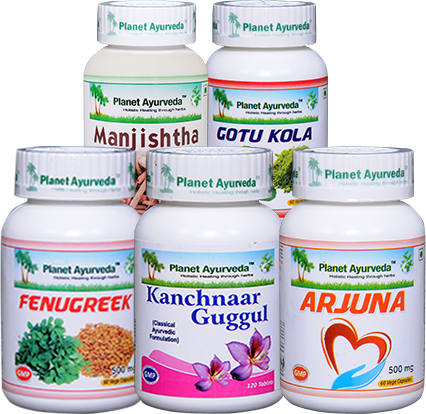

1. Kanchnaar guggul
This herbal formulation contains bark of kanchnar (Bauhinia variegata), haritaki (Terminalia chebula), pippali (Piper longum), kali mirch (Piper nigrum) etc. Kanchanar is a best herb to act as “gandmala nashak” (aid in removing lymphadenopathy), the remaining herbs contain anti-inflammatory action. So this joint combination works really well in stopping the growth of harmful free radicals hence providing great results in chronic venous insufficiency.
Dosage: 1-2 capsules twice daily with lukewarm water.
2. Gotu kola capsule
This herbal capsule contains standardized extract of gotukola (Centella asiatica). This herb is mentioned as the best ‘medhya herb’ (brain tonic) in classical ancient texts. It rejuvenates our mind and helps in strengthening the nervous system of our body. It also contains great antioxidant properties thus helps in removing obstruction present inside the blood channels and proves as a great choice in chronic venous insufficiency patients.
Dosage: 1-2 capsules with plain water two times a day.
3. Arjuna capsule
This herbal formulation contains pure and standardized extract of arjuna (Terminalia arjuna). Arjuna is known for its numerous health benefits on the heart and circulatory system of our body. It contains kashaya rasa (taste) due to this it acts very well in detoxifying the blood. It also shows great results in lowering the level of bad cholesterol, thus works efficiently in the right coronary artery blockage as cholesterol (leads to formation of clot in the lumen of vein) is the main culprit to generate this ailment.
Dosage: 1-2 Capsules, twice daily with plain water.
4. Manjishtha capsule
This herbal capsule contains pure extract of manjishtha (Rubia cordifolia). This herb is clinically proven as the best blood purifier due to various active principles present in it. It helps in removing harmful toxins out from the blood so it helps in removing venous insufficiency very profoundly.
Dosage: 1-2 capsules twice daily with plain water after meal.
5. Fenugreek capsule
This capsule contain standardized form of fenugreek (Trigonella foenum-graecum).Fenugreek known as ‘methi’ is a classical Indian herb contains properties like vata-kapha hara (help in reduction of vitiated vata-kapha dosha) and chronic venous sufficiency also arises due to the vitiation of these two doshas itself. Thus this herbal formulation proves as a very efficacious medicine in patients suffering from chronic venous insufficiency.
Dosage: 1-2 capsules twice daily with plain water after meal.
Contact my assistant to provide you the costing / ordering and delivery information at – costing.planetayurveda@gmail.com or call at +91-172-5214030 Or Check Website – www.PlanetAyurveda.com
CONCLUSION
Now we can conclude that ayurvedic herbs are very effective in managing as well as preventing diseases like chronic venous insufficiency. As ayurveda follow the treatment protocol of ‘nidan parivar jan chikitsa’ (avoiding the root cause of disease). In chronic venous insufficiency, the most common cause is prolonged standing. So with ayurveda, we can sustainably save ourselves from such ailments by following the ideal dietary and lifestyle regime of “dinacharya and ritucharya”. So do consider to opt for ayurvedic treatment by visiting planet ayurveda. They are serving mankind with their authentic approach of healing.


