Author: Dr. Vikram Chauhan

Ayurvedic Treatment For (RCA) Right Coronary Artery Blockage

Abstract

Coronary artery disease is a very common kind of heart disease and one of the primary causes of death in the contemporary age. Males are more likely than females to suffer from Arterial Blockages. Heart muscles need a constant supply of blood, oxygen molecules, and nutrients to function properly. Heart muscles need a constant supply of blood, oxygen molecules and nutrients to function properly. A collection of cells, fat and cholesterol, known as plaque, causes coronary artery obstruction, resulting in a lack of blood flow to the heart muscles. To treat this issue, a range of ayurvedic remedies for heart blockages are available.
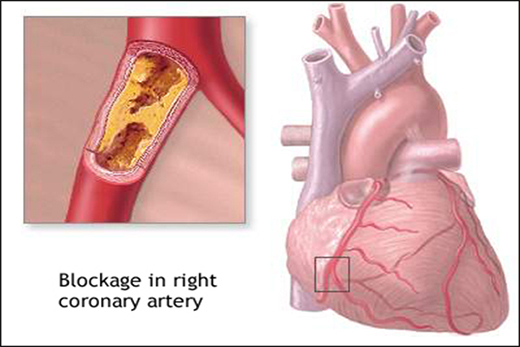
RCA Blockage

Introduction Of RCA Blockage

Two coronary arteries, one on each side, give oxygenated blood to the heart. The texture of arteries is generally elastic and pliable, but plaque accumulation causes them to tighten and harden. Because arterial stiffness lowers blood flow to the heart, which is rich in oxygen, the heart is deprived of it, potentially leading to sudden cardiac arrest or a heart attack. The chief causes of RCA blockage are cholesterol-containing plaques and arterial inflammation. RCA blockage is a degenerative condition that develops slowly, and patients may not notice any indications or symptoms until the blockage has developed considerably.

According to Ayurveda About RCA Blockage

According to Ayurveda, medo vrudhi causes sthoulya and medoroga. Sthoulya seems to have adipose tissue fatty buildup. In contrast, medo roga comprises fat molecules and plasma cholesterol in the blood. Since there are more fat molecules and plasma cholesterol in the blood, it may lead to a number of disorders such as coronary heart disease, PCOD, bladder stones, thyroid, X-syndrome and others.

Symptoms Of RCA Blockage

When a person is active and under a lot of stress, the heart requires more blood flow, but when the coronary artery is blocked, there is a shortage of blood supply to the heart muscles, which is known as ischemic heart disease. Ischemic heart disease is characterized by the following symptoms:

  • Chest pain and burning
  • Aching discomfort
  • A sense of completeness
  • Feeling of heaviness in the chest
  • Squeezing sensation Numbness in arms and neck
  • A sense of dizziness
  • Breathing difficulty
  • Neck, jaw, arm, shoulder or back pain
  • Weakness
  • Nausea\Palpitations
  • Anxiety causes excessive perspiration

Diagnosis Of RCA Blockage

Your doctor may suspect RCA obstruction after collecting a thorough case history. You will be recommended to undergo various blood tests, some of which will be required to confirm the diagnosis, such as:

  • Electrocardiogram
  • Exercise Stress
  • Stress Thallium Test Nuclear Scan Test
  • Catheterization of the Heart
  • Your doctor will send you to a specific test depending on your medical history and symptoms

Factors of Risk For RCA Blockage

You are more likely to develop coronary artery disease if you:

  • Have high cholesterol (particularly high LDL “bad” cholesterol and low HDL “good” cholesterol)
  • I suffer from high blood pressure
  • There is a family history of heart disease
  • I’m diabetic
  • You’re a smoker
  • Are you a post-menopausal lady or a guy over the age of 45?
  • Are you overweight?
  • Are not physically active

What is the treatment for coronary artery disease?

  • Preventive Actions
  • Avoid eating manufactured and junk food
  • You must not smoke
  • Engage in regular exercise—perform the activity to a certain level, but not to the point of exhaustion
  • Avoid extreme, out-of-the-ordinary effort and strenuous activity after a large meal or in cold weather
  • Consume a nutritious diet high in antioxidants and other essential elements
  • Along with these lifestyle modifications, herbal and natural treatments for coronary heart disease may help you get rid of your pain

Ayurvedic Medicine

The blockage is caused by the presence of Medo Vruddi in the blood, which may collect in the coronary artery vessels. And ultimately, it will create ischemia in the heart muscles, which is a lack of oxygen delivery to the heart muscles. This may result in symptoms such as an erratic heartbeat, shortness of breath, and angina. Following that, it is possible that a thrombus may develop, resulting in myocardial infarction.

What does Planet Ayurveda have to offer?

Planet Ayurveda is a herbal manufacturing firm that creates medications out of the finest and highest grade plants. These herbal compositions are made entirely according to traditional Ayurvedic principles and under the direct supervision of MD Ayurveda specialists. They are safer and more efficient since they do not include any chemicals, preservatives, additives, colour, fillers or binders.

Planet Ayurveda provides a Heart Care Pack for RCA blockage, which comprises herbs that aid in avoiding and controlling the blockage to a specific degree, as well as enhancing the functioning of the cardiovascular system.


Herbal Remedies For RCA Blockage

Product Description

1. Arjuna Capsules

Arjuna Capsules are manufactured from a standardized Arjuna extract (Terminalia arjuna). It is fantastic for cardiac support and is quite important in maintaining a healthy heart. Arjuna tablets have a tonic impact on the heart. These tablets eliminate plaque as well as unclog blockages. It contains Kashaya rasa (taste) and as a consequence, it cleanses the blood quite well.

Dosage: 2 Capsules, twice daily with plain water.

2. Arjun Tea

It is a herbal tea that includes Arjuna (Terminalia Arjuna) herbal powder as well as a few other herbs that benefit the heart and cardiac muscles in general. It also contributes to the health of blood vessels and the cardiovascular system. It will also help to cleanse blood channels in the body, making it very beneficial in the healing of right coronary artery blockage.

Dosage: 2 Cups, twice daily.

3. Total Heart Support

In its formulation, Shankhapushpi (Convolvulus pluricaulis), Arjuna (Terminalia Arjuna), Brahmi (Bacopa monnieri) and Ashwagandha are all employed (Withania somniferum). It consists of standardized extracts of various herbs. It aids in the strengthening of the cardiac muscles as well as the repair of the area that was damaged during plaque removal. Furthermore, all of these herbs help to maintain the heart muscles robust and the nervous system under control.

Dosage: 2 Capsules, twice daily with plain water.

Conclusion

Because ayurvedic medications adhere to the concept of ‘nidan parivar jan chikitsa’, we may presume that they are especially effective in both regulating and preventing illnesses like right coronary artery blockage. Consumption of unhealthy fats, which produces a rise in poor cholesterol levels, is the most common cause of coronary artery blockage. So, by sticking to the appropriate diet and lifestyle, we may protect ourselves against such diseases in the long term by practicing Ayurveda. If you are considering ayurveda treatment, Planet Ayurveda should be your first choice since its ayurvedic doctors have been assisting mankind for many years. For more queries, you can send your queries to our email id herbalremedies123@yahoo.com.

What are some natural remedies to treat Nabothian Cysts?

NABOTHIAN CYST

The core classical Ayurvedic scriptures begin with accounts of gods passing down medicinal knowledge to sages and then to human doctors. Ayurvedic treatments have altered and evolved over two millennia. Manual therapies, dietary supplements, lifestyle, herbal medicines, medication, yoga, and purification techniques are all utilized in traditional Indian Ayurvedic medicine. Although ayurvedic techniques are frequently employed to treat nabothian cysts, little comprehensive data on their effectiveness as compared to mainstream care is out there. Here let’s examine how Ayurvedic care is critical in curing Nabothian cysts!

Nabothian Cysts

AN OVERVIEW ON WHAT ARE NABOTHIAN CYSTS?

Nabothian cysts are a lump crammed with mucus that’s secreted by cervical glands of the uterus which are seen on the surface or mouth of the cervix or canalis cervicis uteri. They’re very small in size, particularly 1 inch long. they’re inclusion cysts (something that has been blocked or collected forms a cyst). Nabothian Cysts are common and benign gynecologic findings in women of reproductive age, generally without clinical significance.

CAUSES OF NABOTHIAN CYST

Cervix is lined with two sorts of cells. The outer part is dry and is the stratified squamous epithelium. The inner part is moist and maybe a columnar epithelium that secretes mucus. Inner columnar epithelial cells protrude out into the mouth of the cervix and become overlapped by the outer squamous epithelium. When this happens, the secretions build up in plugged glands.

This is a traditional condition in pregnant women. Normally, your cervix is hospitable allowing your menstruation fluid to pass from your uterus to your vagina, and for sperm to enter the uterus to your vagina. During pregnancy, the cervix closes to keep the developing baby inside the uterus. After your child is born, thanks to high hormone levels, the columnar epithelium grows over the mucous glands and becomes an erosion, so as soon as, it grows out, it’s to get replaced by squamous epithelium that causes inclusion cysts called nabothian cysts.

AYURVEDIC PERSPECTIVE OF NABOTHIAN CYSTS – KARNINI YONI ROGA

The seed capsule of the lotus flower is referred to as Karnini. Karnini Yoni Vyapad may be considered as a little protuberance near the Garbhashaya Dwara that resembles the Padma Karnika or lotus pericarp. An elevated lesion at the Garbhashaya Greeva characterizes the Karnini Yonivyapad. The lesion is claimed to simulate the pericarp of the lotus flower in appearance. Karnini is often compared with cervical erosion. The cervix becomes swollen, congested, and coated with tiny red projections that resemble sprouts in cervical erosion. Due to the presence of small sprouts, the cervix takes on the shape of a small brush. This erosion is usually caused by nabothian cysts, which are small pea-sized smooth nodular structures. When it comes to nabothian cysts, this refers to the lotus pericarp.

If the pregnant woman strains prematurely to expel the fetus, then Vata in reproductive organs gets obstructed by the fetus and successively, Vata is vitiated. Then Rakta (blood) and Kapha together vitiate and further vitiation of Vata occurs. This aggravated Vata causes Karnika (polyp or nodular growth) in her genitalia. This polyp obstructs the course of blood flow, and therefore the ailment is named Karnini.

DIAGNOSING NABOTHIAN CYSTS

Nabothian cysts are often screened and diagnosed during a pelvic examination. It is often seen on a pelvic ultrasound, MRI, or CT scan when watching the cervix. They have a silky appearance and are white or yellow in color. Do not be afraid if you are told you have a nabothian follicle during a vaginal ultrasound exam; their existence is typical. These cysts don’t cause pain, discomfort, or other symptoms, and they are in benign condition.

In rare cases, the cysts may become larger and warp the form and size of your cervix, and block the cervix; the corresponding can do a ‘Pap test’. If it’s severe and needs treatment, they are often removed through excision. In some cases, your doctor may drain fluid from the cyst. They’ll recommend this method due to the very minimal blood loss that happens during the procedure.

TREATMENT FOR NABOTHIAN CYSTS

1. Modern Treatment

Small nabothian cysts don’t need treatment. A nabothian follicle may range from 2–10 millimeters (mm) in diameter. Nabothian cysts are usually self-resolving. Large nabothian cysts can qualify to 4 centimeters (cm) in size. If an outsized nabothian follicle is causing symptoms, people may have surgery to get rid of it. To remove a nabothian cyst, a clinician may use one of the techniques listed below: Electrocautery – a procedure that includes burning the cyst using a small probe and an electrical current. Cryotherapy – a procedure that includes freezing a cyst with nitrogen.

2. Ayurvedic Treatment

Kushtadi Varti is often considered one of the simplest treatments for Nabothian cysts. Pippali (Piper longum), Kushta (Saussurea lappa), Arka (Calotropis gigantea) buds, and halite are triturated with goat’s urine to make Varti (medicated bougie). It’s inserted into the vagina which cures Karnini sort of uterine diseases. All the therapeutic measures prescribed for the treatment of diseases caused by Kapha also are beneficial for the cure of this ailment.

Let’s explore how Planet Ayurveda can help us in alleviating nabothian cysts!

The genuine Planet Ayurveda products have always shown to be the greatest remedy in the event of any ailment. They have consistently provided excellent customer service. They are free of chemicals, fillers, preservatives, yeast, and other additives because they are prepared according to Ayurvedic scriptures. Pradrantak Churna, Chandraprabha Vati Tablets, Kanchnaar Guggul Tablets, and Punarnava Mandur Tablets are part of Planet Ayurveda’s 100% natural Anti-ovarian cyst Pack.

Anti-Ovarian Cyst Pack is a collection of female health drugs that aids in the maintenance of hormonal balance. As a result, ailments such as PCOS (Polycystic Ovary Syndrome), PCOD (Polycystic Ovarian Disease), nabothian cysts, and other similar issues can be treated with this pack. There are no adverse effects because all of the medicines are produced with natural and herbal ingredients.

Herbal Remedies For Nabothian Cysts

PRODUCT DESCRIPTION

1. Chandraprabha Vati

It’s a traditional herbal preparation with Ayurvedic-inspired ingredients. It is particularly effective in painful menstruation, premenstrual syndrome (PMS), irregular menses, uterine fibroids, ovarian, cysts, and leucorrhoea. These tablets contain herbs like Vacha (Acorus calamus), Mustak (Cyperus rotundus), Haridra (Curcuma longa), Vidanga (Embelia ribes), Giloy (Tinospora cordifolia), Maricha (Piper nigrum), Pippali (Piper longum) & Guggul (Commiphora mukul), etc that reduce the size of cysts & it’s associated symptoms.

Dosage: 2 tablets, twice daily with warm water after meals.

2. Pradrantak Churna

It’s a full herbal solution designed to address female health issues. It contains herbs like Lodhra (Symplocos racemosa), Ashok (Saraca indica), Udumbu (Ficus glomerata) & Arjuna (Terminalia arjuna) that particularly show effective results in painful menstruation, premenstrual syndrome (PMS), irregular menses, uterine fibroids ovarian cysts, and leucorrhoea.

Dosage: 1 teaspoonful, twice daily with warm water after meals.

3. Kanchnaar Guggul

These are traditional herbal tablets that have been utilized for cysts and excess growth in the body since ancient times. Kanchnaar bark (Bauhinia variegata), Haritaki (Terminalia chebula), Amalaki (Emblica officinalis), Bibhitaki (Terminalia bellerica), Ginger (Zingiber officinale) & Guggul (Commiphora mukul), etc that reduce cysts size & remove it out. These tablets are useful in the treatment of uterine fibroids and ovarian cysts.

Dosage: 2 tablets, twice daily with warm water after meals.

4. Punarnava Mandur

It is an effective herbal formulation prepared using the most effective herbs like Punarnava (Boerhavia diffusa), Pippali (Piper longum), Amalaki (Emblica officinalis), Haridra (Curcuma longa), etc. All these herbs have proven benefits in eliminating toxins from the body and helping get rid of the accumulation of fluid in any part of the body. This mixture is particularly successful in treating ovarian cysts. Aside from that, it also aids in the female’s overall well-being.

Dosage: 2 tablets, twice a day with warm water after meals.

As a result, Planet Ayurveda and its products are completely trustworthy and deserving of your trust. Choose wisely and rid yourself of the overwhelming pain of Nabothian cysts. For more details of our products, you can check our website www.planetayurveda.com. For more queries, you can send your queries to our email id herbalremedies123@yahoo.com.