Author: Dr. Vikram Chauhan

What is a Dental Black Triangle and How It can be Treated With Ayurveda

ABSTRACT

Dental black triangles are the triangular shape gaps between the teeth which usually people want to get fixed. It is usually considered to be just an aesthetic problem in dentistry and affects the smile of a person. Black triangle is also termed as open gingival embrasures. However, black triangle is not only a cosmetic problem but it affects the health of a person as well. These spaces are formed when gums are pulled away from teeth due to certain different reasons. We’ll discuss in detail about this problem in this article along with its Ayurvedic treatment.

dental black triangle

INTRODUCTION TO DENTAL BLACK TRIANGLE

Some gaps in the teeth can be normal but the gaps which keep on widening can be a sign of dental disease. Black triangles often known as open gingival embrasures not only affect the appearance of the person but it can be a health concern when food is trapped in these spaces leading to growth of bacteria and eventually causing dental troubles. There can be various reasons for these black triangles like gum disease, bad dental hygiene, bone loss and shape and size of the gums and teeth of a person. These all factors can contribute to the formation of the Black triangles.

AYURVEDIC ASPECT OF DENTAL BLACK TRIANGLE

In Ayurvedic texts the dental and oral diseases are described under the mukharogas or mukhagata vyadhis. However specifically the diseases of gums are closely related with dantamulagata rogas. Symptoms of gum diseases are distributed among various diseases mentioned in Ayurvedic texts like Upakusha, Paridara, Dantaveshta, Danta Vaidarbha, and Shaushira. Gum disease is caused due to vitiation of doshas, i.e. Vata, Pitta and Kapha.

CAUSES OF DENTAL BLACK TRIANGLE

There can be different reasons of dental black triangles, i.e. gaps along the gum line between the teeth, like:

  • Shape of teeth- People have teeth in different sizes and shapes like the teeth which are rectangular are wide equally at the bottom and top. In front of the mouth the teeth are called incisors now if they are narrower at the gum line than the bottom or biting surface then there are chances of developing gaps in between them.
  • Receding gums- Gum diseases can cause receding of your gums and eventually they become thin. Gums usually fill up the spaces between the teeth but when they recede they cannot do it leaving empty spaces in between the teeth.
  • Bone loss- Gums can also recede due to disappearance of the underlying bone. This bone loss can occur due to severe gum disease or osteoporosis.
  • Orthodontic treatment- Orthodontic treatments like braces which are used to move and align the teeth to the better looking or safer location can leave gaps between the teeth.
  • Aggressive dental hygiene- Brushing teeth too hard or harshly can hurt the tissues between the teeth. Flossing too hard or scrubbing gums daily can also cause gums to recede, leaving the spaces behind.

DIAGNOSIS OF DENTAL BLACK TRIANGLE

Diagnosis is usually easy and your dentist will be able to find it out just by physical appearance. However, the cause behind it can need further details and investigation. Finding the cause is necessary as along with filling the gaps it is important to treat the cause as well otherwise gaps can reappear at new locations.

TREATMENT OF DENTAL BLACK TRIANGLE

Treatment is based upon the cause of the ailment and severity of the condition. In conventional treatment of dental black triangle by a dentist or oral surgeon patient is usually given Hyaluronic acid injections, composite resin filling, braces to close the spaces by moving teeth, veneers, i.e. a porcelain or cement ceramic to fill the gaps or surgery in cases of advanced gum recession.

AYURVEDIC TREATMENT OF DENTAL BLACK TRIANGLE

Now it is clear that Black triangle is caused due to gum diseases and these gum diseases are caused due to vitiation of dosha, as per Ayurveda. Hence, the treatment will aim at restoring the balance of doshas along with the dietary and lifestyle modification in order to maintain good dental hygiene.

HERBAL REMEDIES BY PLANET AYURVEDA FOR DENTAL BLACK TRIANGLE

Planet Ayurveda is a very renowned herbal pharmaceutical that is known for its authentic and effective herbal remedies and products not only in India but in various parts of the world as well. It has been serving humanity for more than two decades now. There are many official distributors of Planet Ayurveda located in different parts of the globe that help in easy distribution of medicines to the patients outside India. All the herbal remedies are produced using authentic herbs and under strict supervision of MD Ayurveda doctors. For Black triangle Planet Ayurveda offers a combination of herbal remedies which can help in treating the root cause of the ailment and also helps in preventing any further damage in future.

Products List

  1. Gum Care Powder
  2. Arjun Saar
  3. Coral Calcium Complex
  4. Septrin Tablets

dental black triangle care pack

Product’s Description

1. Gum Care Powder

It is a herbal product manufactured using herbs like Haritaki (Terminalia chebula), Karpur (Cinnamomum camphora), Mustak (Cyperus rotundus), Poog (Areca catechu), Khadir (Acacia catechu), Sphatika (Alum), Twak (Cinnamomum zeylanica), Marich (Piper nigrum) and Lavang (Syzygium aromaticum). Gum care powder helps in maintaining healthy gums and fights the diseases of gums as well.

Direction- Take 3-6 gm of powder and massage with it gums and teeth gently for 2-3 minutes and then rinse it with lukewarm water.

2. Arjun Saar

This herbal remedy consists of a combination of juices of Amla (Emblica officinalis) and Arjun (Terminalia arjuna). Both of them are very good for treating gum diseases and fighting bacterial growth and infections. Arjun saar is an amazing formula to treat the infections and diseases of gums that lead to black triangle.

Dosage– Take 30 ml of Arjun saar and mix it with equal amounts of water and rinse your mouth with it daily twice.

3. Coral Calcium Complex

These are the mineral combination capsules which are prepared using Praval pishti (coral), Akik pishti (Agate), Mukta pishti (pearl), Jawar mohra pishti (An Ayurvedic calcium compound), Giloy (Tinospora cordifolia), and Kamdudha ras. Coral calcium complex capsules help in boosting the immune system, and maintaining healthy levels of calcium in the body which eventually prevents damage to teeth and gums.

Dosage– Take 1 capsule twice daily after meals with plain water.

4. Septrin Tablet

Herbs like Marich (Piper nigrum), Haldi (Curcuma longa), Guggul (Commiphora mukul), Tulsi (Ocimum sanctum), Pippali (Piper longum) and Sonth (Zingiber officinale). Septrin tablets help in fighting the infections present in gums and prevent receding.

Dosage- Take 2 tablets twice daily after meals with plain water.

CONCLUSION

Black triangle can be prevented with the help of these herbal remedies and if it is already present these herbal remedies along with dental treatment can help in treating the root cause and accelerate the healing of gums naturally. For more details of our products, you can check our website www.planetayurveda.com. For more queries, you can send your queries to our email id herbalremedies123@yahoo.com
How to Balance Pitta Dosha with Ayurveda

ABSTRACT

Doshas are the humor and elements of the body which are responsible for a person’s physiological, mental and emotional health. Each one of these doshas have their own respective functions in our body. These doshas are Vata, Pitta and Kapha. Where vata represents the movement and nervous system, pitta represents digestive elements or juices and kapha ensures the lubrication of joints. The imbalance in any of these elements will deteriorate one’s health and give rise to various health conditions. In this article we will discuss the pitta dosha and how it can be managed using various ayurvedic herbs.

INTRODUCTION

Pitta dosha is generally said to be associated with the digestion and metabolism where pitta works by its properties of ushna(hot) and tikshna by initiating enzyme secretion. It has other properties according to the properties of their subtypes like ranjaka (coloring), bhrajaka, sadhaka, pachaka and alochaka pitta. Where pachaka pitta refers to digestion and this form of pitta exists primarily in the stomach and the intestine. Each one of them possesses different properties. Ayurvedic medicine is based on the idea that the world is made up of five elements- akash (space), vayu (air), agni (Fire), jala (water) and prithvi (earth).

A combination of each element results in three humors or doshas vata, pitta and kapha which are responsible for a person’s physiological, mental and emotional health. Each and every person has a unique ratio of each dosha if a person is having pitta dosha in predominance while others may be mostly of vata and kapha dosha. Balance of all three doshas is adequate to maintain a healthy mind and body balance. As per the quotation samdoshas samagnisch sama dhatu mala kriya prasantamindriya mana swasth ityabhidhiyata. If our body is in proper balance with the proportion of doshas, agni and dhatu then the patient is said to be in a state of physical, social and mental well being.

pitta dosha

Place of pitta dosha

The important site and location of the pitta dosha is as follows-

  • Sweda- rasa dhatu end product of food digestion
  • Lasika- lymph
  • Rudhira- blood
  • Amashaya- small intestines are sites of pitta.

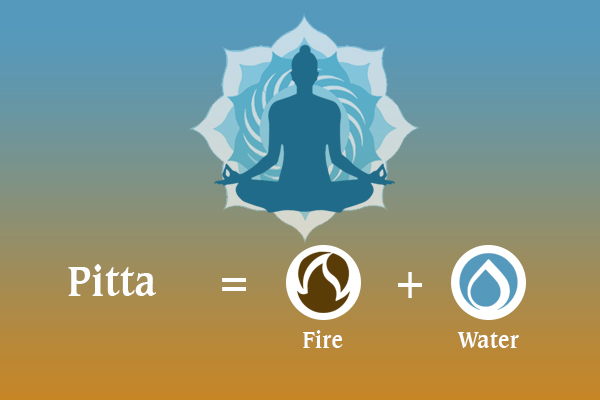
Pitta dosha is based on fire and water. It is commonly described as ushna(hot), laghu(light), tikshan(sharp) and sara(mobile). Grisham ritu or summer season is known as the pitta season. People with pitta dosha have intelligence, self master skills, good metabolism and healthy skin and hair. All metabolic activities, appetite, hunger, color, complexion and body’s circulation are dependent on pitta dosha. When pitta is out of balance then the body may lead to many diseases like inflammation, acne and acidity.

SUB-TYPES OF PITTA DOSHA

TYPE OF PITTA DOSHA LOCATION AND   FUNCTION
Ranjaka Located in the liver and spleen, it is responsible for converting rasa dhatu into rakta dhatu
Pachaka Located in the stomach and intestine, it controls the digestive system
Sadhaka Located in the head and heart. It attends mental functions such as knowledge and intelligence
Bhrajaka Located in the skin, it gives color and complexion to the skin
Alochaka Located in the eyes and helps in vision

Food to eat in pita

Pitta is said to be aggravated by the diet rich in rasa like amla (sour), lavan (salty) and katu (pungent) and is mitigated by madhura (sweet), tikta (bitter) and kashay (astringent) rasa. So, people having a pitta body type should refrain from having a diet rich in rasa amla (sour), lavan (salty) and katu (pungent) like grapes, papaya, onions, eggplant, almonds and various other things.

FOOD TO CONSUME IN PITTA BODY TYPE FOOD NOT TO CONSUME IN PITTA BODY TYPE
Sweet and bitter vegetables like celery, carrots, cucumber and cabbage. Spicy hot food, soy sauce, urad dal and things having salty and sour content.
Fruits like sweet ripe oranges, pear, bananas, melons and mangoes. Cashew, sesame seeds, peanuts, egg yolk and thyme.
Herbs and spices like black pepper, cumin, cilantro and turmeric. Honey, jaggery and white sugar. Spices like garlic, cloves, mustard seeds and hing.

Summer is said to be the season of pitta which is a combination of fire and water elements, pitta has the characteristics of being hot. When there is excess pitta in the body you may experience the following:-

  1. Feeling of heat generation in the body.
  2. Acid reflux
  3. Nausea
  4. Diarrhea
  5. Anger and hot flashes
  6. Excessive sweating
  7. Foul body odor
  8. Irritability
  9. Insomnia
  10. 10.Inflammation of the joints

According to ayurveda due to the inconsistency of them chronic diseases occur. There are 40 types of diseases caused by pitta dosha.

Among the forty nanatmaja vyadhi of pitta dosha some of the diseases are given below:

  1. Daha (burning)
  2. Amlaka
  3. Antar daaha (burning sensation inside the body)
  4. Ati sveda (excessive sweating)
  5. Ushmaadhikya (excessive temperature)
  6. Kaamla (jaundice)
  7. Jivadana (hemorrhage)
  8. Tamah pravesha (fainting)

Symptoms of Pitta Imbalance

  1. Daha- burning sensation
  2. Ushna – heat
  3. Sweda- perspiration
  4. Kandu- itching
  5. Kotha- putrefaction
  6. Srava- discharge
  7. Raaga – redness

General Treatment for pitta diseases

  1. Pita is treated with herbs having Madhura, tikta and kashaya rasa.
  2. Herbs having cool potency
  3. Virechana- purgation
  4. Parisheka- effusion
  5. Abhyanga- massage with herbs having pitta-pacifying qualities.

Importance of virechana in pitta imbalance

Purgation or virechana is the treatment for curing the pattika disease after administration virechana eliminates vitiated pitta from its root from the level of intestines. It also alleviates the entire vitiated pitta from other parts of the body.

AYURVEDIC TREATMENT

In ayurveda shamana is done by using madhura(sweet), tikta(bitter) and kashaya(astringent) rasa. The goal of treatment is to cleanse the body of undigested food. These cleansing mechanisms are described among panchkarma to maintain balance in the body.

Panchkarma includes five types of shodhana karmas.

1. VAMAN

  • Vaman is done to detoxify vitiated kapha dosha.

2. Virechana

  • Virechana is done to detoxify vitiated pitta dosha.

3. Basti

  • Basti is done to detoxify vitiated vata dosha.

4. Nasya

  • Nasya or nasal administration of medicated oil and herbs are used for relieving doshas from the head.

5.Raktamokshana

  • Raktamokshana is done to expel out vitiated rakta dosha.

FORMULATIONS TO BALANCE VITIATED PITTA DOSHA.

  1. Shadanga Paniya
  2. Ushirasava
  3. Praval Panchamrit ras
  4. Amalaki Rasayan
  5. Kamdudha ras

ASANAS TO MAINTAIN HEALTHY PITTA BALANCE

  1. Dhanurasana
  2. Bhujangasana
  3. Ardha matsyendrasana
  4. Setu bandhasana
  5. Ushtrasana

Some effective herbs by planet ayurveda to balance pitta dosha

1. Pitta Balance

This herbal formulation is made up of rasaushadhi like jahar mohra pishti, kaharava pishti, akik pishti, mukta pishti and giloy satva(Tinospora cordifolia) herb. Akik pishti and mukta pishti are helpful in balancing excess acid in the stomach and provides immediate relief from acidity and heartburn but also improves digestion and reduces constipation.

Dosage– 1 to 2 capsules twice daily with water after a meal.

2. Panchatikta kwath

This formulation is made of guduchi(Tinospora cordifolia), nimba(Azadirachta indica), patola(Cucumis acutangulus), kantakari(Solanum virginianum) and parpata(Fumaria indica) etc. which is useful in reducing inflammation and fever like conditions.

Dosage– 2 tsp before food with equal amount of water

3. Shankh bhasma

It is made of the conch or sea shell for managing conditions like acid reflux, also called GERD. Sankha bhasma has a kshar (alkaline) property which helps in neutralizing the excess acid production. It works by its sheeta (cold) property. It is useful in controlling acidity, abdominal pain and ibs like condition.

Dosage– 125-250 mg twice a day

4. Praval panchamrit ras

This herbal formulation is in the form of tablet or powder formed by Mukta bhasma, shankh bhasma, shukti bhasma, praval bhasma and the latex of arka. It has a calming effect on curing bloating, anorexia, ascites, indigestion and gastritis like conditions and is helpful in balancing vata and kapha dosha

Dosage-2 tablets  twice daily with honey, ghee and milk after a meal.

CONCLUSION

Pitta dosha is one of the three doshas of our body which has its own natural properties and functioning in the body. When these doshas get out of balance they cause different health conditions which are aggravated by the consumption of rasa opposite to that of their nature. Pitta dosha is similarly maintained by giving up on certain items leading to its aggravation like amla(sour), lavan(salt) and katu(pungent) rasa and also by shodhana(detoxification) and shamna(pacification).