November 26, 2026
Haritaki for pineal gland cleansing – Why it is called Third Eye herb
Abstract
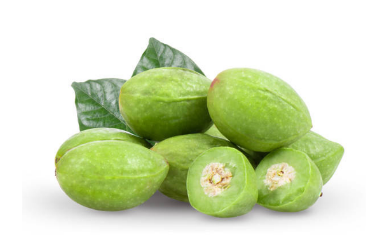
Within the deeply furrowed rind of Haritaki (Terminalia chebula) lies an ancient chemical matrix engineered to bridge gut health and higher cognition. This unassuming, wrinkled drupe acts as a potent molecular scraper, deploying a dense payload of chebulinic and gallic acids that cross the blood-brain barrier. By neutralizing oxidative stress and enhancing cerebral micro-circulation, it optimizes perfusion to deep brain structures. Classically revered as a Rasayana that purifies the body’s vital channels (srotas), modern science recognizes its power to modulate the gut-brain axis—clearing systemic inflammation to awaken cognitive clarity, sharpen intuition, and unveil the brain’s hidden potential. Let’s discuss in detail!
What Is Haritaki? The Ayurvedic King of Herbs
In the classical taxonomy of Ayurvedic flora, Haritaki (Terminalia chebula) reigns supreme. According to the text, the herb originated from a drop of celestial nectar (Amrita) that fell to the earth from the mouth of Indra while he was drinking. Because of this divine link, it is uniquely blessed with seven distinct botanical variations and a maternal quality of protection unmatched by any other plant in nature.
Nomenclature & Synonyms (Nama-Paryaya)
The text specifies a rich array of classical names for Haritaki, each highlighting a distinct therapeutic power:
- Abhaya: That which removes the fear of disease.
- Pathya: That which is highly beneficial for the channels (patha) of the body.
- Amrita: Divine nectar that grants longevity and vitality.
- Shiva: Highly auspicious, bringer of health and balance.
- Kayastha: That which stabilizes and firms up the physical body (Kaya).
- Other recognized names include: Putana, Haimavati, Avyatha, Chetaki, Shreyasi, Vayastha, Vijaya, Jivanti, and Rohini.
The Seven Classical Varieties (Sapta-Bhedah)
The text classifies Haritaki into seven distinct types based on shape and target action:
- Vijaya: Gourd-shaped; the supreme variety used for all diseases.
- Rohini: Round; ideal for healing wounds and ulcers.
- Putana: Large seed; used for external pastes.
- Amruta: Thick flesh; used for deep detoxification.
- Abhaya: Five ridges; excellent for eye health.
- Jivanti: Golden-yellow; a panacea for all systemic disorders.
- Chetaki: Three ridges; a powerful purgative whose mere touch or shadow can induce cleansing.
The Esoteric Power of Chetaki
The text notes an incredible property of the Chetaki variety: simply looking at the tree, touching it, or sitting in its shadow can stimulate an immediate bowel evacuation in sensitive individuals (Sukumaras), domestic animals, and birds.
Physical Qualities and Pharmacodynamics (Guna-Karma)
- The Five Tastes (Pancha-Rasa): It possesses Sweet (Madhura), Acidic/Sour (Amla), Pungent (Katu), Bitter (Tikta), and Astringent (Kashaya). It is completely devoid of the salty (lavana) taste.
- Distribution of Taste Within the Fruit:
- Pulp/Flesh: Sweet (Madhura).
- Fibrous Ridges: Sour (Amla).
- Stalk/Stem: Bitter (Tikta).
- Skin/Rind: Pungent (Katu).
- Seed/Kernel: Astringent (Kashaya).
- Systemic Potency (Virya & Vipaka): It is fundamentally dry (Ruksha), hot in potency (Ushna Virya), kindles metabolic fire (Dipani), builds intellect (Medhya), transforms into a sweet post-digestive state (Madhura Vipaka), and slows down aging (Rasayani).
How Preparation Dictates Its Action (Prayoga-Bheda)
How you process Haritaki completely transforms its therapeutic target in the digestive tract:
- Chewed Raw (Charvita): Kindles Digestive Fire (Agni-Deepani).
- Ground Into Paste (Peshita): Thoroughly Flushes Toxins (Mala-Shodhini).
- Steamed/Boiled (Svitna): Binds Loose Stool (Samgrahi / Stops Diarrhea).
- Roasted In Ghee (Bhrishta): Instantly Balances All 3 Doshas (Tridoshanut).
- Taken with Meals: Enhances intelligence, sharpens the sensory organs, and completely clears out blocks in the stool and urine.
- Taken Post-Meals: Quickly cures disorders born from toxic food combinations, incorrect diet, and accumulated Vata, Pitta, and Kapha.
To balance your internal climate with the shifting seasons, the text instructs that Haritaki must be paired with a specific vehicle (Anupana) throughout the year:
- Rainy Season (Varsha): Take with Rock Salt (Saindhava) to control Vata.
- Autumn (Sharad): Take with Unrefined Sugar (Sharkara) to cool Pitta.
- Early Winter (Hemanta): Take with Dry Ginger (Shunti) to protect Agni.
- Late Winter (Shishir): Take with Long Pepper (Pippali) to break up thick Kapha.
- Spring (Vasanta): Take with Raw Honey (Madhu) to scrape out liquefied Kapha.
- Summer (Greeshma): Take with Jaggery (Guda) to prevent dehydration and loss of vitality.
Strict Contraindications (Bhakshana-Anarha)
Because Haritaki is intensely drying (Ruksha) and metabolic-boosting, the text explicitly warns that it must not be taken by:
- People who are exhausted from walking long distances, heavy physical labor, or intense fasting.
- Individuals who are excessively dry, thin, or emaciated (Krusho).
- Those with high Pitta conditions, acute fevers, or active internal bleeding.
- Pregnant women.
Understanding the Third Eye and the Pineal Gland
The intersection of the Third Eye and the pineal gland bridges ancient spiritual anatomy with modern neuroscience. In Eastern esoteric traditions, the Third Eye represents the Ajna Chakra—the energetic command center situated between the eyebrows that governs intuition, cosmic perception, and inner vision. Physically, this vortex maps precisely to the pineal gland, a tiny, pinecone-shaped endocrine structure nestled deep within the brain’s epithalamus.
Neurobiologically, the pineal gland acts as Nature’s inner compass, translating light signals into biochemical messages. It synthesizes melatonin to regulate our circadian rhythms and sleep architecture. Structurally, it contains specialized photoreceptor cells akin to retinal tissue, validating its historical moniker as a “hidden eye.”
Because it lacks a blood-brain barrier and is highly vascularized, it is uniquely vulnerable to environmental toxins, frequently leading to calcium and fluoride accumulation. This calcification forms a literal mineral shell that dampens its endocrine function. Purifying this center through targeted, antioxidant-rich botanicals like Haritaki helps clear these micro-obstructions. By restoring the gland’s physical integrity, we optimize cerebral micro-circulation, unlocking mental clarity, vivid dreaming, and heightened intuitive awareness.
Why Haritaki Is Known as the “Third Eye Herb”
Haritaki (Terminalia chebula) is crowned the “Third Eye Herb” due to its profound ability to clear the physical and subtle pathways linking the gut to higher cognition. Mystically, the Third Eye (Ajna Chakra) represents intuition and inner vision, mapping physically to the pineal gland—a deep-brain structure highly prone to mineral calcification from environmental toxins, which dims mental clarity.
Haritaki cracks this bottleneck through its potent Srotoshodhana (channel-cleansing) properties. Packed with dense antioxidant polyphenols like chebulinic acid, it crosses the blood-brain barrier to reduce oxidative stress and optimize cerebral micro-circulation. Simultaneously, as a premier Anulomana herb, it thoroughly purifies the gastrointestinal tract. By cleansing the gut, it calms the gut-brain axis, lowers systemic inflammation, and allows upward-moving Prana to reach the brain. This systematic flush decalcifies and awakens this sacred center, unlocking sharp focus, vivid dreaming, and heightened intuitive awareness.
The Ayurvedic Concept of Cleansing and Consciousness
In Ayurveda, the evolution of human consciousness is directly dependent on the purity of the physical vessel. This relationship is governed by Agni (the metabolic fire) and Ama (toxic, undigested metabolic byproducts). When Agni is compromised, Ama accumulates within the gastrointestinal tract. If left unaddressed, these dense toxins translocate, penetrating the Srotas (micro-channels) of the nervous tissue (Majja Dhatu) and clouding the mind.
True mental transformation requires Srotoshodhana—the systematic cleansing of these physical and subtle pathways. Herbs like Haritaki act as potent Anulomana agents, steering downward-moving waste out of the colon. This physical evacuation directly calms the gut-brain axis, dropping systemic inflammation and freeing the upward-moving vital energies, Prana and Udana Vayu.
With the physical channels cleared of Ama, Sadhaka Pitta (the subtle fire governing intellectual processing) is fully kindled. This allows the brain to seamlessly process emotions and sensory data into higher truth. By removing the physical obstructions that dull the nervous system, Ayurvedic cleansing decalcifies the deeper brain structures, unlocking Medha (intellect), expanding the Ajna Chakra, and elevating everyday awareness into higher states of cosmic consciousness.
How Haritaki Supports Mental and Spiritual Well-Being!
Haritaki (Terminalia chebula) supports mental and spiritual well-being by clearing the physical obstructions that dull human consciousness. Classically revered as a Medhya Rasayana (intellect rejuvenator), it targets the Majja Dhatu (nervous system) to sharpen memory, reduce mental fatigue, and calm an overactive mind by balancing Prana Vayu. Chemically, its rich antioxidant payload crosses the blood-brain barrier to reduce neuro-inflammation and optimize cerebral micro-circulation. This directly supports the health of the pineal gland, the biological counterpart to the Ajna Chakra (Third Eye). Simultaneously, as a premier Anulomana herb, Haritaki purifies the gastrointestinal tract, eliminating Ama (metabolic toxins). By optimizing the gut-brain axis, it lowers systemic stress markers, allows vital Prana to rise effortlessly to higher cerebral centers, and cultivates the deep emotional processing and meditative stillness necessary for spiritual awakening.
Scientific Insights into Haritaki’s Active Compounds
Core Active Compounds
- Hydrolyzable Tannins: Driven by high concentrations of chebulinic acid and chebulagic acid, which give the fruit its potent astringency and structural stability.
- Key Polyphenols: Rich in gallic acid and ellagic acid, which serve as the primary drivers behind the herb’s systemic cell-protective and anti-inflammatory properties.
Key Neuro-Protective Actions
- Blood-Brain Barrier Penetration: The small molecular weight of its polyphenols allows them to cross the blood-brain barrier to deliver direct antioxidant defense to cerebral tissues.
- Suppression of Neuro-Inflammation: Mechanistically inhibits microglial activation, reducing the production of inflammatory cytokines that trigger cognitive decline and brain fog.
- Pineal Gland Protection: Prevents lipid peroxidation and minimizes heavy metal-induced mineral crystallization (calcification) within deep-brain structures.
Gut-Brain Axis Regulation
- Microbiome Optimization: Acts as a selective antimicrobial against gut pathogens while performing as a prebiotic to nourish beneficial, short-chain fatty acid-producing flora.
- Cytokine Downregulation: By restoring the integrity of the intestinal mucosal barrier, it stops systemic inflammatory markers from traveling up the vagus nerve to the central nervous system.
Cognitive and Neuroplastic Benefits
- Acetylcholinesterase Inhibition: Research indicates its compounds help preserve acetylcholine levels, directly improving memory retention, spatial learning, and overall focus.
- Cerebral Perfusion: Enhances micro-circulation in brain capillaries, maximizing oxygenation and nutrient delivery to sustain high-level mental clarity.
Traditional Uses in Meditation and Yogic Practices
In traditional yoga and meditative lineages, Haritaki is utilized as a physical catalyst to stabilize the mind and elevate consciousness. Ancient yogis recognized that deep meditation requires a perfectly clear nervous system (Majja Dhatu), free from the disruptive movements of Prana Vayu (the vital air governing mental activity). By acting as a potent Anulomana herb, Haritaki corrects the downward flow of energy, safely clearing metabolic toxins (Ama) from the gut. This digestive purification calms the gut-brain axis, dropping systemic nervous tension. Consequently, the upward-moving vital forces—Prana and Udana Vayu—are freed to rise smoothly to the higher cerebral centers. This subtle energetic shift directly kindles Sadhaka Pitta, the inner fire of discernment. By purifying both the physical and subtle channels (Srotas), Haritaki dispels mental dullness (Tamas), induces sensory clarity, and prepares the practitioner for sustained concentration and deep meditative stillness.
Conclusion
At last we can say that The journey through the classical science of Haritaki reveals that true cognitive and spiritual expansion relies entirely on a clean physical foundation. By serving as a potent channel-cleanser (Srotoshodhana) and gut-regulator (Anulomana), Haritaki effectively lifts the heavy metabolic burden of Ama from the physiology. This deep gastrointestinal purification directly calms the gut-brain axis, dropping systemic inflammation and allowing vital Prana to rise effortlessly to the head. As deep-brain structures like the pineal gland are cleared of oxidative stress and mineral calcification, the Ajna Chakra awakens. Ultimately, Haritaki proves that the path to higher perception, crisp mental focus, and unshakeable inner vision begins with the dedicated purification of the physical vessel.

Dr. Vikram Chauhan
https://www.planetayurveda.comDr. Vikram Chauhan (MD - Ayurveda) is a Globally Renowned Ayurveda Physician with Expertise of more than 25 Years. He is the CEO & Founder of http://www.PlanetAyurveda.com, a leading Ayurveda Brand, Manufacturing, and Export Company with a Chain of Clinics and Branches in the US, Europe, Africa, Southeast Asia, India, and other parts of the World. He is also an Ayurveda Author who has written Books on Ayurveda, translated into Many European Languages. One of his Books is "Ayurveda – God’s Manual for Healing". He is on a Mission to Spread Ayurveda All Over the Planet through all the Possible Mediums. With his Vast Experience in Herbs and their Applied Uses, he is successfully treating Numerous Patients suffering from Various Ailments with the help of the Purest Herbal Supplements, Diet, and Lifestyle, according to the Principles of Ayurveda. For More Details, visit - www.planetayurveda.com, www.alwaysayurveda.com
View more posts from this author